Classical Chinese 原文古文原文
孫子曰:凡處軍相敵,絕山依谷,視生處高,戰隆無登。此處山之軍也。
sūn zǐ yuē: fán chǔ jūn xiàng dì, jué shān yī gǔ, shì shēng chǔ gāo, zhàn lóng wú dēng. cǐ chǔ shān zhī jūn yě.
絕水必遠水。客絕水而來,勿迎之于水內,令半濟而擊之,利。
jué shuǐ bì yuǎn shuǐ. kè jué shuǐ ér lái, wù yíng zhī yú shuǐ nèi, lìng bàn jì ér jī zhī, lì.
欲戰者,無附于水而迎客,視生處高,無迎水流。此處水上之軍也。
yù zhàn zhě, wú fù yú shuǐ ér yíng kè, shì shēng chǔ gāo, wú yíng shuǐ liú. cǐ chǔ shuǐ shàng zhī jūn yě.
絕斥澤,惟亟去無留。若交軍于斥澤之中,必依水草而背眾樹。此處斥澤之軍也。
jué chì zé, wéi jí qù wú liú. ruò jiāo jūn yú chì zé zhī zhōng, bì yī shuǐ cǎo ér bèi zhòng shù. cǐ chǔ chì zé zhī jūn yě.
平陸處易而右背高,前死后生。此處平陸之軍也。
píng lù chǔ yì ér yòu bèi gāo, qián sǐ hòu shēng. cǐ chǔ píng lù zhī jūn yě.
凡此四軍之利,黃帝之所以勝四帝也。
fán cǐ sì jūn zhī lì, huáng dì zhī suǒ yǐ shèng sì dì yě.
凡軍好高而惡下,貴陽而賤陰,養生而處實,軍無百疾,是謂必勝。
fán jūn hǎo gāo ér wù xià, guì yáng ér jiàn yīn, yǎng shēng ér chǔ shí, jūn wú bǎi jí, shì wèi bì shèng.
丘陵堤防,必處其陽而右背之。此兵之利,地之助也。
qiū líng dī fáng, bì chǔ qí yáng ér yòu bèi zhī. cǐ bīng zhī lì, dì zhī zhù yě.
上雨,水沫至,欲涉者,待其定也。凡地有絕澗、天井、天牢、天羅、天陷、天隙,必亟去之,勿近也。
shàng yǔ, shuǐ mò zhì, yù shè zhě, dài qí dìng yě. fán dì yǒu jué jiàn, tiān jǐng, tiān láo, tiān luó, tiān xiàn, tiān xì, bì jí qù zhī, wù jìn yě.
Modern Chinese 今译现代汉语译文
孙子说:凡是部署军队、观察敌情,都要注意:通过山地时要靠近山谷行进,驻扎时要选择向阳的高地,与占据高地的敌人作战不要仰攻。这是在山地部署军队的原则。
横渡江河后一定要远离水流驻扎。敌人渡水而来,不要在水边迎击,等他渡过一半时再发动攻击,这样最为有利。
想要决战的人,不要紧靠水边列阵迎敌,要驻扎在向阳的高处,不要面迎水流。这是在江河地带部署军队的原则。
通过盐碱沼泽地带,要迅速离开,不要停留。如果在盐碱沼泽中与敌军交战,必须靠近水草、背靠树林。这是在沼泽地带部署军队的原则。
在平原地带要选择平坦之处驻扎,右侧和背后要依托高地,前低后高。这是在平原地带部署军队的原则。
这四种利用地形的军事原则,正是黄帝之所以能战胜四方部落首领的原因。
凡是军队,总是喜欢高地而厌恶低洼,重视向阳面而轻视阴暗处,驻扎在物资丰实的地方以利于休养,这样全军将士不生各种疾病,就是必胜的保障。
在丘陵堤防之地,一定要驻扎在向阳的一面,右侧和背后要依托高地。这些对用兵有利的条件,是借助地形取得的。
上游下雨,水沫涌来,要想涉水渡河,必须等水势平稳后再渡。凡是遇到绝涧、天井、天牢、天罗、天陷、天隙这六种险恶地形,必须迅速离开,不可靠近。
English Translation
Sun Tzu said: We come now to the question of encamping the army, and observing signs of the enemy. Pass quickly over mountains, and keep in the neighbourhood of valleys. Camp in high places, facing the sun. Do not climb heights in order to fight. So much for mountain warfare.
After crossing a river, you should get far away from it. When an invading force crosses a river in its onward march, do not advance to meet it in mid-stream. It will be best to let half the army get across, and then deliver your attack.
If you are anxious to fight, you should not go to meet the invader near a river which he has to cross. Occupy the high ground and face the sun. Do not move up-stream to meet the enemy. So much for river warfare.
In crossing salt-marshes, your sole concern should be to get over them quickly, without any delay. If you find yourself in a salt-marsh in the presence of the enemy, endeavour to get water and grass near, and with trees at your back. So much for operations in salt-marshes.
In dry, level country, take up an easily accessible position with rising ground to your right and on your rear, so that the danger may be in front, and safety behind. So much for campaigning in flat country.
These are the four useful branches of military knowledge which enabled the Yellow Emperor to vanquish four several sovereigns.
All armies prefer high ground to low, sunny spots to dark. If an army is encamped in a place where it can obtain supplies and is free from sickness, it will be in a position to win.
When you come to a hill or a dike, occupy the sunny side, with the slope on your right rear. Thus you will at once act for the benefit of your soldiers and utilize the natural advantages of the ground.
When rain-clouds appear in the upper air and foam gathers on the surface of the stream, wait until the waters subside before attempting to cross. Whenever you encounter narrow defiles, deep pits, natural pitfalls, tangled ground, quagmires, or crevasses, make all speed to get away from them — do not linger near them.
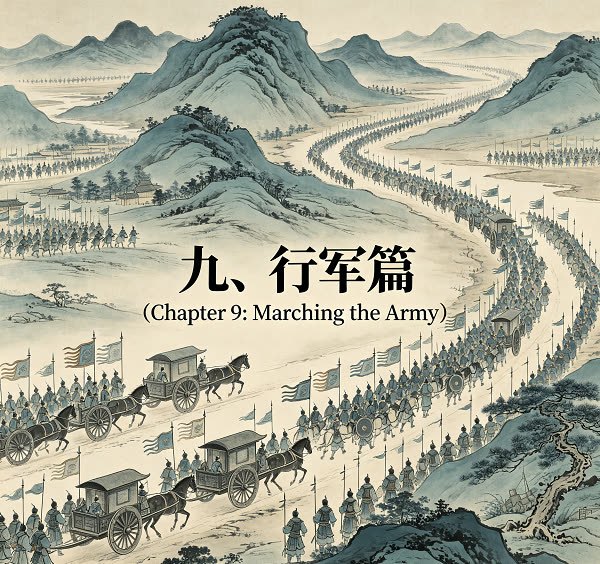


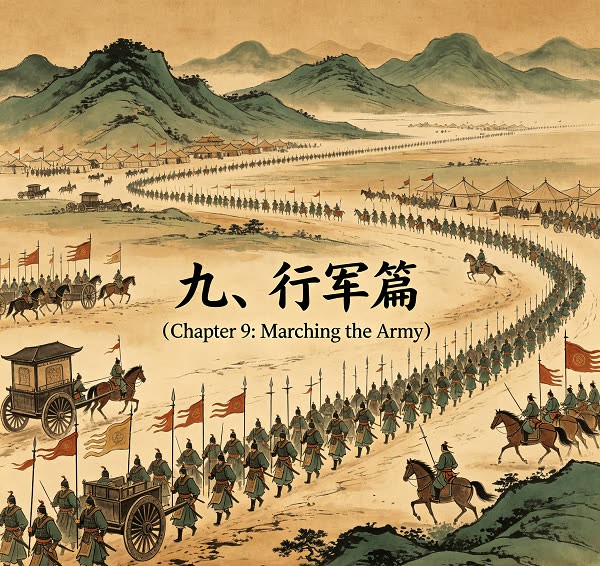
This is the chapter's core concept. 處軍 (chǔ jūn) means to position or station troops in optimal terrain. 相敵 (xiàng dì) means to observe and assess enemy movements. Together, they form a two-part tactical discipline: first secure your own position, then read the enemy's signals. Modern military science calls this "tactical appreciation" — the continuous cycle of positioning and intelligence.这是本章的核心概念。處軍指将军队部署在最优地形上。相敵指观察判断敌情。两者构成一个完整的战术纪律:先确保己方态势,再研判敌方信号。现代军事学称之为"战术研判"——不断循环部署与情报。