Classical Chinese 原文古文原文
孫子曰:凡火攻有五:一曰火人,二曰火積,三曰火輜,四曰火庫,五曰火隊。
sūn zǐ yuē: fán huǒ gōng yǒu wǔ: yī yuē huǒ rén, èr yuē huǒ jī, sān yuē huǒ zī, sì yuē huǒ kù, wǔ yuē huǒ duì.
行火必有因,煙火必素具。發火有時,起火有日。時者,天之燥也;日者,月在箕、壁、翼、軫也。凡此四宿者,風起之日也。
xíng huǒ bì yǒu yīn, yān huǒ bì sù jù. fā huǒ yǒu shí, qǐ huǒ yǒu rì. shí zhě, tiān zhī zào yě; rì zhě, yuè zài jī, bì, yì, zhěn yě. fán cǐ sì sù zhě, fēng qǐ zhī rì yě.
凡火攻,必因五火之變而應之。火發於內,則早應之於外。火發而其兵靜者,待而勿攻。極其火,可從而從之,不可從而止。
fán huǒ gōng, bì yīn wǔ huǒ zhī biàn ér yìng zhī. huǒ fā yú nèi, zé zǎo yìng zhī yú wài. huǒ fā ér qí bīng jìng zhě, dài ér wù gōng. jí qí huǒ, kě cóng ér cóng zhī, bù kě cóng ér zhǐ.
火可發於外,無待於內,以時發之。火發上風,無攻下風。晝風久,夜風止。
huǒ kě fā yú wài, wú dài yú nèi, yǐ shí fā zhī. huǒ fā shàng fēng, wú gōng xià fēng. zhòu fēng jiǔ, yè fēng zhǐ.
凡軍必知有五火之變,以數守之。故以火佐攻者明,以水佐攻者強。水可以絕,不可以奪。
fán jūn bì zhī yǒu wǔ huǒ zhī biàn, yǐ shù shǒu zhī. gù yǐ huǒ zuǒ gōng zhě míng, yǐ shuǐ zuǒ gōng zhě qiáng. shuǐ kě yǐ jué, bù kě yǐ duó.
Modern Chinese 今译现代汉语译文
孙子说:火攻的方式共有五种:一是焚烧敌军人马,二是焚烧敌军粮草,三是焚烧敌军辎重,四是焚烧敌军仓库,五是焚烧敌军运输队。
实施火攻必须具备一定的条件,发火器材必须平时就准备好。放火要选择有利的时机,起火要选好有利的日期。所谓时机,是指天气干燥;所谓日期,是指月亮运行到箕、壁、翼、轸四个星宿位置的时候。凡是月亮运行到这四个星宿的日子,就是起风的日子。
凡是火攻,必须根据五种火攻方式的变化,灵活部署兵力加以配合。如果从敌营内部放火,就要及早从外部策应。火起之后敌军仍然保持镇静的,就应等待观察,不要急于进攻。等火势烧到最旺时,可以进攻就进攻,不可以进攻就停止。
火也可以从外部放起,不必等待内应,只要时机合适就可以放火。火在上风处放起,不要从下风处进攻。白天风刮得久了,夜晚风就会停止。
凡是军队都必须懂得五种火攻方式的变化,并根据天象气候的规律来防守。所以用火来辅助进攻的,效果显著;用水来辅助进攻的,威力强大。水可以断绝敌人的粮道和增援,但不能夺取敌人的物资和人员。
English Translation
Sun Tzu said: There are five ways of attacking with fire. The first is to burn soldiers in their camp; the second is to burn stores; the third is to burn baggage trains; the fourth is to burn arsenals and magazines; the fifth is to hurl fire among the enemy's ranks.
In order to carry out an attack, we must have means available. The material for raising fire should always be kept in readiness. There is a proper season for attacking with fire, and special days for starting a combustible fire. The proper season is when the weather is very dry; the special days are those when the moon is in the constellations of the Sieve, the Wall, the Wing, or the Cross-bar; for these four are all days of rising wind.
In attacking with fire, one should be prepared to meet five possible developments: (1) When fire breaks out inside the enemy's camp, respond at once with an attack from without. (2) If there is an outbreak of fire, but the enemy's soldiers remain quiet, bide your time and do not attack. (3) When the force of the flames has reached its height, follow it up with an attack, if that is practicable; but if not, stay where you are.
A fire may be started outside the enemy's camp, and there is no need to wait for an opportunity from within — one need only seize the right moment to set it ablaze. One should not attack from the leeward when fire has been started upwind. A wind that rises by day will die down at night.
No army should be ignorant of the five methods of fire attack, and should guard against them by watching for the appropriate signs. Hence those who use fire to assist their attacks show intelligence; those who use water to assist their attacks show strength. Water may cut off the enemy's communications, but it cannot deprive him of his stores or men.
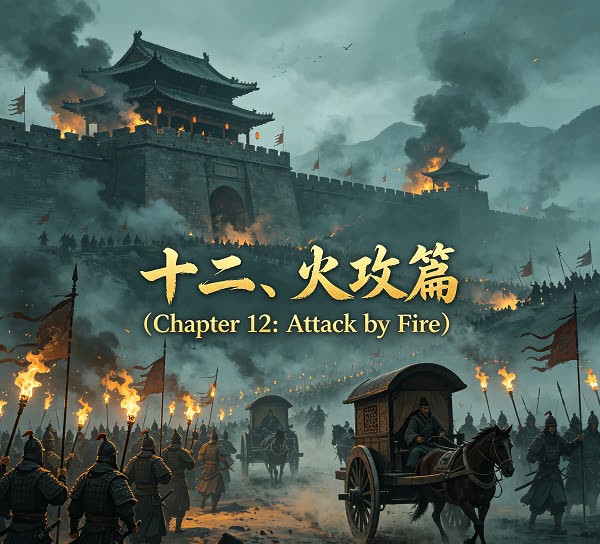


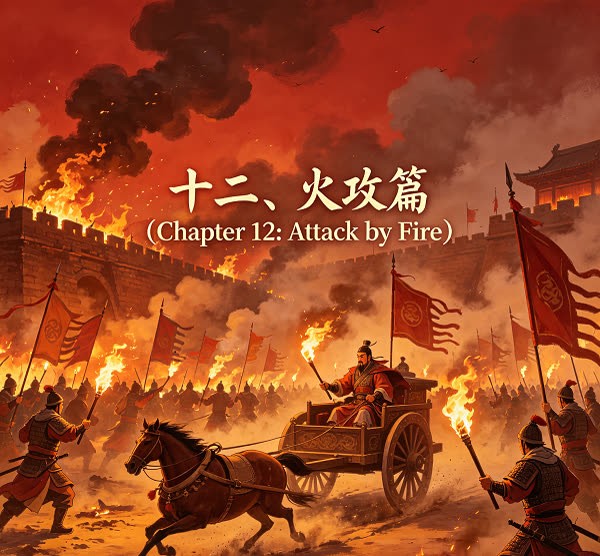
Literally "to fire people" — the most direct form of fire attack, targeting enemy soldiers and their mounts in camp. This is the highest-impact fire method (weight 0.30) because it destroys irreplaceable human capital and morale simultaneously. Zhou Yu's fire attack at Red Cliffs is the canonical example.字面义"焚烧人马"——最直接的火攻方式,目标为敌军人马。此为五火之首(权重0.30),因同时消灭不可再生的人力资本和打击士气。赤壁之战周瑜火攻即为典范。