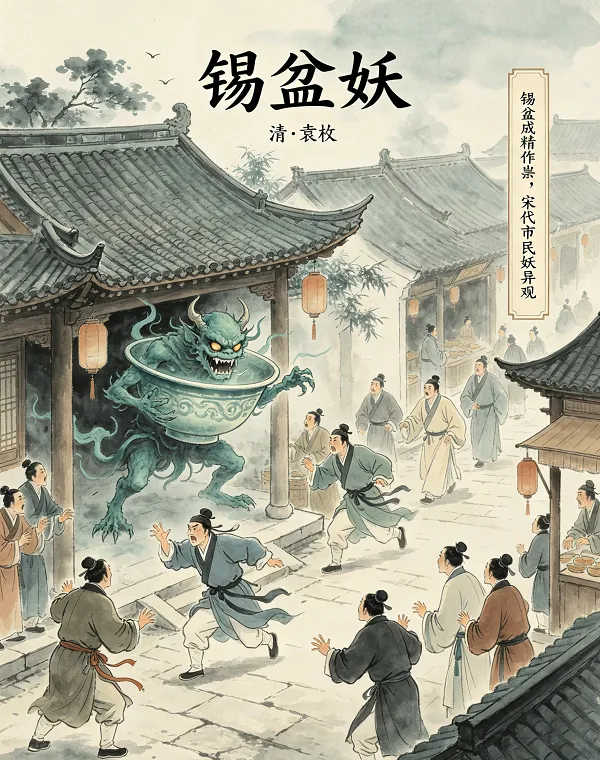
某市井人家有一锡盆锡盆锡制的盆。锡器在宋代市民家庭中是常见的日用品,用来盛水、盛物。锡盆"成精"是典型的"物久成怪"观念——器物使用日久,吸收日月精华,便获得了灵性。,年深日久。一日夜半,锡盆忽自鸣,声如人叹。家人惊惧,以为不祥。
自此夜夜作祟。或自移其位,或发出怪声。家中妇人病,小儿夜啼不止。邻人亦闻之,皆曰此盆成精矣。
主人惧,请道士道士道教的出家修行者。道士在宋代志怪文学中是"驱邪"的核心角色——他们掌握符箓、咒语、法术等超自然力量,专门对付妖魔鬼怪。此处道士以符箓镇住锡盆精,是宋代志怪的标准驱邪叙事。来驱邪。道士以符箓镇之,锡盆遂碎,怪声乃止。
A certain urban household had a tin basin锡盆 xī pénA basin made of tin. Tinware was a common household item in Song-dynasty urban families, used for holding water and objects. A tin basin "becoming a spirit" exemplifies the "objects become strange with age" concept — utensils used long enough absorb the essence of sun and moon, gaining spiritual awareness., long in use. One night at midnight, the basin suddenly emitted a sound on its own, like a human sigh. The family was terrified, considering it an ill omen.
From then on it caused trouble every night — moving from its place, emitting strange sounds. The household's women fell ill; infants cried ceaselessly through the night. Neighbors heard it too, all saying the basin had become a spirit.
The owner, frightened, invited a Daoist priest道士 dào shìA Daoist monastic practitioner. In Song supernatural literature, Daoist priests are the core "exorcism" figures — commanding talismans, incantations, and supernatural powers specifically to combat demons and spirits. Here the priest subdues the basin spirit with talismans, a standard Song exorcism narrative. to exorcise it. The priest sealed it with talismans; the tin basin shattered, and the strange sounds ceased.
"物久成怪"的宋代市民版
《锡盆妖》体现了宋代志怪文学的一个重要特征:妖怪从山林走向市井。传统志怪中的妖怪多在荒山野岭出没,但宋代的"物怪"就发生在市民家庭中——一个用了很久的锡盆成了精。这种"日常化"的妖异,反映了宋代城市生活中人与物的密切关系。
"物久成怪"是中国志怪文学的核心观念之一:任何物品,使用足够长时间后,都能获得灵性。锡盆成精、古琴成妖、旧衣化鬼——这些"物怪"故事本质上是对"物"的敬畏。它暗示:人与器物之间不仅是使用关系,更是一种共存关系——器物也在"观察"和"积累"着什么。
宋代驱邪叙事的标准化
故事的结构(物作祟 → 人得病 → 请道士 → 符箓镇压 → 物碎怪止)是宋代志怪的标准模式。道士以"符箓"镇压锡盆精,符箓既是道教法术的核心工具,也是宋代市民社会中"秩序"的象征——超自然的混乱需要超自然的秩序来恢复。
The Song Urban Version of "Objects Become Strange with Age"
"The Tin Basin Spirit" reflects a key feature of Song supernatural literature: monsters moving from mountains into cities. Traditional monsters haunted wilderness; Song "object-spirits" occur in urban households — an old tin basin becoming sentient. This "domesticated" supernatural reflects the intimate human-object relationship of Song urban life.
"Objects become strange with age" is a core concept of Chinese supernatural literature: any item, used long enough, gains spiritual awareness. These "object-spirit" tales are fundamentally about reverence for "things" — implying that the relationship between humans and objects isn't merely use, but coexistence.
The Standardization of Song Exorcism Narrative
The story's structure (object haunts → people fall ill → summon Daoist → talisman suppresses → object shatters, haunting ceases) is the standard Song supernatural pattern. The Daoist "talisman" suppressing the basin spirit is both the core tool of Daoist magic and a symbol of "order" in Song urban society — supernatural chaos requires supernatural order to restore.
中国志怪文学的核心观念:任何物品——器皿、乐器、衣物、家具——使用日久,吸收天地精华,便获得了灵性和自主意识。这一观念源于"万物有灵"的泛灵论思想,与道家"道生万物"的宇宙观一脉相承。锡盆成精是"物久成怪"的典型范例——一件普通的日用品,在漫长的岁月中悄然"觉醒"。
A core concept of Chinese supernatural literature: any object — utensils, instruments, clothing, furniture — used long enough absorbs the essence of heaven and earth, gaining spiritual awareness and autonomous consciousness. This concept stems from animistic "all things have spirit" thinking, continuous with the Daoist "the Way generates all things" cosmology. The tin basin spirit is the classic case — an ordinary household item quietly "awakening" over the long years.