The White Horse Philosopher
公孙龙
Gongsun Long
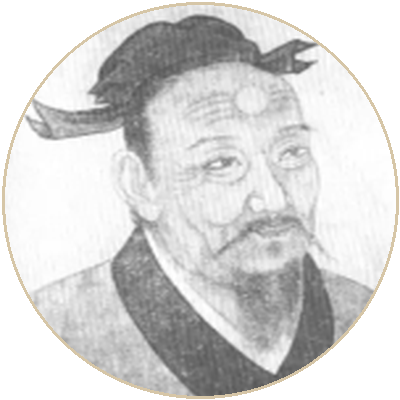
The White Horse Philosopher
公孙龙
The events of Gongsun Long's life are recorded across several classical texts. Here are the most significant episodes.
A White Horse Is Not a Horse: 'Horse' names a shape; 'white' names a color. If you ask for a 'horse,' any color will do; if you ask for a 'white horse,' only white qualifies. Since the ranges differ, the concepts are not identical.
Separating Hardness and Whiteness: The hardness and whiteness of a stone cannot be perceived simultaneously — eyes see white, hand feels hardness. Since they cannot be perceived together, they are separate, not unified. This raises a fundamental question about sensory knowledge.
On Reference and Things: Names and things belong to different domains, yet every thing can be named and every name refers to something. This addresses philosophy of language's core question: how do words point to the world?
Debating Kong Chuan: When a Confucius descendant offered to become his student if he abandoned the white horse thesis, Gongsun Long replied: 'My teaching IS that a white horse is not a horse. You want me to abandon it — what would you then learn?'
The Siege of Handan: When Qin besieged Zhao's capital, Gongsun Long counseled Lord Pingyuan to prioritize national interests over personal gain — showing his concern for political reality alongside his philosophical work.
白马非马。
"A white horse is not a horse." — Gongsun Long's most famous proposition. 'Horse' names a shape; 'white' names a color. Since the concepts have different intensions and extensions, they are not identical.
坚、白、石不相盈,藏三可乎?
"Hardness, whiteness, and stone do not fill each other — may we say three are hidden?" — Since hardness and whiteness cannot be perceived simultaneously, they exist as separate attributes, making three distinct things (hardness, whiteness, stone).
物莫非指,而指非指。
"There is no thing that is not a reference, yet a reference is not itself a reference." — Everything in the world can be referred to by a name, but the act of referring is itself not a thing in the world. The map is not the territory.
视不得其所坚而得其所白者,无坚也;拊不得其所白而得其所坚者,无白也。
"Seeing cannot grasp hardness, only whiteness — so there is no hardness. Touching cannot grasp whiteness, only hardness — so there is no whiteness." — Different senses access different qualities, proving their separation.
天下无指,物无可以谓物。
"If the world had no names, things could not be called things." — Without the power of naming, reality would be an undifferentiated chaos. Names create distinctions that make the world intelligible.
「白马非马」是公孙龙最核心的哲学命题。这一论辩的关键在于区分「类」与「种」的关系。「马」是一个类概念,包含了所有颜色的马;「白马」是一个种概念,仅限于白色的马。因此「白马」的外延小于「马」的外延,两者不是同一概念。公孙龙通过这一论辩,揭示了概念的层次性和语言表达的精确性要求。这一思想在现代逻辑学中被称为「内涵与外延」的区分。" data-en="'A white horse is not a horse' is Gongsun Long's central philosophical proposition. The key lies in distinguishing between a genus and a species. 'Horse' is a genus concept encompassing horses of all colors; 'white horse' is a species concept limited to white horses. Since 'white horse' has a narrower extension than 'horse,' they are not identical concepts. Through this argument, Gongsun Long revealed the hierarchical nature of concepts and the need for precision in language. This insight corresponds to the modern logical distinction between intension and extension.">The key is distinguishing genus from species. 'Horse' encompasses all colors; 'white horse' is narrower. Since their extensions differ, they are not identical. This corresponds to the modern logical distinction between intension and extension.
「离坚白」是公孙龙的认识论核心。他认为,一块白石的硬度和白色是两个独立的属性,因为它们通过不同的感官被感知——视觉感知白色,触觉感知硬度。既然不同的感官不能同时工作,它们所感知的属性就是分离的。这一论辩挑战了常识性的「统觉」假设——我们倾向于认为不同感官提供的是关于同一个事物的统一认识,但公孙龙质疑这种统一性是否真实存在。" data-en="'Separating hardness and whiteness' is Gongsun Long's epistemological core. He argued that the hardness and whiteness of a white stone are independent qualities perceived through different senses — sight grasps whiteness, touch grasps hardness. Since different senses cannot operate simultaneously, the qualities they perceive are separate. This challenges the common-sense assumption of 'unified perception' — we tend to assume different senses provide unified knowledge of the same thing, but Gongsun Long questioned whether this unity truly exists.">Hardness and whiteness are independent qualities perceived through different senses. Since senses cannot operate simultaneously, their objects are separate. This challenges the assumption that different senses provide unified knowledge.
《指物论》是公孙龙最深奥的哲学论文,讨论了「指」(概念、名称、指称行为)与「物」(事物、对象)之间的关系。公孙龙认为:第一,天下万物都可以被指称(物莫非指);第二,但指称本身不是事物(指非指);第三,如果没有指称系统,事物就无法被区分和认识(天下无指,物无可以谓物)。这一理论涉及语言哲学的根本问题——语言与世界的关系、概念与实在的关系。" data-en="'On Reference and Things' is Gongsun Long's most profound philosophical essay, discussing the relationship between 'reference' (names, concepts, acts of pointing) and 'things' (objects, reality). Gongsun Long argued: first, all things in the world can be referred to; second, the act of reference is not itself a thing; third, without a system of reference, things cannot be distinguished or known. This theory addresses fundamental questions in philosophy of language — the relationship between language and world, between concepts and reality.">All things can be referred to, yet reference is not itself a thing. Without names, things cannot be distinguished. This addresses philosophy of language's deepest questions about the relationship between language, concepts, and reality.
公孙龙对名实关系的讨论是其哲学的重要组成部分。他认为,名称(名)和现实(实)必须相符,但这种相符不是简单的——同一事物可以有不同的名称,同一名称可以指称不同的事物。他强调名称的精确性和规范性,认为如果名实不符,就会导致混乱。这一思想与孔子的「正名」学说有某种呼应,但公孙龙更加关注语言的逻辑结构而非道德规范。" data-en="Gongsun Long's discussion of the relationship between names (ming) and reality (shi) is an important part of his philosophy. He held that names and reality must correspond, but this correspondence is not simple — the same thing can have different names, and the same name can refer to different things. He emphasized the precision and normativity of names, believing that misalignment between names and reality leads to confusion. This thinking echoes Confucius's 'rectification of names,' but Gongsun Long focused more on the logical structure of language than on moral norms.">Names and reality must correspond, but the relationship is complex — the same thing can have different names. He emphasized precision in naming, echoing Confucius's 'rectification of names' but focusing on logical structure rather than moral norms.
公孙龙将辩论提升为一种哲学方法论。他认为,通过严格的逻辑分析和精确的概念区分,可以揭示日常语言中隐藏的矛盾和混淆。他的辩论不是为了诡辩,而是为了追求真理——通过挑战常识性假设来深化我们对世界的理解。这种方法类似于现代分析哲学的概念分析——通过仔细检查概念的边界和条件来澄清思想。" data-en="Gongsun Long elevated debate to a philosophical methodology. He believed that through rigorous logical analysis and precise conceptual distinctions, hidden contradictions and confusions in everyday language could be revealed. His debates were not sophistry but truth-seeking — challenging common-sense assumptions to deepen our understanding of the world. This method resembles the concept analysis of modern analytic philosophy — clarifying thought through careful examination of conceptual boundaries and conditions.">Through rigorous logical analysis and precise conceptual distinctions, hidden contradictions in everyday language are revealed. His method resembles modern analytic philosophy's concept analysis — clarifying thought through careful examination of boundaries and conditions.
Originally fourteen chapters (six survive): 'On the White Horse,' 'On Reference and Things,' 'On Hardness and Whiteness,' 'On Change,' 'On Names and Reality,' and 'Traces.' One of the most important documents of ancient Chinese logic, displaying remarkable abstract reasoning unique among pre-Qin philosophers.
Gongsun Long's philosophy anticipates modern concerns: concept analysis in analytic philosophy, the binding problem in cognitive science, word-world relationships in AI and NLP, and the cultivation of precise thinking. His 'white horse' argument remains one of the most famous philosophical thought experiments ever devised.