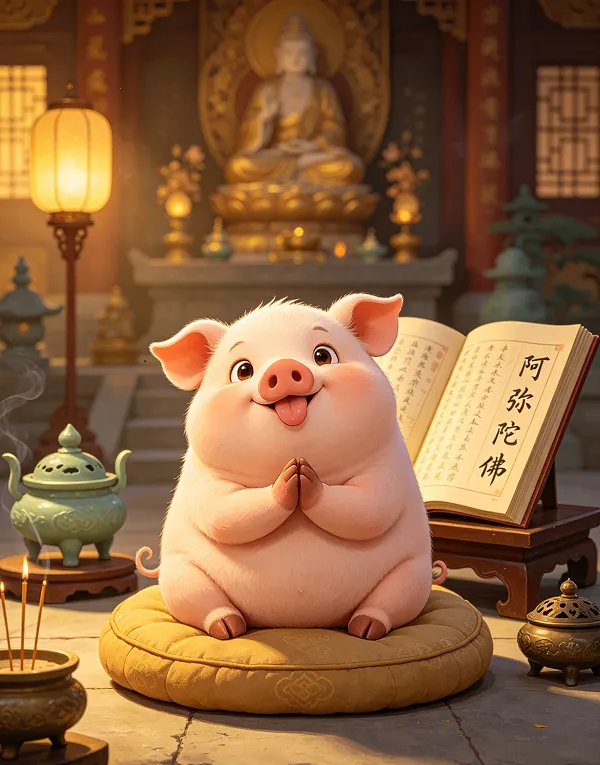
某屠户畜一猪,颇肥。邻有僧庵,僧日诵经。猪每闻经声,辄伏地谛听,若有所悟。
久之,猪渐通灵性。见人来则摇尾摇尾摇动尾巴。通常"摇尾"是狗的行为,猪摇尾极为罕见。纪昀以此细节暗示猪在"模仿"听经后的反应——它通了灵性,但通的方向很奇特。迎之,目光柔和,不复猪之蠢态。或以手搔其腹,辄翻卧露腹,哼哼不已,若甚得意。
屠户笑曰:「此猪听经开悟开悟佛教术语,指通过修行获得觉悟。猪听了几年佛经后"开悟",但它的"悟"不是解脱成佛,而是变得爱卖萌——纪昀用极致的反差制造了幽默效果。矣,惜悟错了路——悟成卖萌了!」众皆大笑。
A butcher kept a rather plump pig. Next door was a monk's hermitage where the monk chanted sutras daily. Each time the pig heard the chanting, it would lie down and listen attentively, as if comprehending something.
Over time, the pig grew increasingly sentient. When people approached, it would wag its tail摇尾 yáo wěiWagging the tail. Tail-wagging is normally a canine behavior; a pig wagging its tail is extremely rare. Ji Yun uses this detail to hint that the pig "mimicked" responses after hearing the sutras — it gained sentience, but in a peculiar direction. to greet them, its gaze gentle, no longer bearing a pig's foolish look. If someone scratched its belly, it would roll over and expose its belly, grunting ceaselessly, as if thoroughly pleased.
The butcher laughed: "This pig has attained enlightenment开悟 kāi wùA Buddhist term meaning to achieve awakening through practice. After years of sutra-listening, the pig "attained enlightenment" — but its "awakening" isn't liberation into Buddhahood, rather it learned to act cute. Ji Yun creates humor through the ultimate comedic reversal. from hearing sutras —可惜 it went down the wrong path: it enlightened into showing off its belly!" Everyone burst out laughing.
纪晓岚的幽默哲学
这是纪昀(纪晓岚)最能体现其幽默风格的短篇。故事的核心反差在于:佛经开悟 → 悟成了卖萌。佛教追求的是超越轮回的解脱,但猪的"开悟"是翻肚皮让人挠——最高深的宗教追求,被一个猪的本能行为消解了。
这种幽默不是简单的搞笑,而是暗含了纪昀对"修行"的思考:听经不等于开悟,形式不等于本质。猪虽然"听"了几年佛经,但它的理解方式仍然是猪的——它把佛经当成了白噪音,真正的收获是变得亲近人。纪昀以此讽刺那些形式上修行、本质上毫无改变的人。
动物通灵的文学传统
中国志怪文学中有大量"动物通灵"的故事,但多数是严肃的(如狐仙、蛇精)。纪昀的创新在于:他让"通灵"变得滑稽。猪通了灵性,但没有变成神仙,而是变成了一个更可爱、更亲近人的猪。这种"通灵而不成仙"的处理,是对传统志怪套路的解构。
Ji Xiaolan's Philosophy of Humor
This is the tale that best embodies Ji Yun's (Ji Xiaolan's) comedic style. The core reversal: Buddhist sutra enlightenment → enlightenment into belly-showing. Buddhism pursues liberation from the cycle of rebirth, but the pig's "awakening" is rolling over for belly scratches — the highest religious pursuit is dissolved by an animal's instinct.
This humor isn't mere comedy but contains Ji Yun's reflection on "practice": hearing sutras doesn't equal awakening; form doesn't equal essence. The pig "heard" years of sutras, but processed them as white noise — its real gain was becoming more affectionate. Ji Yun satirizes those who practice in form but remain unchanged in substance.
The Literary Tradition of Animal Sentience
Chinese supernatural literature abounds with "animal sentience" stories, mostly serious (fox spirits, snake demons). Ji Yun's innovation: making "sentience" comical. The pig gains awareness but doesn't become a deity — it becomes a cuter, more affectionate pig. This "sentience without divinity" treatment deconstructs traditional supernatural tropes.
佛教术语,指通过修行破除无明、证得真理。禅宗讲"顿悟",净土宗讲"念佛开悟"。纪昀在这里故意用了一个极度崇高的宗教术语来形容猪的行为,制造了最大的反差效果。猪的"开悟"是翻肚皮让人挠——这既是对"开悟"概念的幽默消解,也暗示了纪昀的怀疑态度:真正"开悟"的又有几人?
A Buddhist term meaning to break through ignorance and realize truth through practice. Chan Buddhism speaks of "sudden awakening"; Pure Land of "Buddha-name recitation enlightenment." Ji Yun deliberately uses an exalted religious term to describe a pig's behavior, creating maximum comedic contrast. The pig's "enlightenment" is rolling over for belly scratches — both a humorous dissolution of the concept and a hint of Ji Yun's skepticism: how many truly "awaken"?