The Grand Architect
管仲
Guan Zhong
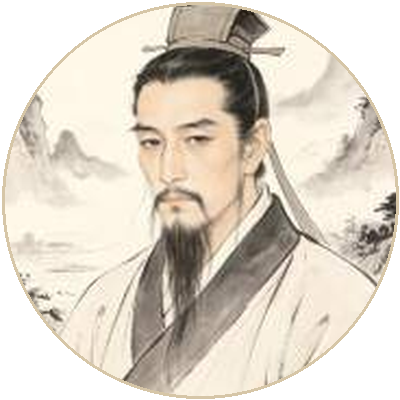
The Grand Architect
管仲
The events of Guan Zhong's life are recorded in several classical texts. Here are the most significant episodes.
The Friendship of Guan and Bao: Their friendship is China's most famous example of true companionship. Bao Shuya never complained when Guan Zhong took larger profits, knowing his family was poor. 'My parents gave me life, but Bao Shuya gave me understanding.'
Shooting Duke Huan: Guan Zhong once shot an arrow at Prince Xiaobai during a succession crisis. After becoming Duke Huan, Xiaobai set aside the grudge and appointed him Prime Minister — a story told for millennia.
Revere the King, Repel the Barbarians: Through this diplomatic strategy, Qi gained hegemony while respecting the Zhou order. In 656 BCE, an eight-state coalition compelled Chu to acknowledge Zhou suzerainty.
经济改革:管仲推行「相地而衰征」——根据土地肥沃程度征收不同税率,这是中国最早的级差地税制度。他同时实行盐铁官营,由国家控制关键资源的生产和销售。这些经济改革使齐国国库充盈,为霸业奠定了坚实的物质基础。管仲的经济思想远远领先于他的时代。
Economic Reforms: He implemented graduated land taxes and state monopolies on salt and iron — filling Qi's treasury and laying the material foundation for hegemony. His economic thinking was far ahead of his time.
仓廪实则知礼节,衣食足则知荣辱。
"When granaries are full, people know propriety; when clothing and food are sufficient, they know honor and shame." — Guan Zhong's most famous dictum: material prosperity is the foundation of moral civilization.
礼义廉耻,国之四维;四维不张,国乃灭亡。
"Propriety, righteousness, integrity, and shame — these are the four pillars of the state. If the four pillars are not upheld, the state will perish." — Guan Zhong's theory of the social and moral foundations of governance.
政之所兴,在顺民心;政之所废,在逆民心。
"Government prospers when it follows the people's heart; government fails when it goes against the people's heart." — An early statement of the principle that good governance must serve the people.
十年树木,百年树人。
"It takes ten years to grow a tree, but a hundred years to cultivate a person." — Guan Zhong on the long-term importance of education and human development, still quoted today.
管仲最核心的治国理念是:经济基础决定道德水平。他认为,只有当人民的基本物质需求得到满足后,才能谈礼义教化。空谈道德而忽视民生,是本末倒置。这一思想比马克思主义的唯物史观早了两千多年,是中国最早的政治经济学思想。管仲因此特别重视经济建设和富民政策。
Guan Zhong's core insight: economic foundations determine moral standards. Only when material needs are met can moral education succeed. This anticipates historical materialism by two millennia — China's earliest political economy.
管仲提出「礼义廉耻,国之四维」的理论。礼是社会行为规范,义是道德判断标准,廉是为官操守,耻是内心自律。管仲认为,这四种品德是维系国家和社会稳定的四根支柱,如果「四维不张」,国家就会走向灭亡。这一理论将道德建设提升到了国家治理的战略高度。
The 'four pillars': propriety, righteousness, integrity, and shame. These govern social conduct, moral judgment, official conduct, and self-discipline. If not upheld, the state perishes — elevating morality to the level of statecraft.
管仲是中国最早系统论述法治思想的政治家之一。他认为治国必须有明确的法律制度,不能仅靠君主个人的贤明。他推行「壹刑」——法律面前人人平等,不因身份贵贱而区别对待。这一思想为后来商鞅、韩非子等法家学者的法治思想奠定了基础。
An early advocate of rule by law: clear legal systems, not just personal wisdom. He championed equality before the law regardless of status — laying foundations for Shang Yang and Han Fei.
管仲认为,政权的兴衰取决于是否顺应民心。「政之所兴,在顺民心;政之所废,在逆民心。」他主张政府应该关注民众的实际需求,让人民富裕、安居乐业。他的「民本」思想虽然以富国强兵为最终目的,但其中蕴含的重视民生、关注民意的理念,对后世产生了深远影响。
Government prospers by following the people's heart. He advocated attending to practical needs — prosperity and stability. Though aimed at state power, his emphasis on livelihood influenced all later political thought.
《管子》是一部托名管仲的先秦诸子著作,实际上由战国至西汉时期的学者陆续编撰而成。全书原有八十六篇,现存七十六篇,内容涵盖政治、经济、军事、法律、哲学、教育、农业等方方面面。它是先秦诸子中篇幅最大、内容最丰富的一部著作,保存了大量管仲的治国思想和齐国的政治经验,也是研究先秦政治经济学的珍贵文献。" data-en="The Guanzi is a pre-Qin philosophical text attributed to Guan Zhong, actually compiled by various scholars from the Warring States through Western Han periods. Originally eighty-six chapters (seventy-six surviving), it covers politics, economics, military affairs, law, philosophy, education, and agriculture. It is the largest and most comprehensive of all pre-Qin philosophical works, preserving Guan Zhong's governance philosophy and Qi's political experience — a precious document for studying pre-Qin political economy.">Attributed to Guan Zhong but compiled over centuries, the Guanzi is the largest pre-Qin philosophical work — seventy-six chapters covering politics, economics, military, law, philosophy, and agriculture. A precious document of early Chinese political economy.
Guan Zhong's governance philosophy remains strikingly relevant: economic development as the foundation of morality, the importance of clear legal institutions, people-centered governance that follows the people's heart, and recognizing talent based on merit rather than past grievances.