The Moral Metaphysician
牟宗三
Mou Zongsan
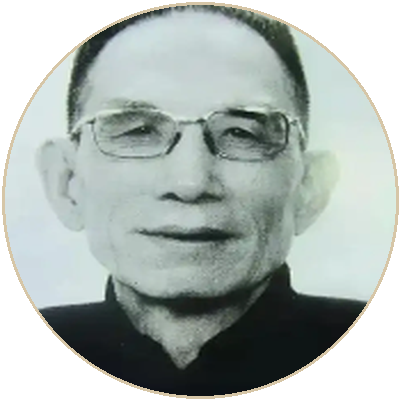
The Moral Metaphysician
牟宗三
Mou Zongsan's life was a purely philosophical career centered on research and teaching.
Studying Under Xiong Shili: At Peking University, Xiong's New Consciousness-Only philosophy and fierce personality shaped Mou's understanding of true scholarship.
Encountering Kant: Mou discovered deep resonance between Kant's practical reason and Confucian liangzhi, but argued that Confucian liangzhi realizes what Kant denied — intellectual intuition. This became the fulcrum of his system.
Constructing Moral Metaphysics: His major works systematized Confucian moral practice as a metaphysics capable of reaching reality itself, through reinterpretation of Song-Ming Neo-Confucianism.
The Three Traditions: His theory of simultaneously establishing three traditions — moral, democratic-scientific, and political — showed how New Confucianism could meet modernization's challenges.
良知是道德实践的先天根据,亦是存在论的根据。
"Innate moral knowledge (liangzhi) is the a priori foundation of moral practice and also the foundation of ontology." — The core claim of Mou's moral metaphysics: morality grounds reality.
智的直觉,在康德是不能承认的,在中国哲学则是必然要承认的。
"Intellectual intuition, which Kant denied, is necessarily affirmed in Chinese philosophy." — Mou's decisive break from Kant on the capacity of moral consciousness.
良知自我坎陷。
"The self-negation of innate moral knowledge." — Mou's ingenious explanation of how moral consciousness gives rise to theoretical knowledge and science by voluntarily limiting itself.
中国哲学的特质在于「主体性」与「内在道德性」。
"The distinctive character of Chinese philosophy lies in 'subjectivity' and 'intrinsic morality.' — Mou's fundamental insight into what makes Chinese philosophy unique."
The core of Mou's system: Confucian moral practice — extending innate moral knowledge — is not merely ethical behavior but a metaphysical activity that directly accesses reality. Morality has objective metaphysical grounding; it is the path to reality itself.
康德认为,人类只有感性直觉,没有智的直觉——即不能直接把握物自身。牟宗三对此提出了根本性的挑战。他认为儒家的「良知」就是智的直觉的实现:良知不是推论的结果,而是直接的、直觉的道德认知。通过良知,人可以直接把握道德本体,而不需要经过感性的中介。这一论证是牟宗三对康德哲学最根本的回应。
Kant denied humans have intellectual intuition. Mou argued that Confucian liangzhi is precisely its realization — direct, intuitive moral cognition that apprehends moral substance without sensible mediation.
牟宗三面临着一个关键问题:如果良知是道德的终极根据,那么科学和民主(即理论理性的领域)是如何产生的?他的回答是「良知自我坎陷」——良知主动地限制自己、否定自己的全能性,从而为理论理性腾出空间。就像一个国王退位以建立民主制度一样,良知通过自我否定而为科学和民主创造了可能性。这一理论试图解决新儒学如何容纳现代性的根本问题。
Mou faced a key question: if liangzhi is the ultimate moral ground, how do science and democracy (the domain of theoretical reason) arise? His answer was the 'self-negation of liangzhi' — liangzhi voluntarily limits itself, negating its own omnipotence to make room for theoretical reason. Like a king abdicating to establish democracy, liangzhi creates the possibility for science and democracy through self-negation. This theory addresses the fundamental question of how New Confucianism can accommodate modernity.">How do science and democracy arise from liangzhi? Through 'self-negation' — liangzhi voluntarily limits itself, creating room for theoretical reason. Like a king abdicating for democracy, it enables modernity.
牟宗三认为,中国现代文化建设需要同时继承三个传统:道统——儒家的道德传统,这是中华文明的精神命脉;学统——民主与科学的传统,这是现代化的核心内容;政统——现代政治制度的传统,这是社会治理的保障。三者缺一不可,必须同时建设,才能实现中国文化的全面复兴。" data-en="Mou argued that modern Chinese cultural construction requires simultaneously inheriting three traditions: the moral tradition (道统), the spiritual lifeblood of Chinese civilization; the tradition of democracy and science (学统), the core of modernization; and the tradition of modern political institutions (政统), the guarantee of social governance. All three are indispensable and must be developed together for the comprehensive revival of Chinese culture.">Modern Chinese culture requires three simultaneous traditions: the moral tradition (道统), democracy and science (学统), and modern political institutions (政统). All three are indispensable for comprehensive cultural revival.
Mou's most important work and the pinnacle of contemporary New Confucianism. A comprehensive reinterpretation of Song-Ming Neo-Confucianism demonstrating the metaphysical significance of Confucian mind-nature learning.
《现象与物自身》是牟宗三与康德哲学进行深度对话的代表作。在该书中,牟宗三系统地论证了儒家的良知可以实现康德所否认的「智的直觉」,从而打通了现象界与物自身的隔阂,建立了「两层存有论」——本体界的存有论和现象界的存有论。" data-en="Phenomena and Things-in-Themselves is Mou's masterpiece of dialogue with Kantian philosophy. He systematically argued that Confucian liangzhi can realize the 'intellectual intuition' Kant denied, bridging the gap between phenomena and things-in-themselves, and establishing a 'two-layer ontology' — one for the noumenal realm and one for the phenomenal realm.">Mou's masterpiece of dialogue with Kant. He argued that Confucian liangzhi realizes intellectual intuition, bridging phenomena and things-in-themselves through a 'two-layer ontology.'
《智的直觉与中国哲学》是牟宗三论证中国哲学特质的关键著作。通过对康德「智的直觉」概念的深入分析,牟宗三论证了中国哲学——特别是儒道两家——已经实现了智的直觉,这是中国哲学区别于西方哲学的根本特质。" data-en="Intellectual Intuition and Chinese Philosophy is the key work in which Mou demonstrates the distinctive character of Chinese philosophy. Through deep analysis of Kant's concept of intellectual intuition, Mou argued that Chinese philosophy — particularly Confucianism and Daoism — has already realized intellectual intuition, the fundamental trait distinguishing it from Western philosophy.">The key work demonstrating Chinese philosophy's distinctive character. Both Confucianism and Daoism have realized intellectual intuition — the fundamental trait distinguishing Chinese from Western philosophy.
Mou's thought remains significant for Chinese-Western philosophical dialogue, moral realism, and the modern transformation of tradition. His 'self-negation of liangzhi' shows how traditional values can be compatible with science and democracy — tradition as modernization's foundation, not its obstacle.