The Commoner Sage
王艮
Wang Gen
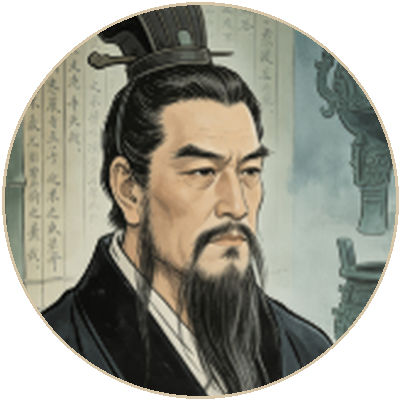
The Commoner Sage
王艮
Wang Gen's life is the remarkable story of an ordinary person who became a great thinker through self-study and practice.
The Qufu Awakening: As a young man, Wang Gen accompanied his father on a trading trip to Shandong. Visiting the Confucian temple in Qufu, he was deeply moved and exclaimed: 'The Master was a human being, and I too am a human being.' From that moment, he resolved to become a sage like Confucius. This experience completely transformed his life, turning him from an ordinary salt merchant's son onto the path of seeking the Way.">The Qufu Awakening: Visiting the Confucian temple as a young trader, he was moved to exclaim: 'The Master was human, and I too am human.' This moment transformed him from salt merchant's son to seeker of the Way.
Becoming Wang Yangming's Disciple: Wang Gen traveled to Jiangxi wearing homemade ancient-style robes and cap to visit Wang Yangming. Wang Yangming was impressed by his unusual appearance and character. Initially not fully convinced of Wang Yangming's teachings, Wang Gen engaged in several rounds of debate before genuinely accepting the philosophy of innate knowing and formally becoming a disciple. This episode reveals Wang Gen's independent spirit.">Wearing homemade ancient robes, he visited Wang Yangming and debated him before accepting his teachings — revealing his fiercely independent spirit.
Founding the Taizhou School: After Wang Yangming's death, Wang Gen returned to Taizhou and began independent teaching. He proposed the distinctive doctrine that 'the Way is in the daily life of common people,' breaking down the elite barriers of Confucianism. His audience was not limited to scholars but included all who wished to learn — farmers, artisans, merchants, and other ordinary people. The Taizhou school thus became the most populist school in Chinese intellectual history.">Founding the Taizhou School: He taught that the Way is in daily life, and his students included farmers, artisans, and merchants — making it the most populist school in Chinese intellectual history.
讲学民间:王艮的讲学方式极为独特。他不拘泥于书院课堂,而是走到田间地头、市井街巷,与普通百姓面对面交流。他用通俗易懂的语言解释深奥的哲学道理,让从未读过书的人也能理解儒家的义理。这种深入民间的讲学方式,使他的思想在社会底层产生了广泛影响。
Teaching Among the People: He taught in fields and marketplaces, not classrooms, using plain language that even illiterate people could understand — giving his thought wide influence among ordinary people.
淮南格物:王艮提出了独特的「淮南格物」说,对朱熹和王阳明的格物理论都进行了修正。他认为「格物」的「格」是「格式」之意,即规范、标准;「格物」就是以自身为标准来衡量天下万物。他强调「身是本,天下国家是末」,主张先正己身,然后才能正人正物。
The Huainan Method: He reinterpreted 'investigating things' as using oneself as the standard to measure all things — 'the self is the root; family, state, and world are the branches.'
百姓日用即道。
"The daily life of common people is the Way itself." — The foundational principle of the Taizhou school, democratizing the concept of the Way.
夫子亦人也,我亦人也。
"The Master was a human being, and I too am a human being." — Wang Gen's declaration at the Confucian temple that launched his quest to become a sage.
身是本,天下国家是末。
"The self is the root; family, state, and world are the branches." — Wang Gen's Huainan method: begin with self-cultivation, then extend outward.
愚夫愚妇与知能行,便是道。
"When the simplest man and woman can understand and practice it — that is the Way." — The Way is not reserved for the learned; it belongs to everyone.
圣人之道,无异于百姓日用。
"The Way of the sage is no different from the daily life of the common people." — The sage's path is not otherworldly; it is found in ordinary life.
「百姓日用即道」是王艮最核心的哲学命题,也是泰州学派的纲领性主张。他认为道不是高高在上的抽象本体,也不是只有读书人才能理解的深奥道理,而是体现在普通百姓的日常生活中——吃饭穿衣、耕田织布、待人接物,无处不是道。这一命题从根本上消解了道的神秘性和精英性,将儒学从象牙塔带入了民间。
The Way is not an elevated abstraction nor a truth only scholars grasp — it is in eating, farming, weaving, dealing with others. This demystified the Way and brought Confucianism to the common people.
王艮对传统的「格物」概念进行了创造性的重新诠释。他认为「格」的本义是「格式」(标准、规范),「格物」就是以自身为标准来衡量天下万物。他强调「身是本,天下国家是末」,修身是一切的根本——只有先端正自己,才能影响他人、治理天下。这种以「身」为中心的格物论,既不同于朱熹的「即物穷理」,也不同于王阳明的「正念头」,而是提供了一条更为切实的修身路径。
He reinterpreted 'investigating things' as using oneself as the standard to measure all things. Self-cultivation is the root — differing from both Zhu Xi and Wang Yangming with a more practical path.
王艮最伟大的实践贡献之一,是将儒学教育从精英阶层推广到了普通百姓之中。他的学生中有大量的农夫、工匠、樵夫、商贩,这些人此前从未有机会接触儒学。王艮用通俗的语言、贴近生活的例子来解释深奥的哲学道理,使儒学成为普通人也能理解和实践的生活智慧。这种平民化的教育实践,在中国教育史上具有开创性的意义。
He brought Confucian education to farmers, artisans, and merchants who had never accessed it before — using plain language and everyday examples to make philosophy practical for ordinary people.
王艮特别强调学习的快乐。他认为真正的学问不应该是痛苦的苦修,而应该是发自内心的喜悦。他提出了「乐学」的理念——学习本身就是快乐的,因为它使人认识自我、理解世界、提升生命。这种将学习与快乐联系在一起的思想,打破了传统儒学中「苦学」的刻板印象,为学习赋予了更加积极和人性化的内涵。
True scholarship should be joyful, not painful. Learning is inherently joyful because it leads to self-understanding and the elevation of life — breaking the stereotype of 'bitter study.'
《王心斋全集》收录了王艮的语录、书信、论说等各类文章,是研究其思想的核心文献。其中的语录部分记录了他与学生的日常对话,语言通俗生动,充满了对普通百姓生活的关注和对深奥哲理的通俗解读。" data-en="The Complete Works of Wang Xinzhai contains Wang Gen's recorded sayings, letters, essays, and other writings — the core texts for studying his thought. The recorded sayings section preserves his daily dialogues with students, written in vivid, accessible language, full of concern for ordinary people's lives and popular interpretations of profound philosophy.">His recorded sayings, letters, and essays. The dialogues with students are written in vivid, accessible language full of concern for ordinary people's lives.
《明哲保身论》是王艮的重要哲学论文,阐述了他关于「保身」的思想。他认为保全自己的身心是一切事业的根本——只有先照顾好自己,才能去帮助他人。这一观点看似简单,实则蕴含着深刻的人生智慧,与现代心理学中关于自我关怀的理论有着有趣的呼应。" data-en="On Preserving the Self Through Wisdom is Wang Gen's important philosophical essay expounding his thought on 'preserving the self.' He argued that caring for one's own body and mind is the foundation of all endeavors — one must first take care of oneself before helping others. This seemingly simple view contains profound life wisdom, offering intriguing parallels with modern psychological theories of self-care.">An essay on 'preserving the self' — caring for one's body and mind is the foundation of all endeavors. This parallels modern psychology's emphasis on self-care.
Wang Gen's thought speaks to modern educational equality, daily life philosophy, and self-care. His practice of teaching common people embodies educational fairness. His 'Way is in daily life' reveals wisdom in ordinary routines. His 'preserving the self' parallels modern self-care psychology. His self-taught journey proves that birth and credentials don't determine achievement — love of knowledge does.