Master Zhu
朱熹
Zhu Xi
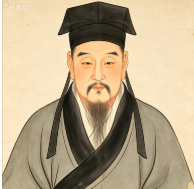
Master Zhu
朱熹
Establishing the Bailudong Academy (创建白鹿洞书院): Zhu Xi rebuilt the White Deer Grotto Academy at the foot of Mount Lu, creating one of China's most important centers of learning. His "Articles of Learning" (白鹿洞书院揭示) became the model for academies across East Asia.
Systematizing the Four Books (集注四书): Zhu Xi selected the Great Learning (大学), Doctrine of the Mean (中庸), Analects (论语), and Mencius (孟子) as the core curriculum, writing extensive commentaries (四书章句集注). These became the standard textbooks for the civil service examinations for seven hundred years.
The Debate with Lu Jiuyuan (鹅湖之会): In 1175, Zhu Xi debated with Lu Jiuyuan at Goose Lake Temple (鹅湖寺). Their disagreement — Zhu Xi emphasizing the investigation of things (格物致知), Lu Jiuyuan emphasizing the mind (心即理) — became the defining tension in Neo-Confucian philosophy.
The Controversy of False Learning (庆元党禁): In his later years, Zhu Xi's teachings were denounced as "false learning" (伪学) by political opponents. He was stripped of his titles and his students were persecuted. He continued teaching quietly until his death.
格物致知。
"Investigate things to extend knowledge." — The method of understanding principle through careful study of the world.
问渠那得清如许?为有源头活水来。
"Ask the canal: how can it be so clear? Because living water flows from the source." — Continuous learning keeps the mind fresh.
半亩方塘一鉴开,天光云影共徘徊。
"A half-acre square pond opens like a mirror; sky light and cloud shadows linger together." — The mind reflects the cosmos when clear.
读书之法,在循序而渐进,熟读而精思。
"The method of reading is to proceed step by step, read thoroughly and think deeply." — Scholarship requires patience and depth.
存天理,灭人欲。
"Preserve heavenly principle; eliminate human desire." — The moral imperative of Neo-Confucian cultivation.
The underlying pattern or law of all things. Every phenomenon has its li, and the ultimate li (太极) unifies them all. Zhu Xi held that li exists prior to and independent of material form.
The physical substance of the universe. Li and qi are inseparable — li provides the pattern, qi provides the stuff. All diversity arises from different combinations of li and qi.
The method of moral and intellectual cultivation. By carefully studying things, one gradually comprehends the principle within them, ultimately reaching the supreme principle.
The supreme principle is one, but it manifests differently in every thing and situation. This resolves the tension between unity and diversity.
"Commentaries on the Four Books" — The definitive edition that became the basis of Chinese education and civil service examinations for seven centuries.
"Classified Conversations of Master Zhu" — A compilation of his lectures and discussions, recorded by students.
"Family Rituals" — A manual of rites and ceremonies that shaped Chinese social practice.
Zhu Xi's emphasis on systematic study, critical thinking, and the unity of knowledge and virtue remains relevant. His metaphor of "living water from the source" speaks to the need for lifelong learning. His method of investigating things to understand principle resonates with the scientific spirit. The tension between his approach and Lu Jiuyuan's — between studying external things and looking within — mirrors modern debates about education, empiricism, and introspection.