The Benevolent Philosopher
程颢
Cheng Hao
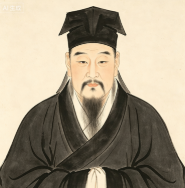
The Benevolent Philosopher
程颢
The events of Cheng Hao's life are recorded in the History of Song and the Collected Works of the Two Chengs.
Studying Under Zhou Dunyi: As a youth, Cheng Hao studied under Zhou Dunyi, who guided him to appreciate the vitality of all things. Cheng Hao later recalled gaining a carefree spirit of 'whistling at the wind and playing with the moon' — setting the direction of his ren-centered philosophy.
Governing Jincheng: As magistrate, he established community compacts, founded schools, and favored mediation over judgment. After three years, Jincheng was so peaceful that 'doors were left unlocked at night.'
Opposing the New Policies: Cheng Hao criticized Wang Anshi's reforms for focusing on profit over moral education. He debated Wang Anshi in person — courteous but unwavering — and was eventually dismissed, maintaining that governance must rectify hearts, not accumulate wealth.
如沐春风:程颢的教学风格与弟弟程颐截然不同。程颐严肃刚毅,学生见他时往往正襟危坐;而程颢温润和煦,学生在他身旁感到轻松自在。弟子朱光庭在程颢处听课一个月后,回去对人说:「光庭在春风中坐了一个月。」这个故事后来成为「如沐春风」这一成语的来源之一,形容受到良好的教育和感化。
Bathing in a Spring Breeze: Cheng Hao's teaching style was remarkably different from his brother's. Where Cheng Yi was stern and rigorous, Cheng Hao was warm and gentle. His student Zhu Guangting, after spending a month listening to Cheng Hao's lectures, told others: 'I have been sitting in a spring breeze for a month.' This anecdote became one of the origins of the Chinese idiom '沐浴春风' (like bathing in a spring breeze), describing the experience of receiving wonderful education and moral inspiration.
仁者浑然与物同体。
"The benevolent person is seamlessly one with all things." — Cheng Hao's most famous philosophical statement, expressing the unity of the self and the cosmos through ren.
天理二字,却是自家体贴出来。
"The two characters 'heavenly principle' — I grasped them through my own personal experience." — A statement of philosophical independence, emphasizing that true understanding comes from direct insight, not mere book learning.
学者须先识仁。仁者浑然与物同体,义、礼、知、信皆仁也。
"The student must first know ren. The benevolent person is seamlessly one with all things; righteousness, ritual, wisdom, and trustworthiness are all ren." — From the famous 'Essay on Knowing Ren' (识仁篇).
天地万物之理,无独必有对。
"The principle of all things in heaven and earth — nothing exists in isolation; everything has its counterpart." — Cheng Hao's insight into the complementary structure of reality.
万物静观皆自得,四时佳兴与人同。
"Contemplate all things in stillness and each finds its own place; the delights of the four seasons are shared with all people." — A verse capturing Cheng Hao's vision of harmony between humanity and nature.
Cheng Hao elevated ren from interpersonal morality to the highest cosmological principle. Ren means being 'seamlessly one with all things' — humans and nature form one organic body. To recognize this unity is ren; to forget it is unren.
程颢是最早明确提出「天理」概念的理学家之一。他说「天理二字,却是自家体贴出来」,强调这不是从书本上学来的,而是通过自身的生命体验领悟到的。天理既是宇宙万物运行的根本法则,也是人心本有的道德直觉。它不需要向外求索,只需要去除私欲的遮蔽,天理自然呈现。这一思想为后来朱熹的理学体系奠定了基础。
Cheng Hao was among the first Neo-Confucians to explicitly articulate the concept of tianli (heavenly principle). He declared that he grasped this concept 'through his own personal experience,' not from books. Tianli is both the fundamental law governing the cosmos and the innate moral intuition within the human heart-mind. It requires no external search — one need only remove the obscuration of selfish desire, and heavenly principle naturally manifests. This insight laid the groundwork for Zhu Xi's comprehensive system of Neo-Confucian philosophy.
程颢在《识仁篇》中提出了他独特的修养方法。他认为学者首先要「识仁」——认识到仁的真实存在。这种认识不是概念上的理解,而是生命深处的直觉体验。一旦真正体认到仁,就会发现自己与万物之间的界限消融了,天地之间充满了生意和活力。修养的功夫不在于向外穷索,而在于保持这种觉悟,让它在日常生活中自然流露。
In his 'Essay on Knowing Ren' (识仁篇), Cheng Hao outlined his distinctive approach to self-cultivation. The student must first 'know ren' — recognize the reality of benevolence. This recognition is not conceptual understanding but a deep intuitive experience. Once one truly grasps ren, the boundaries between self and all things dissolve, and one discovers that heaven and earth are filled with creative vitality. The practice of cultivation lies not in external investigation but in maintaining this awakened awareness and allowing it to manifest naturally in daily life.
在《定性书》中,程颢回应了张载关于如何在外界干扰下保持内心平静的问题。程颢认为,圣人的心境并不是与外界隔绝的死寂,而是在顺应万物的同时保持内在的定力。他反对将「动」与「静」对立起来,主张「动亦定,静亦定」——无论面对什么情境,内心都能保持安定和清明。关键在于不以私心私欲来回应外物,而是以天理自然地应对一切。
In his 'Essay on Equilibrium of Nature' (定性书), Cheng Hao responded to Zhang Zai's question about maintaining inner peace amid external disturbances. He argued that the sage's mind is not a dead stillness cut off from the world but an inner equilibrium maintained while responding to all things. He opposed the opposition of 'movement' and 'stillness,' advocating that 'in movement there is equilibrium, and in stillness there is equilibrium.' The key is to respond to all situations through heavenly principle rather than selfish desire.
程颢虽然强调「识仁」的直觉体验,但并不忽视修养的功夫。他主张以「诚」和「敬」作为日常修养的基本态度。诚是真实无妄,敬是心存敬畏。他认为诚敬不是外在的约束,而是内心天理自然流露的状态。通过不断的诚敬功夫,人可以逐渐去除私欲的遮蔽,恢复天理的本来面目,最终达到「浑然与物同体」的仁者境界。
Although Cheng Hao emphasized the intuitive experience of 'knowing ren,' he did not neglect the discipline of self-cultivation. He advocated sincerity (诚) and reverence (敬) as the fundamental attitudes of daily practice. Sincerity means being genuine and free from falsehood; reverence means maintaining an attitude of awe. These are not external constraints but natural expressions of heavenly principle within the heart-mind. Through continuous practice of sincerity and reverence, one gradually removes the obscuration of selfish desire and restores the original face of heavenly principle, ultimately achieving the sage's state of being 'seamlessly one with all things.'
A letter responding to Zhang Zai on maintaining inner peace. Cheng Hao argued 'in movement there is equilibrium, in stillness there is equilibrium' — a foundational text of Neo-Confucian self-cultivation theory.
Cheng Hao's most important philosophical work. It declares 'the student must first know ren,' presenting benevolence as a lived experience of cosmic unity. Brief but profound, it encapsulates his entire philosophy.
程颢的著作大多散佚,现存的文字主要收录在《二程集》中,包括《河南程氏遗书》《河南程氏外书》《明道文集》等。这些文献记录了程颢的语录、书信和短文,是研究他思想的第一手资料。由于程颢生前不喜著述,他的许多思想是通过弟子们的记录才得以保存下来。" data-en="Most of Cheng Hao's writings have been lost; the surviving texts are mainly preserved in the Collected Works of the Two Chengs, including the Surviving Books of the Chengs of Henan, the Outer Books, and the Collected Writings of Master Mingdao. These records of his sayings, letters, and essays are the primary sources for studying his thought. As Cheng Hao disliked writing, many of his ideas survived only through his disciples' records.">Cheng Hao's surviving writings are preserved in the Collected Works of the Two Chengs. As he disliked writing, many of his ideas survived only through his disciples' records — making these texts invaluable primary sources.
《二程粹言》是后人编纂的程颢、程颐兄弟语录选集,按主题分类整理,涵盖了天理、性情、修养、教育、政治等方面的言论。虽然经过后人编辑加工,但仍然保留了程颢思想的核心要义。通过这部著作,读者可以系统地了解二程的哲学体系,特别是程颢以仁为中心的思想特色。" data-en="The 'Classified Conversations of the Two Chengs' is a later compilation of selected sayings of the Cheng brothers, organized by topic and covering heavenly principle, human nature and emotions, self-cultivation, education, and governance. Though edited by later hands, it preserves the core of Cheng Hao's thought. Through this work, readers can systematically understand the philosophical system of the Two Chengs, especially Cheng Hao's ren-centered approach.">A later compilation of the Cheng brothers' sayings organized by topic. It systematically covers heavenly principle, self-cultivation, education, and governance — preserving Cheng Hao's ren-centered philosophy.
Cheng Hao's thought offers profound insights for today: his cosmic ren (unity with all things) provides a philosophical foundation for environmental ethics; his 'equilibrium of nature' guides us through modern anxiety and information overload; his emphasis on experiential knowing resonates with embodied cognition research; and his gradual reform approach offers lessons for sustainable governance.