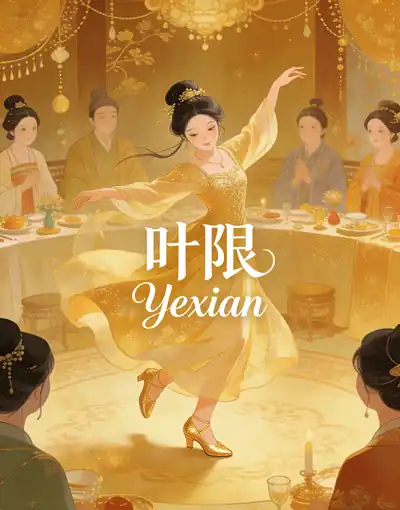
南人相传,秦汉前有洞主洞主南方少数民族地区的部落首领。"洞"指山间盆地或溪谷,是南方百越族群的基本聚落单位。唐代岭南、黔中等地仍有此称。吴氏,土人呼为吴洞。娶两妻,一妻卒。有女叶限,善淘金,父爱之。
父卒,为后母所苦,常令樵险汲深。尝得一赪鳞赪鳞红色鳞片的鱼。"赪"为赤红色,古代常用于形容晚霞、花朵或珍贵动物的色泽。此处暗示此鱼非凡物。,长二寸许,养于盆水。日日渐长,后易数盆,大不能受。
女投食即来,食已而去。惟女至则出,他人至则隐。母知之,伺女出,衣弊衣,携利刃,刺鱼杀之。
Among the southern peoples it is told that before the Qin and Han dynasties, there was a cave chieftain洞主 dòng zhǔA tribal chief among the southern minority peoples. "Cave" (洞) referred to mountain basins or valleys — the basic settlement unit of the Baiyue peoples of the south. The term persisted into the Tang dynasty in Lingnan and Qianzhong regions. surnamed Wu, whom the locals called "Cave Wu." He took two wives; one died. He had a daughter named Yexian, who was skilled at panning for gold, and the father loved her.
After the father's death, she was tormented by her stepmother, who often sent her to gather firewood on treacherous slopes and draw water from deep wells. Once she caught a red-scaled fish赪鳞 chēng línA fish with crimson scales. "赪" denotes a deep red color, often used in classical texts to describe sunset clouds, blossoms, or precious creatures. Here it hints that this fish is no ordinary creature., about two inches long, and raised it in a basin of water. It grew larger each day; she transferred it to several basins, until it grew too large for any of them.
When Yexian threw in food, the fish would come; when it had eaten, it would go away. Only when Yexian appeared would it surface; for anyone else it would hide. The stepmother learned of this. She waited until Yexian went out, then donned ragged clothes, took a sharp blade, and stabbed the fish to death.
Cave Chieftain — A Tang-dynasty term for tribal leaders of southern minorities. "Cave" refers not to caverns but to mountain basins, the basic settlement units of the Baiyue peoples. Duan Chengshi opens with this to place the story in a mysterious southern world distinct from the Central Plains.
女遂弃鱼骨于粪中。一日,洞节洞节南方少数民族的部落节庆。类似于赶集、歌圩,是社交、贸易与择偶的重要场合。后母与亲生女儿赴节庆,却将叶限留在家中。至,母往令守巢。女泣,忽鱼骨谓之曰:「可著旧衣,灶下有金履一双。」
女即著之往节。后母所生女识之,曰:「此似姊也。」母亦疑之。女觉,忽去。遽归,遂遗一金履金履金制的鞋子。"履"为古汉语中鞋的正式称谓。金鞋与灰姑娘的水晶鞋功能相同——都是通过遗落物实现身份识别的关键道具。于道。
陀汗国人得之。其王购之,国人不能识。王令其左右试之,足皆不盈。乃令国中妇人皆试之,无一人称者。其轻如毛,履石无声。
王遂疑为妖,囚女于狱。女忽见鱼骨在焉。王遂大悦,以金履验之,果如一。王以为上妇上妇正妻、元配。"上"有尊贵、首要之意。叶限从受虐孤女到国王正妻,完成了从最低到最高的身份跃升。,携鱼骨与金宝还国。
The girl then cast the fishbone into a dung heap. One day, when the tribal festival洞节 dòng jiéA festival of the southern minority tribes. Similar to market fairs and song gatherings, these were crucial occasions for socializing, trade, and finding a spouse. The stepmother took her own daughter to the festival but left Yexian behind. arrived, her stepmother ordered her to stay and watch the house. The girl wept, and suddenly the fishbone spoke to her: "Put on your old clothes — beneath the stove is a pair of golden shoes."
The girl put them on and went to the festival. Her stepsister recognized her and said: "That looks like my sister." The stepmother also suspected. The girl sensed this and suddenly departed. Hurrying home, she dropped one golden shoe金履 jīn lǚA golden shoe. "履" is the formal classical term for footwear. The golden shoe serves the same function as Cinderella's glass slipper — a lost object that enables identification of the true owner. on the road.
A man from the Kingdom of Tuohan found it. The king offered a reward, but no one in the country recognized it. He had his attendants try it on — none could fill it. Then he ordered every woman in the kingdom to try it, yet not one fit. It was light as a feather and made no sound when stepping on stone.
The king suspected sorcery and imprisoned the girl. Suddenly she saw the fishbone there. The king was overjoyed and tested the golden shoe — it matched perfectly. He took her as his principal wife上妇 shàng fùThe principal wife, the first consort. "上" connotes supreme and primary status. Yexian's leap from an abused orphan to a king's principal wife completes a transformation from lowest to highest station. and returned to his kingdom with the fishbone and treasures of gold.
Golden Shoe — The golden shoe functions identically to Cinderella's glass slipper: a lost object → fitting test → identity confirmation. But Yexian's tale predates the Grimm version (1812) by roughly 800 years and the Perrault version (1697) by 700 years. It is among the earliest written records of the worldwide "Cinderella" motif.
王遂载鱼骨还。至国,居第一等。每求辄应。后值海中风浪大作,舟尽覆。王沉鱼骨鱼骨故事中的魔法物件——红色鱼的遗骨,具有满足愿望的神力。与南瓜马车、仙女教母功能类似,但更冷酷:当被过度索取后,鱼骨"离弃"了叶限。这暗示神力有限、贪欲有报的东方伦理。于海。自后不复应求。
The king then carried the fishbone home. In his kingdom, he was placed in the highest rank. Every wish was fulfilled. Later, when a great storm arose at sea and all ships were wrecked, the king sank the fishbone鱼骨 yú gǔThe magical object in the story — the remains of the red fish, possessing the power to grant wishes. Similar in function to the pumpkin carriage or fairy godmother, but more severe: when excessively demanded of, the fishbone "abandoned" Yexian. This hints at the Eastern ethic that divine power has limits and greed invites retribution. into the sea. From then on, it no longer answered any pleas.
文学价值
《叶限》是《酉阳杂俎》中最具世界影响力的篇章。段成式以极简的笔法,在短短数百字中完成了灰姑娘故事的所有核心要素:受虐孤女、神奇助力者(鱼骨代替仙女教母)、盛大舞会(洞节)、遗落信物(金鞋)、身份验证(试穿)。比格林兄弟版本早了约八百年,比佩罗版本早了七百年。
值得注意的是结尾:鱼骨沉海,魔法终结。这与西方灰姑娘"从此幸福地生活"的结局截然不同,暗含东方"神力有限、贪欲有报"的伦理观。鱼骨的离去,是对人类贪得无厌的惩罚。
比较文学视角
叶限故事中的核心母题——受虐少女、神奇帮助者、遗落物试穿——在全球至少有500多个变体。段成式版本的独特之处在于:帮助者不是仙女或精灵,而是一条被杀死后遗留的鱼骨。这种"死物通灵"的观念,与南方少数民族万物有灵的信仰密切相关。
Literary Merit
"Yexian" is the most globally influential tale in Youyang Zazu. With remarkable economy, Duan Chengshi completes all core elements of the Cinderella story in barely a few hundred characters: an abused orphan, a magical helper (fishbone replacing the fairy godmother), a grand ball (tribal festival), a lost token (golden shoe), and identity verification (the fitting test). This predates the Grimm version by roughly 800 years.
Note the ending: the fishbone sinks into the sea and the magic ends. This differs sharply from Western Cinderella's "happily ever after," encoding an Eastern ethic that divine power has limits and greed invites retribution. The fishbone's departure is a punishment for human avarice.
Comparative Literature
The core motifs of Yexian — abused maiden, magical helper, lost-token fitting — appear in at least 500 variants worldwide. Duan Chengshi's version is distinctive: the helper is not a fairy or spirit, but the bone of a killed fish. This concept of "inanimate objects possessing spiritual power" is closely tied to the animistic beliefs of southern minority peoples.
唐代南方少数民族的部落节庆活动。类似中原的庙会、赶集,但更强调社交、择偶功能。节庆期间,男女盛装出行,通过对歌、舞蹈等方式相识相恋。后母携亲生女儿赴节庆、独留叶限守家的行为,既是虐待,也是剥夺社交权利——这与灰姑娘被留在家中打扫的桥段完全对应。
Tribal festivals of the southern minorities during the Tang dynasty. Similar to Central Plains temple fairs, but with greater emphasis on socializing and finding a spouse. During festivals, men and women dressed in their finest, meeting through song and dance. The stepmother taking her own daughter while leaving Yexian behind was both abuse and social deprivation — directly paralleling Cinderella being left behind to clean.
叶限最终嫁入的国度。学界对其地理位置有多种推测:有人认为在今越南或柬埔寨一带,有人认为是虚构的南方乐土。段成式将叶限的命运归于一个"异域王国",既增加了故事的奇幻色彩,也反映了唐人对南方"化外之地"的想象。
The kingdom into which Yexian ultimately marries. Scholars debate its location: some place it in modern Vietnam or Cambodia, others see it as a fictional southern paradise. By sending Yexian's fate to a "foreign kingdom," Duan Chengshi adds fantastical color and reflects Tang-dynasty imagination of southern "barbarian lands."
故事中的核心魔法物件。鱼骨的功能类似西方的仙女教母——满足愿望、提供帮助。但与仙女不同,鱼骨源于死亡(叶限的鱼被继母杀死),是一个"死物通灵"的东方概念。鱼被杀死后的遗骨仍能施法,暗含万物有灵的南方少数民族信仰。结尾鱼骨沉海、神力消散,也暗示了"物极必反"的道家思想。
The central magical object. The fishbone functions like a Western fairy godmother — granting wishes and providing aid. But unlike a fairy, the fishbone originates from death (the stepmother kills the fish), embodying the Eastern concept of "inanimate objects possessing spirit." That the bone of a killed fish can still cast spells reflects the animistic beliefs of southern minorities. The fishbone's eventual sinking into the sea encodes the Daoist principle that extremes reverse themselves.