道教谓酆都酆都道教所称的地府所在地,位于今重庆市丰都县。酆都是道教冥界信仰的核心地名,相当于佛教的"阎罗殿"。段成式将其与地府官僚体系并列,展示了唐人对死后世界的系统想象。在北方癸地,有六天宫。一曰纣绝阴天宫,二曰泰杀谅事宗天宫,三曰明晨耐犯武城天宫,四曰恬照罪气天宫,五曰宗灵七非天宫,六曰敢司连宛屡天宫。
人死皆先至纣绝阴天宫纣绝阴天宫道教地府六天宫之首,亡魂首先到达之处。"纣绝"意为穷尽、终止;"阴"指阴间。此处相当于佛教的"第一殿",是灵魂进入冥界的第一站。,受事查核。罪轻者出,罪重者入第二宫。如此依次转递,至第六宫决断。
According to Daoist doctrine, Fengdu酆都 Fēng dūThe Daoist location of the underworld, in modern Fengdu County, Chongqing. Fengdu is the core toponym of Daoist underworld belief, equivalent to the Buddhist "Hall of Yama." Duan Chengshi pairs it with the underworld bureaucratic system, showcasing Tang-dynasty systematic imagination of the afterlife. lies in the northern quarter of Gui, where stand six celestial palaces. The first is called the Palace of Yin-Absolute; the second, the Palace of Supreme Judgment; the third, the Palace of Morning Patience; the fourth, the Palace of Serene Illumination; the fifth, the Palace of Seven Aberrations; the sixth, the Palace of Reckoning.
When people die, they first arrive at the Palace of Yin-Absolute纣绝阴天宫 Zhòu jué yīn tiān gōngThe first of the Daoist underworld's six palaces, where souls arrive upon death. "纣绝" means to exhaust or terminate; "阴" refers to the underworld. This is equivalent to the Buddhist "First Hall," the soul's first station in the nether realm. for examination. Those with minor offenses are released; those with grave sins proceed to the second palace. Thus they pass through each hall in turn, with final judgment rendered at the sixth.
泰山府君泰山府君泰山府君是中国本土的地府之主,早于佛教传入后的阎罗王。泰山自古被视为灵魂归处,"泰山府君"即主管亡魂的神灵。段成式将道教酆都系统与泰山信仰并列,反映了唐代冥界信仰的多元融合。主生死,判官掌善恶之籍。勾魂使者持铁索而行,循名录索。
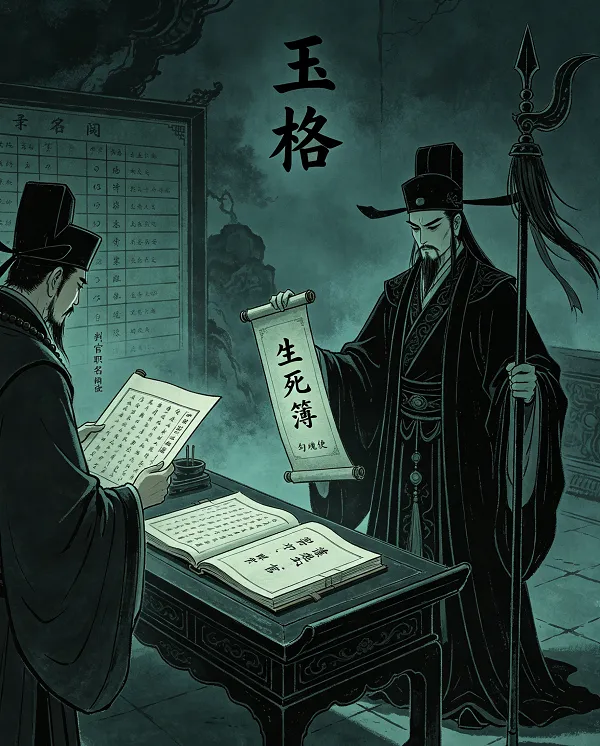
凡人命中皆有定数,书于生死簿生死簿记录每个人寿命与命运的冥界文书。"生死簿"是道教与民间信仰中最具影响力的想象之一——它将抽象的"命运"具象化为可查阅、可修改的文本。这种"命运文本化"的想象,深刻影响了后世的文学创作。中。一字不可增,一字不可减。然有大善大恶者,可以改易。
地府官吏皆以阴德阴德暗中积累的善行功德。与"阳善"(公开的善行)相对。道教认为阴德的功德远大于阳善,因为不求回报、不为人知的善行最能感动天地。生死簿上可以因阴德而改写命运。为标准,考校生人功过。其法甚严,毫厘不爽。
The Lord of Mount Tai泰山府君 Tài shān fǔ jūnThe indigenous Chinese lord of the underworld, predating the Buddhist Yama. Mount Tai has been regarded since antiquity as the destination of souls; the "Lord of Mount Tai" is the deity governing the dead. Duan Chengshi's pairing of the Fengdu system with Mount Tai belief reflects the pluralistic fusion of Tang-dynasty afterlife faith. governs life and death; judges keep ledgers of virtue and vice. Soul-reapers walk with iron chains, collecting the named in accordance with their registers.
Every person's fate has a predetermined allotment, recorded in the Ledger of Life and Death生死簿 shēng sǐ bùThe underworld document recording each person's lifespan and fate. The "Ledger of Life and Death" is one of the most influential imaginations in Daoist and folk belief — it materializes the abstract concept of "fate" into a consultable, modifiable text. This "textualization of destiny" profoundly influenced later literary creation.. Not a single character may be added or removed. However, for those of great virtue or great wickedness, alterations may be made.
Underworld officials use hidden virtue阴德 yīn déMeritorious deeds accumulated in secret. Contrasted with "public virtue" (阳善). Daoism holds that hidden virtue accrues far greater merit than public virtue, for selfless and unseen good deeds most move Heaven and Earth. The Ledger of Life and Death can be rewritten on account of hidden virtue. as the standard, weighing the merits and faults of the living. Their methods are strict, accurate to the smallest measure.
冥界官僚体系的文化意义
《玉格》构建了一个完整的"阴间政府"——六天宫殿级审查、生死簿文书制度、勾魂使者执行机制、阴德考核标准。这不是随意的想象,而是对唐代现实官僚体系的精确镜像。唐人将人间的科举考试、官员考核、文书行政全部"投射"到了地府,创造出一个秩序井然的死後世界。
这种"官僚化冥界"的想象,与但丁《神曲》中的九层地狱异曲同工。但中国版的特点是:地府不是惩罚性的地狱,而是一个"行政审查系统"——亡魂要经过六道审查,根据功过轻重决定去向,与现代社会的司法程序惊人相似。
对后世文学的影响
《玉格》中的地府官僚体系直接影响了后世的志怪文学。《西游记》中孙悟空大闹地府、涂改生死簿的情节,《聊斋志异》中大量阴间审案的故事,其源头均可追溯至《酉阳杂俎》。段成式是将"冥界官僚化"推向成熟的奠基者。
Cultural Significance of Underworld Bureaucracy
"Yuge" constructs a complete "underworld government" — six palace-level examinations, a documentary system of life-death ledgers, an enforcement mechanism of soul-reapers, and standards for evaluating hidden virtue. This is not random imagination but an accurate mirror of the Tang dynasty's real bureaucracy. Tang people projected human-world examinations, official evaluations, and documentary administration onto the afterlife, creating an orderly posthumous world.
This "bureaucratized underworld" parallels Dante's nine circles of Hell. But the Chinese version differs: the underworld is not punitive hell but an "administrative review system" — souls pass through six reviews, with destinations determined by the balance of merits and faults, strikingly similar to modern judicial procedures.
Influence on Later Literature
The underworld bureaucracy system in "Yuge" directly influenced later supernatural literature. Sun Wukong's raid on the underworld and alteration of the Ledger in Journey to the West, and the many afterlife courtroom tales in Strange Tales from a Chinese Studio, all trace their origins to Youyang Zazu. Duan Chengshi was the foundational figure who matured the vision of "bureaucratized underworld."
道教地府的核心建筑。亡魂死后依次经过六座宫殿接受审查,每殿审查一个方面。六殿制与佛教的十殿阎罗有所不同,更强调官僚化的审查流程。六殿分别是:纣绝阴(审查)、泰杀谅事宗(审判)、明晨耐犯武城(对质)、恬照罪气(量刑)、宗灵七非(复核)、敢司连宛屡(决断)。这套系统与唐代的三省六部制惊人地平行。
The core architecture of the Daoist underworld. Souls pass through six palaces for examination, each reviewing one aspect. The six-palace system differs from Buddhism's ten courts of Yama, emphasizing a more bureaucratic review process. The six palaces parallel the Tang dynasty's own three-department-six-ministry system with astonishing fidelity.
地府中负责勾取亡魂的差役,手持铁索,循名录索人。勾魂使者是中国冥界文学中最具辨识度的形象之一,相当于西方的"死神"(Grim Reaper)。但与死神不同,勾魂使者不是死的执行者,而是"阳间-阴间"的信使和差役——他们更像官员,而非神灵。这种"公务员化的死亡",是中国冥界想象的独特之处。
Underworld functionaries responsible for retrieving souls, armed with iron chains and following their name registers. Soul-reapers are among the most recognizable figures in Chinese afterlife literature — equivalent to the Western Grim Reaper. But unlike Death personified, soul-reapers are not executors of death but couriers and clerks between the worlds of the living and dead. This "bureaucratized death" is unique to Chinese underworld imagination.