The Cosmic Philosopher
张载
Zhang Zai
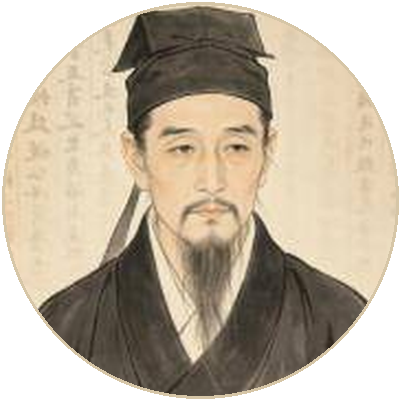
The Cosmic Philosopher
张载
The events of Zhang Zai's life are recorded in the History of Song and the Collected Works of Zhang Zai.
Fan Zhongyan's Guidance: The statesman Fan Zhongyan recognized Zhang Zai's talent but told him: 'Confucian scholars have moral teachings to delight in — why concern yourself with military affairs?' He gave Zhang Zai the Doctrine of the Mean, redirecting his life toward philosophy.
京师论易:张载在京师开封讲学《易经》时,据说在寺中设座,听者常常有数十人之多。他的讲解深入浅出,既保留了对卦象的分析,又融入了自己对天道性命的思考。当时程颢、程颐兄弟也在京师,三人在学术上多有往来。张载是二程的表叔,但年龄相差不大,三人在学术讨论中相互启发,共同推动了北宋理学的繁荣。
Lecturing on the Yi in the Capital: When Zhang Zai lectured on the Book of Changes in the capital Kaifeng, he reportedly set up his seat in a temple, often drawing audiences of several dozen. His explanations were accessible yet profound, combining hexagram analysis with reflections on the way of heaven and human destiny. The Cheng brothers were also in the capital at the time, and the three engaged in frequent intellectual exchange. Zhang Zai was the Chengs' grand-uncle by marriage, but close in age, and their discussions mutually enriched one another.
与王安石的分歧:王安石推行变法时,希望得到张载的支持。据记载,王安石曾对张载说:「朝廷将大有为,愿与君共之。」但张载委婉地回答:「公与人为善,则人以善归公。如教玉人琢玉,则人不受命矣。」暗示变法操之过急,应当尊重人们的接受能力。王安石不悦,张载随后被外派,实际上离开了权力中心。
Disagreement with Wang Anshi: When Wang Anshi launched his reforms, he sought Zhang Zai's support, reportedly saying: 'The court is about to accomplish great things — I wish to share this with you.' Zhang Zai tactfully replied: 'If you deal kindly with people, people will respond with kindness. But if you try to teach a jade carver how to carve jade, people will not accept your commands.' Wang Anshi was displeased, and Zhang Zai was soon dispatched away from the capital.
撰写《西铭》:张载在横渠讲学期间,写下了著名的《西铭》(原名《订顽》)。这篇文章以宏大的宇宙视野,提出了「民胞物与」的思想——天下之人都是我的同胞,天下之物都是我的伙伴。程颢读后赞叹说:「《西铭》扩前圣所未发,与孟子性善养气之论同功。」这篇文章成为宋明理学中最具感召力的文献之一。
Writing the Western Inscription: During his teaching years at Hengqu, Zhang Zai composed the famous 'Western Inscription' (西铭). This essay, with its grand cosmic vision, proposed that 'all people are my siblings and all things are my companions' (民胞物与). Cheng Hao, upon reading it, praised it as 'expanding what former sages had not yet articulated, equal in achievement to Mencius's theories of the goodness of human nature and the cultivation of vital force.' This became one of the most inspiring texts in Neo-Confucian literature.
为天地立心,为生民立命,为往圣继绝学,为万世开太平。
"Establish the heart-mind for heaven and earth; establish the destiny for the people; continue the lost teachings of past sages; open eternal peace for all future generations." — The Four Sentences that became the spiritual mission statement of Chinese intellectuals for a thousand years.
太虚即气。
"The Great Void is qi." — Zhang Zai's foundational cosmological statement: what appears as empty space is actually qi in its most subtle and dispersed state.
民吾同胞,物吾与也。
"The people are my siblings; all things are my companions." — From the Western Inscription, expressing the Confucian ideal of universal love rooted in cosmic kinship.
天地之塞,吾其体;天地之帅,吾其性。
"What fills heaven and earth constitutes my body; what commands heaven and earth constitutes my nature." — From the Western Inscription, expressing the unity of the self with the cosmos.
学贵心悟,守旧无功。
"Learning values mental insight; clinging to the old yields no results." — Zhang Zai on the importance of original thinking and personal understanding in scholarship.
张载哲学的核心是他的气本论——以气为宇宙万物的根本。他认为,所谓「太虚」(太空虚空)并不是真正的空无,而是气的本然状态。气有聚有散:聚则成形,成为可见的万物;散则归于太虚,恢复无形的状态。因此,宇宙间没有绝对的生灭——万物的生成只是气的凝聚,万物的消亡只是气的消散。这一思想既回应了佛教「万法皆空」的挑战,又为儒家的宇宙论提供了坚实的哲学基础。
The core of Zhang Zai's philosophy is his qi-based cosmology — taking qi (vital force) as the foundation of all things. He argued that the Great Void (太虚, the vast emptiness of space) is not truly empty but is qi in its primordial state. Qi condenses and disperses: when it condenses, it takes visible form as the myriad things; when it disperses, it returns to the Great Void, resuming its formless state. Thus there is no absolute creation or destruction in the cosmos — the formation of things is merely the condensation of qi, and their dissolution is merely its dispersal. This thought responded to the Buddhist challenge of 'all dharmas are empty' while providing a solid philosophical foundation for Confucian cosmology.
在《西铭》中,张载提出了「民胞物与」的伟大思想——天下所有人都是我的同胞兄弟姐妹,天下所有事物都是我的同伴和朋友。这一思想建立在他的宇宙论基础之上:既然天地万物都由气构成,那么人与人之间、人与物之间就存在着根本的统一性。这种统一不是抽象的哲学概念,而是体现在具体的人伦关系中——对长辈的孝顺、对弱者的关怀、对万物的爱惜,都是这种宇宙一体性的自然流露。
In the Western Inscription, Zhang Zai articulated the magnificent idea of 'universal kinship' (民胞物与) — all people under heaven are my siblings, and all things are my companions. This vision rested on his cosmological foundation: since all things in heaven and earth are constituted by qi, there exists a fundamental unity between all humans and between humans and all things. This unity is not an abstract philosophical concept but manifests in concrete human relationships — filial devotion to elders, care for the weak, and reverence for all things are natural expressions of this cosmic kinship.
张载最广为人知的贡献是他提出的「四为」——「为天地立心,为生民立命,为往圣继绝学,为万世开太平。」这四句话概括了儒者的四重使命:为天地立心,就是通过人的道德自觉来彰显天地的生生之德;为生民立命,就是为人民确立安身立命的精神家园;为往圣继绝学,就是继承和发扬先圣的学术传统;为万世开太平,就是开创持久和平的太平盛世。这四句话成为后世中国知识分子最崇高的精神追求。
Zhang Zai's most widely known contribution is the 'Four Sentences' (四句教): 'Establish the heart-mind for heaven and earth; establish the destiny for the people; continue the lost teachings of past sages; open eternal peace for all future generations.' These four sentences articulate the fourfold mission of the Confucian scholar: to manifest heaven and earth's creative virtue through human moral consciousness; to provide people with a spiritual home for their lives; to inherit and carry forward the scholarly tradition of the ancient sages; and to inaugurate lasting peace for all generations to come. These became the loftiest spiritual aspiration of Chinese intellectuals.
张载认为,宇宙万物的变化本质上是气的聚散变化。他提出了「一物两体」的辩证思想——每一个事物都包含阴阳两个对立面,正是这种对立和统一推动了事物的运动和变化。他将这种变化称为「气化」,认为气化是宇宙的根本法则。这一思想包含了深刻的辩证法因素,比黑格尔的辩证法早了近八百年,是中国哲学中最具原创性的宇宙论贡献之一。
Zhang Zai held that all cosmic change is essentially the condensation and dispersal of qi. He proposed the dialectical idea of 'one thing, two bodies' (一物两体) — every entity contains two opposing aspects (yin and yang), and it is this opposition and unity that drives movement and change. He called this process 'transformation of qi' (气化) and regarded it as the fundamental law of the cosmos. This thought contains profound dialectical elements — anticipating Hegel's dialectic by nearly eight centuries — and represents one of the most original cosmological contributions in Chinese philosophy.
张载区分了两种人性:「天地之性」和「气质之性」。天地之性是人天生具有的纯善本性,来源于气的本然状态(太虚);气质之性则是人在具体形体中所表现出的性情,受到气的清浊、厚薄等因素的影响,因此有善有恶。修养的目标就是「变化气质」——通过学习和实践,克服气质之性中的偏颇,回归天地之性的纯善。这一理论对后来程颐和朱熹的人性论产生了直接影响。
Zhang Zai distinguished two types of human nature: the 'nature of heaven and earth' (天地之性) and the 'nature of material endowment' (气质之性). The nature of heaven and earth is the purely good nature inherent in all people, originating from qi's primordial state (the Great Void). The nature of material endowment is the temperament manifested in each person's physical constitution, influenced by the clarity or turbidity of their qi, and therefore potentially good or bad. The goal of cultivation is to 'transform one's material endowment' — through learning and practice, overcome the biases in one's temperament and return to the pure goodness of the nature of heaven and earth. This theory directly influenced Cheng Yi and Zhu Xi's theories of human nature.
《正蒙》是张载最重要的哲学著作,也是宋明理学中最具原创性的作品之一。全书分为十七篇,系统阐述了张载以气为本的宇宙论、人性论和修养论。书名取自《易经》「蒙以养正」之意,即从蒙昧中纠正偏差,回归正道。书中包含了「太虚即气」「一物两体」「变化气质」等核心思想,是理解张载哲学体系的关键文本。" data-en="Correcting Youthful Ignorance is Zhang Zai's most important philosophical work and one of the most original texts in Song-Ming Neo-Confucianism. Divided into seventeen chapters, it systematically expounds his qi-based cosmology, theory of human nature, and approach to self-cultivation. The title alludes to the Book of Changes' phrase 'nurture correctness through youth,' meaning to correct deviations from ignorance and return to the right path. It contains his core ideas of the Great Void as qi, one thing with two bodies, and transforming one's material endowment.">Zhang Zai's masterwork in seventeen chapters, systematically expounding his qi-based cosmology and theory of human nature. Contains his most original philosophical contributions.
《西铭》原名《订顽》,是张载写在学堂西墙上的铭文,全文仅253字,却包含了宏大的宇宙视野和深厚的人文关怀。文章以「乾称父,坤称母」开篇,将天地比作父母,将万物比作同伴,提出了「民胞物与」的著名思想。程颢称赞这篇文章「扩前圣所未发」,是宋明理学中最具感召力的短文之一。" data-en="The Western Inscription, originally titled 'Correcting Obstinacy,' was inscribed on the western wall of Zhang Zai's school. At only 253 characters, it encompasses a grand cosmic vision and profound humanistic care. Opening with 'Heaven is called father, Earth is called mother,' it compares heaven and earth to parents and all things to companions, articulating the famous idea of universal kinship. Cheng Hao praised it as 'expanding what former sages had not yet articulated.'">A mere 253 characters inscribed on a school wall, yet encompassing a grand cosmic vision. Opening with 'Heaven is called father, Earth is called mother,' it articulates universal kinship between all people and all things.
《易说》是张载对《易经》的注释和阐发,体现了他以气解《易》的独特方法。与程颐以义理解《易》不同,张载更注重从宇宙论的角度来理解卦象和爻辞,将《易经》中的变化思想与他的气化理论相结合。这部著作虽然不如《正蒙》系统,但包含了张载许多重要的哲学洞见,是理解他思想体系的重要补充。" data-en="The Commentary on the Book of Changes is Zhang Zai's interpretation of the Yi, reflecting his distinctive method of reading the Yi through the lens of qi cosmology. Unlike Cheng Yi's principle-based approach, Zhang Zai emphasized understanding hexagrams from a cosmological perspective, combining the Yi's ideas of change with his theory of qi transformation. Though less systematic than Correcting Youthful Ignorance, it contains many important philosophical insights.">Zhang Zai's interpretation of the Yi through qi cosmology. Less systematic than his masterwork but containing many important philosophical insights about change and transformation.
Zhang Zai's thought speaks powerfully to our time: his 'universal kinship' provides philosophical grounding for environmental ethics; his Four Sentences inspire social responsibility; his qi cosmology resonates with modern physics' conservation laws; and his dialectical 'one thing, two bodies' offers wisdom for transcending opposition in a divided world.