The Empirical Philosopher
戴震
Dai Zhen
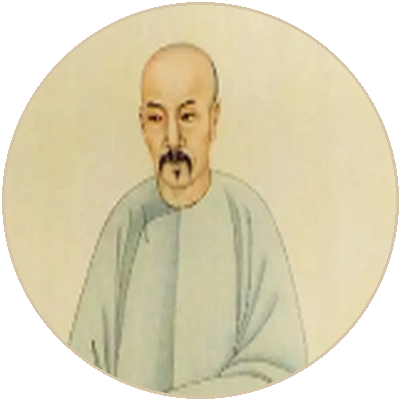
The Empirical Philosopher
戴震
Dai Zhen's life tells the story of a prodigious scholar who rose from obscurity to reshape Chinese intellectual history.
Childhood Challenge to Authority (c. 1734): At ten, Dai asked his teacher: 'How could Zhu Xi know what Confucius meant two thousand years ago?' The teacher had no answer. This story reveals his lifelong spirit of independent inquiry.
Rising to Fame in Beijing (1754): Penniless and fleeing a vendetta, Dai brought his phonological works to the great scholar Qian Daxin, who called him 'a genius without equal' and introduced him to Beijing's leading scholars.
Joining the Imperial Library (1773): Dai was appointed editor for the Complete Library of the Four Treasuries, collating ancient texts. The grueling workload, however, severely damaged his health.
Philosophical Critique: In his masterwork, Dai argued Neo-Confucians who suppressed human desires were 'killing with principle' — using abstract morality to cause endless human tragedy. An epoch-making critique.
理存乎欲。
"Principle resides in desires." — Dai's most radical proposition: moral principle is not opposed to human desires but is found within properly ordered desires.
以情絜情。
"Empathize with others through your own emotions." — Dai's ethical method: understanding others' feelings through the natural capacity for emotional resonance, rather than through abstract moral rules.
酷吏以法杀人,后儒以理杀人。
"Cruel officials kill with the law; later Confucians kill with principle." — Dai's devastating critique of how abstract moral principles can become instruments of oppression.
人死于法,犹有怜之者;死于理,其谁怜之?
"When people die by the law, there are still those who pity them; when they die by principle, who will pity them?" — A powerful indictment of moral absolutism that silences its victims.
天下必无舍生养之道而得存者。凡事为皆有于欲,无欲则无为矣。
"The world cannot survive without the way of sustaining life. All action arises from desire; without desire, there is no action." — A defense of human desires as the foundation of all productive activity.
戴震最核心的哲学命题是「理存乎欲」——道德原则不是外在于人的抽象规范,而是存在于人的自然情感和合理欲望之中。他反对程朱理学将「天理」与「人欲」对立起来的做法,认为欲望本身不是恶的,只有过度的、不合理的欲望才需要节制。合理的欲望——如饥而欲食、寒而欲衣——是人生存和发展的基础。
Dai's most radical idea: moral principle is found within natural desires, not opposed to them. Desires themselves are not evil — only excess needs restraint. Eating when hungry, clothing when cold — these are the foundation of human life.
戴震提出了「以情絜情」的伦理方法论。他认为,道德判断的标准不是抽象的「天理」,而是人与人之间的情感共鸣。所谓「絜情」,就是以自己的情感去体谅他人的情感——己所不欲,勿施于人。这种方法不需要外在的权威来判断是非,而是依靠人天生的同理心和情感感应能力。
Dai's ethical method: moral judgment comes from emotional resonance between people, not abstract principle. Use your own feelings to understand others' — relying on innate empathy rather than external authority.
戴震对程朱理学最猛烈的批判是「以理杀人」。他指出,当理学家将「天理」绝对化、将「人欲」妖魔化时,抽象的道德原则就变成了压迫人的工具。酷吏用法律杀人,人们还会同情受害者;但理学家用道德原则杀人——比如要求寡妇守节殉死——受害者反而被视为理所当然,无人同情。
Dai's most devastating critique: when abstract morality is absolutized, it becomes a tool of oppression. Officials kill with law and people sympathize; moralists kill with principle — and no one pities the victims.
戴震主张通过严谨的考据训诂来理解古代经典的真正含义。他认为,宋明理学家之所以曲解了儒家经典,是因为他们不重视文字训诂,凭空臆断古人的意思。要真正理解圣贤之道,必须从字义、音韵、训诂入手,逐字逐句地还原经典的原意。他的《孟子字义疏证》就是这种方法的典范。
Dai advocated rigorous philological analysis to understand classics. Neo-Confucians distorted texts by neglecting scholarship. True understanding requires word-by-word textual restoration — the method exemplified in his masterwork.
Dai's philosophical masterwork. Through philological analysis of key concepts, he critiqued the Neo-Confucian opposition of principle and desire, rebuilding ethics on the foundation of human emotions.
"原善"是戴震早期的哲学著作,系统阐述了他的善论。他认为善不是外在的道德规范,而是人性中自然具有的品质。人的自然情感——恻隐之心、羞恶之心、辞让之心、是非之心——就是善的根源。这一观点与孟子的性善论一脉相承,但戴震更强调善植根于人的感性生命之中。
Dai's early work arguing that goodness is inherent in human nature. Natural emotions — compassion, shame, moral judgment — are the roots of goodness, rooted in sensory life.
"声韵考"是戴震在音韵学领域的代表作。他系统研究了上古汉语的声母和韵母系统,提出了许多重要的音韵学见解。他的音韵学研究不仅为他的哲学考据提供了方法论基础,也为中国历史语言学的发展做出了开创性的贡献。
Dai's representative phonological work, systematically studying Old Chinese sound systems. His research provided the methodological foundation for his philosophical analysis and pioneered Chinese historical linguistics.
Dai's thought remains profoundly relevant. His critique of 'killing with principle' warns against moral coercion. His affirmation of human desires reminds us that healthy societies don't demand suppression of normal needs. His rigorous method insists that profound thought rests on solid evidence. His 'empathy through emotions' offers a viable ethical path for a diverse world.