The Prose Patriarch
韩愈
Han Yu
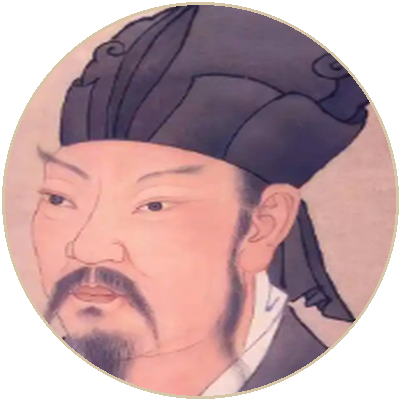
The Prose Patriarch
韩愈
Han Yu's life was marked by dramatic episodes. Here are the most significant.
Three Failed Examinations: After passing the imperial exam in 792, Han Yu failed the special examination three times and his appeals to the prime minister went unanswered — a frustration that deepened his resolve to reform literary style.
Memorial Against the Buddha's Bone (819): When Emperor Xianzong enshrined a Buddhist relic, Han Yu submitted a blistering memorial calling Buddhism a 'barbarian doctrine.' Nearly executed, he was banished to Chaozhou, writing his famous poem of defiance on the journey.
Governance of Chaozhou: In just eight months, Han Yu drove away crocodiles, established schools, freed slaves, and promoted culture. The grateful people renamed their river and mountain after him — names still used today.
The Classical Prose Movement: With Liu Zongyuan, Han Yu championed a return to natural prose, theorizing that literary power flows from moral cultivation. His essays became enduring models.
Writing 'On the Teacher': When scholars were ashamed to seek instruction, Han Yu publicly accepted students, proclaiming 'where the Way resides, there the teacher dwells' — facing mockery that others dared not endure.
文以载道。
"Literature is the vehicle of the Way." — Han Yu's foundational principle: writing must carry moral purpose, not merely display technical virtuosity.
师者,所以传道受业解惑也。
"A teacher is one who transmits the Way, imparts knowledge, and resolves doubts." — From 'On the Teacher,' defining the three essential functions of education.
道之所存,师之所存也。
"Where the Way resides, there the teacher dwells." — A radical assertion that authority comes from knowledge, not social rank or age.
业精于勤,荒于嬉;行成于思,毁于随。
"Excellence in study comes from diligence and is ruined by playfulness; good conduct comes from reflection and is destroyed by carelessness." — The opening of 'On Learning,' a timeless call to disciplined effort.
大凡物不得其平则鸣。
"When things are not at peace, they cry out." — Han Yu's theory of literature: great writing arises from injustice and the need to set things right.
Han Yu held that literature must carry the Confucian Way — not mere ornamentation but a vessel for moral spirit. He opposed florid parallel prose, advocating vigorous classical prose that serves social transformation.
古文运动是韩愈发起的文学复古运动,主张恢复先秦两汉散文的质朴传统。他提出「气盛言宜」的创作理论——文章的气势源于作者的道德修养和精神境界。韩愈的散文风格雄浑奔放,善于创新,被后世奉为古文典范。
The Classical Prose Movement was Han Yu's literary revolution, calling for a return to natural prose. He theorized that literary power flows from moral cultivation — his innovative style became the enduring model.
韩愈以儒家卫道者自居,猛烈抨击佛道二教。他认为佛教是外来之教,违背儒家伦理纲常;佛道二教耗费国家财力,使人民弃本逐末。他的《原道》构建了从尧舜到孟子的儒家道统谱系,将佛道排除在外,开宋代理学之先河。
As a defender of Confucian orthodoxy, Han Yu attacked Buddhism and Daoism as drains on state wealth and violations of ethics. His 'On the Way' constructed a Confucian transmission anticipating Neo-Confucianism.
《师说》是韩愈最著名的教育论著。他针对当时士大夫耻于从师的社会风气,提出「无贵无贱,无长无少,道之所存,师之所存」的进步教育理念。他认为从师学习不分贵贱长幼,以学问为唯一标准,这是对门第观念和年龄偏见的有力挑战。
"On the Teacher" is Han Yu's most celebrated educational essay. Against the prevailing shame of seeking instruction, he proclaimed that learning knows no class or age — 'where the Way resides, there the teacher dwells.' Knowledge, not social rank or age, determines who is worthy to teach — a radical challenge to aristocratic prejudice.">Against the shame of seeking instruction, Han Yu proclaimed that learning knows no class or age. Knowledge, not rank or age, determines who is worthy to teach — a radical challenge to aristocratic prejudice.
Han Yu's most important philosophical essay, constructing a Confucian transmission from Yao and Shun to Confucius and Mencius. Its fierce critique of Buddhism and Daoism served as a manifesto for Confucian revival.
Written in 802 against the shame of seeking instruction. Defines the teacher's three functions and asserts authority comes from knowledge alone — a masterpiece of argument and rhetoric.
A dialogue expressing frustration at the neglect of talent. Its opening — 'Excellence comes from diligence, ruined by playfulness' — has become proverbial. A masterpiece of blended prose styles.
Submitted in 819, this memorial fiercely opposed the Buddhist relic, leading to Han Yu's banishment but establishing him as a symbol of Confucian moral courage.
Han Yu's principle that 'literature carries the Way' reminds us that writing should bear social responsibility. His assertion that learning knows no class or age aligns with modern educational equity. His moral courage — risking his life to oppose imperial policy — embodies the tradition of intellectual integrity essential for social progress.