The Cosmological Scholar
扬雄
Yang Xiong
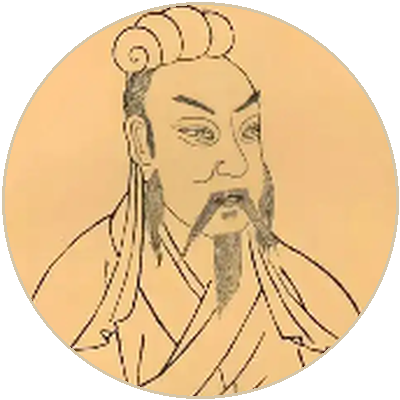
The Cosmological Scholar
扬雄
Yang Xiong's life encompassed many significant episodes. Here are the most representative.
Fame in Shu: He gained early fame composing rhapsodies in the style of Sima Xiangru. His 'Rhapsody on the Capital of Shu' depicted the region's prosperity in dazzling prose.
Rhapsodies for the Emperor: He composed four great rhapsodies for Emperor Cheng, but later concluded they encouraged more excess than restraint, and angrily abandoned the genre.
Writing the Supreme Mystery: He spent years composing a cosmological system based on three rather than two. Many couldn't understand it, but he declared: 'A future Yang Ziyun will surely appreciate it.'
The Tianlu Pavilion Incident: When caught in a political case, Yang Xiong jumped from the library tower but survived. Wang Mang ordered his release, noting he was never involved in such affairs.
Dialect Survey: Over twenty-seven years, he compiled China's first comparative dialect dictionary by questioning travelers to the capital — founding the field of Chinese dialectology.
人之性也,善恶混。修其善则为善人,修其恶则为恶人。
"Human nature is a mixture of good and evil. Cultivate the good and you become a good person; cultivate the evil and you become an evil person." — Yang Xiong's distinctive theory of human nature, mediating between Mencius and Xunzi.
玄之又玄,众妙之门。
"Mystery upon mystery — the gateway to all wonders." — Though originally from Laozi, Yang Xiong took 'mystery' (玄) as the foundation of his entire cosmological system.
后世复有扬子云,必好之矣。
"In future generations, when another Yang Ziyun appears, he will surely appreciate it." — A prophetic statement of confidence that his obscure cosmological work would find its audience.
言,心声也;书,心画也。
"Speech is the sound of the mind; writing is the painting of the mind." — Yang Xiong on the intimate connection between inner character and outward expression.
The Supreme Mystery is a cosmological system modeled on the Book of Changes but using ternary instead of binary. Its 81 tetragrams correspond to the days of the year. 'Mystery' (玄) is the origin of all things — a unity transcending yin and yang.
扬雄提出了独特的人性论,认为人性是善恶混杂的,既非纯善(如孟子所言),亦非纯恶(如荀子所言)。他主张通过后天的学习和修养来发扬善的成分、抑制恶的成分。这一观点是对孟子性善论和荀子性恶论的综合与超越,对后世的人性讨论产生了重要影响。
Yang Xiong's theory of human nature mediates between Mencius and Xunzi: nature is a mixture of good and evil. Through cultivation, one develops the good and suppresses the evil — a synthesis that influenced all later debates.
《法言》仿《论语》而作,是扬雄系统阐述儒学思想的著作。「法」意为准则、典范。扬雄在书中讨论了人性、道德、政治、文学等诸多话题,强调学习和修身的重要性,反对当时流行的谶纬迷信。他认为儒家经典才是真正的「法」,而非术数方技。
Modeled on the Analects, the Model Sayings discusses human nature, morality, and governance. 'Model' means standard — Confucian classics, not esoteric prophecy, are the true standards for human conduct.
《方言》是中国第一部方言比较词汇著作,历时二十七年完成。扬雄通过调查全国各地的方言差异,记录了当时汉语的丰富多样性。这部著作不仅具有语言学价值,还反映了西汉时期的社会文化面貌,是中国语言学史上的里程碑之作。
China's first comparative dialect dictionary, completed over twenty-seven years. It recorded the rich diversity of Han-era Chinese and remains a milestone in Chinese linguistics.
A cosmological system modeled on the Book of Changes, using 81 tetragrams in a ternary framework. One of the most original philosophical works of the Han dynasty.
Thirteen chapters of dialogue on human nature, morality, and governance. An important document of Han Confucian revival against superstition.
China's first comparative dialect dictionary, compiled over twenty-seven years. Founded the field of Chinese dialectology.
Yang Xiong's legacy offers enduring insights: his interdisciplinary integration of astronomy and philosophy, his nuanced theory of human nature as mixed good and evil, his pioneering dialect research celebrating cultural diversity, and his academic confidence that truth will find its audience in time.