The Revival Scholar
李翱
Li Ao
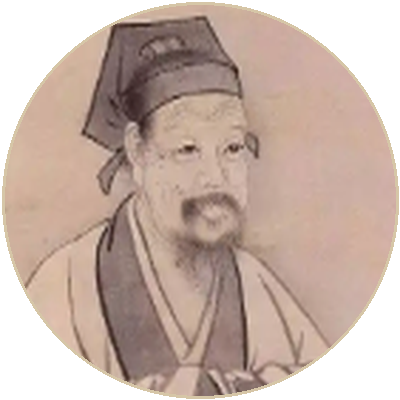
The Revival Scholar
李翱
Li Ao balanced scholarship with public service. Here are the most representative episodes.
Studying Under Han Yu: He became Han Yu's student, later marrying his niece. Though influenced by Han Yu's style, Li Ao forged his own path toward philosophical speculation.
Visiting Chan Monasteries: His encounter with Chan Master Weiyan was transformative. Asked 'What is the Way?' the master said: 'Clouds in the sky, water in the vase' — profoundly shaping Li Ao's philosophy.
Writing the Fuxing Shu: His three-part essay blended the Doctrine of the Mean with Buddhist thought — one of the most original philosophical works of the Tang dynasty.
Upright Governance: As prefect of Luzhou, he reformed corrupt practices and lightened burdens — embodying the Confucian ideal of self-cultivation and good governance.
人之所以为圣人者,性也;人之所以惑其性者,情也。
"What makes a person a sage is their nature; what confuses their nature is emotion." — The core thesis of Li Ao's philosophy: we are all potentially sages, but emotions cloud our original goodness.
情既灭,性斯复矣。
"When emotions are extinguished, nature is restored." — Li Ao's method of spiritual cultivation: not suppressing emotions but transcending them to recover original purity.
云在青天水在瓶。
"Clouds in the sky, water in the vase." — Chan Master Weiyan's teaching to Li Ao: the Way is everywhere in its natural state, requiring no striving.
诚者,圣人之性也。
"Sincerity is the nature of the sage." — From the Doctrine of the Mean, which Li Ao placed at the center of his philosophy of returning to original nature.
李翱认为人的本性是纯善的,源自天命之性(《中庸》所谓「天命之谓性」)。但人在与外界接触时产生了各种情感和欲望,这些情欲蒙蔽了本然之善性。修养的目标就是通过「灭情复性」的功夫,去除情欲的遮蔽,恢复本性的清明纯善。这一思想融合了儒家的性善论和佛教(特别是禅宗)的明心见性思想。
Human nature is originally pure, derived from Heaven's mandate. Emotions and desires obscure it. Through 'extinguishing emotions to restore nature,' one recovers original clarity — a synthesis of Confucian and Chan Buddhist thought.
「灭情复性」是李翱修养论的核心方法。他所说的「灭情」并非消灭一切情感,而是去除那些遮蔽本性的私欲和妄情。当心达到「动静皆离」的境界——不被外物所动,也不被内心情绪所扰——本性自然显现。这种方法与禅宗的「无念」和道家的「心斋」有异曲同工之妙。
Not eliminating all feelings, but removing selfish desires that obscure true nature. When the mind transcends both motion and stillness, original nature manifests — paralleling Chan's 'no-thought' and Daoist 'mind-fasting.'
李翱特别重视《中庸》,将其作为复性说的经典依据。他认为《中庸》开篇「天命之谓性,率性之谓道,修道之谓教」三句,概括了儒家心性论的全部精髓。通过对《中庸》的创造性诠释,李翱将儒家的心性论提升到了一个新的哲学高度,为宋代理学家重新发现和诠释《中庸》开辟了道路。
He used the Doctrine of the Mean as his classical foundation, arguing its opening sentences encapsulate all of Confucian mind-nature philosophy. His creative interpretation paved the way for Song Neo-Confucian reinterpretation.
Li Ao's masterwork in three parts — on nature and emotion, the method of restoration, and personal experience. The critical bridge between Han Yu and Song Neo-Confucianism.
A joint work with Han Yu offering fresh insights on the Analects, particularly on mind and nature. Embodies the spirit of re-examining classics during the Tang revival.
Li Ao's thought offers enduring insights: his 'extinguishing emotions to restore nature' parallels modern mindfulness practice; his fusion of Confucianism and Buddhism models creative cultural synthesis; his belief in original goodness encourages self-cultivation; and his re-reading of classics shows that ancient wisdom can be continually reactivated.