The Reform Visionary
康有为
Kang Youwei
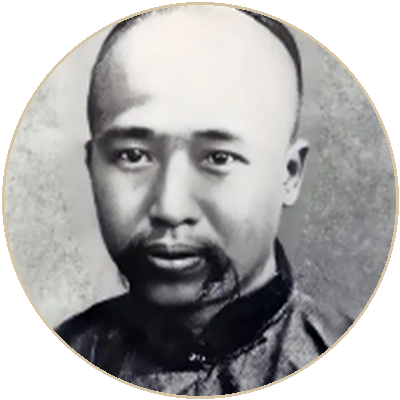
The Reform Visionary
康有为
Kang Youwei, known as 'Master Nanhai,' was modern China's most influential reform thinker. After encountering Western civilization in his youth, he organized the famous 'Petition of the Graduates' in 1895 and led the Hundred Days' Reform in 1898. When the reform was crushed, he fled abroad, traveling thirty-one countries. He remained a constitutional monarchist until his death in 1927.
Kang Youwei's life was inseparably bound to modern China's most dramatic political transformations. Here are the most significant episodes.
Petition of the Graduates (1895): After China's defeat by Japan, Kang organized 1,300+ examination candidates to petition the emperor for reform. It marked the birth of Chinese intellectuals' collective political engagement.
Hundred Days' Reform (1898): 103 days of sweeping edicts modernizing education, government, and military — crushed by Empress Dowager Cixi's coup. Six reformers were executed.
Years of Exile: Escaping with British help, Kang spent sixteen years visiting thirty-one countries, promoting constitutional monarchy and founding the Protect the Emperor Society among overseas Chinese.
Confucian Religious Movement: Kang devoted himself to transforming Confucianism into a religion, founding the Confucian Church and advocating it as a state religion — a controversial idea still debated today.
变者,天下之公理也。
"Change is the universal principle of all under Heaven." — Kang's fundamental argument for reform: transformation is not a betrayal of tradition but the deepest truth of the cosmos.
大同之世,天下为公,选贤与能,讲信修睦。
"In the Great Unity, the world belongs to all; the virtuous and able are chosen, trust and harmony prevail." — Kang's vision of an ideal future, drawn from the Book of Rites but given radical new meaning.
物新则壮,旧则老;新则鲜,旧则腐。
"What is new grows strong; what is old grows weak. What is new stays fresh; what is old decays." — An argument for the necessity of constant renewal in state and society.
非变通不足以宜民,非更新不足以图存。
"Without flexibility, one cannot benefit the people; without renewal, one cannot survive." — Kang's appeal to the Qing court to embrace reform as a matter of national survival.
Kang's most original idea: an ideal world abolishing national boundaries, private property, class distinctions, and gender inequality — 'the world belongs to all.' Though dismissed as utopian, it anticipated later socialist and globalist ideas.
托古改制是康有为推动改革的核心策略。他认为,真正的孔子是一位改革家,而非保守派的守护者。通过重新诠释儒家经典,康有为为变法提供了传统合法性,巧妙地将西方现代思想嫁接到了中国古典传统之上。这一方法论深刻影响了后来的中国知识分子。
Kang's core strategy: the true Confucius was a reformer, not a conservative. By reinterpreting the classics, he provided traditional legitimacy for reform, grafting Western ideas onto Chinese tradition.
康有为主张全面的制度改革,包括建立君主立宪制、废除科举八股、发展现代工商业、建立新式军队和学校等。他的改革方案吸收了明治日本和西方国家的经验,试图在保持中国文化主体性的同时实现国家的现代化。" data-en="Kang advocated comprehensive institutional reform: constitutional monarchy, abolition of the eight-legged essay, development of modern industry and commerce, and establishment of new-style armies and schools. His reform program drew on Meiji Japan and Western models, seeking modernization while preserving Chinese cultural identity.">Comprehensive institutional reform: constitutional monarchy, modern education, industry, and military — drawing on Meiji Japan and Western models while preserving Chinese cultural identity.
康有为认为,儒学不仅是学术,更应成为凝聚国民精神的宗教。他创立孔教会,主张将孔教定为国教,试图以宗教的形式赋予传统儒学以现代组织力和号召力。这一思想在当时引发了激烈的争论,反对者认为它违背了儒学的人文精神,支持者则认为它有助于民族凝聚。" data-en="Kang believed Confucianism should be not merely an academic tradition but a religion unifying the national spirit. He founded the Confucian Church and advocated Confucianism as a state religion, attempting to give traditional Confucianism modern organizational power. This sparked intense debate: opponents said it violated Confucian humanism; supporters saw it as a tool for national cohesion.">Kang founded the Confucian Church, advocating Confucianism as a state religion to unify the national spirit — sparking intense debate about whether this honored or betrayed Confucian humanism.
Kang's most ambitious work, envisioning an ideal society abolishing all inequality. In ten sections, it synthesizes Confucian Great Unity ideals, Buddhist compassion, and Western socialist thought.
Kang's most controversial scholarly work, arguing many Confucian classics were Han-dynasty forgeries. Though academically contested, it shook classical authority and cleared intellectual ground for reform.
The core of Kang's 'reform through ancient precedent': reinterpreting Confucius as a great institutional reformer, providing reform with the sage's own endorsement.
Kang's 'reform through ancient precedent' poses an eternal question: how to pursue transformation while preserving cultural identity? As one of China's first global thinkers, he combined worldwide vision with local concern. His life illuminates both the power and the limits of intellectuals in politics.