The Skeptical Thinker
王充
Wang Chong
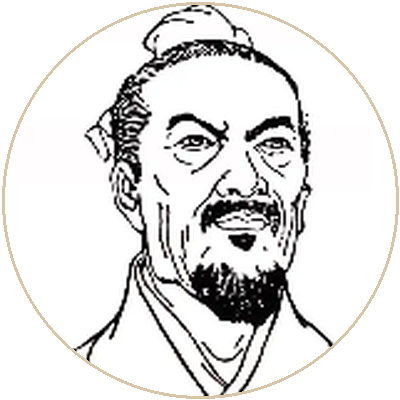
The Skeptical Thinker
王充
Though politically obscure, Wang Chong's intellectual life was rich with drama. These episodes reveal his character as a thinker.
Studies at the Imperial Academy: Not content with rote learning of official doctrines, Wang Chong read widely across the Hundred Schools and developed the independent spirit that would define the Lunheng.
Writing the Lunheng: Over thirty years, Wang Chong systematically listed and refuted the era's superstitions using logic, empirical evidence, historical analysis, and analogy — creating an encyclopedic masterpiece of rational criticism.
Critiquing Apocryphal Prophecy: Wang Chong systematically demolished the mystical system of prophetic apocrypha, arguing that natural disasters are not divine warnings, auspicious omens not divine rewards, and all things are generated naturally by primordial qi — a bold and dangerous stance.
蔡邕携书入中原:王充去世后,《论衡》长期只在会稽一带流传。直到东汉末年,大学者蔡邕因避祸来到会稽,偶然发现了这部著作,大为惊叹。他将《论衡》的抄本带回洛阳,此书方才在中原士人中传播开来。据记载,人们读了《论衡》后,惊叹于王充的博学和犀利,纷纷感叹:「不见异人,当得异书。」——虽然见不到这位奇人,但能读到这部奇书也是幸事。
Cai Yong Brings the Book North: For decades the Lunheng circulated only locally. When the scholar Cai Yong discovered it in Kuaiji and brought it to Luoyang, readers exclaimed: 'Though we cannot meet this extraordinary man, his extraordinary book is fortune enough.'
事莫明于有效,论莫定于有证。
"Nothing is clearer than effective evidence; no argument is more settled than one supported by proof." — Wang Chong's epistemological manifesto: truth must be established through evidence, not authority or tradition.
疾虚妄。
"Attack what is false and absurd." — The three-character motto that encapsulates Wang Chong's entire intellectual project: a relentless crusade against falsehood and superstition.
天地合气,万物自生。犹夫妇合气,子自生矣。
"When heaven and earth mingle their qi, the ten thousand things are spontaneously generated — just as when husband and wife combine their qi, children are naturally born." — Wang Chong's naturalistic cosmology: the universe operates through natural processes, not divine creation.
人死血脉竭,竭而精气灭,灭而形体朽,朽而成灰土,何用为鬼?
"When a person dies, the blood and vessels are exhausted; when exhausted, the vital qi ceases; when it ceases, the body decays; when decayed, it becomes dust and earth. How could it become a ghost?" — Wang Chong's materialist argument against the existence of ghosts and spirits.
不学自知,不问自晓,古今行事,未之有也。
"To know without studying, to understand without asking — in all the deeds of past and present, such a thing has never existed." — Wang Chong on the necessity of learning and inquiry, rejecting claims of innate or supernatural knowledge.
元气自然是王充宇宙论的核心概念。他认为天地万物都是由「元气」自然化生的,不存在一个有意志的造物主。天不是有意识的神灵,而是一种自然存在;天不会因为人间的善恶而降下祥瑞或灾异。万物的产生和变化都是气的自然聚散过程。这一观点从根本上否定了天人感应说和谶纬神学的理论基础,建立了一种唯物主义的自然观。" data-en="Natural qi (元气自然) is the core concept of Wang Chong's cosmology. He argued that all things in heaven and earth are spontaneously generated by primordial qi — there is no intentional creator. Heaven is not a conscious deity but a natural existence; it does not send auspicious omens or disasters in response to human virtue or vice. All generation and change are natural processes of qi gathering and dispersing. This fundamentally demolished the theoretical foundations of Heaven-humanity correspondence and apocryphal theology, establishing a materialist view of nature.">The core of Wang Chong's cosmology: all things are spontaneously generated by primordial qi. Heaven is not a conscious deity; it does not respond to human virtue or vice. This demolished the foundations of apocryphal theology and established a materialist view of nature.
王充强调认识事物必须通过实际验证,不能仅凭传闻或权威。「事莫明于有效,论莫定于有证」是他的认识论宣言。他反对盲从古人,反对迷信权威,主张独立思考和实证检验。在论证方法上,他广泛使用逻辑推理、经验观察、历史比较和类比分析等方法,形成了中国古代最完整的理性批判方法论。这种重视证据、强调验证的思维方式,在中国思想史上具有开创性意义。" data-en="Wang Chong insisted that knowledge must be established through actual verification, not mere hearsay or authority. 'Nothing is clearer than effective evidence; no argument is more settled than one supported by proof' — this was his epistemological manifesto. He opposed blind deference to the ancients and superstition toward authority, championing independent thinking and empirical testing. His argumentative methods — logical reasoning, empirical observation, historical comparison, and analogical analysis — constituted the most complete rational-critical methodology in ancient China. This evidence-based approach was pioneering in Chinese intellectual history.">'Nothing is clearer than effective evidence.' Wang Chong championed independent thinking and empirical testing over blind deference to authority — the most complete rational-critical methodology in ancient China.
反对谶纬是王充思想中最具战斗性的部分。东汉时期,谶纬之学被官方定为正统,质疑谶纬等同于质疑皇权的合法性。王充不畏强权,对谶纬进行了全面系统的批判。他指出:祥瑞之说不可信,因为太平之世也有灾异,乱世之中也有祥瑞;天人感应说不能成立,因为天是自然之物,不具备人的意志和感情;鬼神之说没有根据,因为人死之后精气消散,不可能变成鬼魂。这些批判在当时是石破天惊的。" data-en="Opposing superstition was the most combative aspect of Wang Chong's thought. In the Eastern Han, apocryphal prophecy was official orthodoxy; questioning it was equivalent to challenging the legitimacy of imperial power. Wang Chong fearlessly launched a comprehensive critique. He showed that auspicious omens are untrustworthy — peaceful eras have disasters, chaotic times have omens. Heaven-humanity correspondence cannot hold, because heaven is a natural object without human will or feeling. Ghosts and spirits have no basis, because when a person dies, their vital qi disperses. These critiques were earth-shattering in their time.">Fearlessly challenging official orthodoxy, Wang Chong demolished every pillar of the apocryphal system: auspicious omens are unreliable, heaven has no will, ghosts cannot exist after death. These critiques were earth-shattering in their time.
王充反对空洞的道德说教和脱离实际的理论玄谈。他认为文章和学问应该有实际的用途和价值。「为世用者,百篇无害;不为用者,一章无补。」——如果对社会有用,写一百篇也不算多;如果没用,写一篇也是多余的。他批评当时儒者只知死守经文,不通世务,认为真正的学问应该能够解决实际问题。这种务实的精神,使王充的思想具有超越时代的现实意义。" data-en="Wang Chong opposed empty moral exhortation and impractical theoretical speculation. He believed writings and learning should serve practical purposes. 'A hundred chapters harm nothing if they serve the world; a single chapter adds nothing if they do not.' He criticized contemporary Confucians who clung rigidly to classical texts while remaining ignorant of practical affairs, insisting that true learning should solve real problems. This pragmatic spirit gives Wang Chong's thought a relevance that transcends his era.">'A hundred chapters harm nothing if they serve the world; one chapter adds nothing if they don't.' Wang Chong valued practical learning over empty theorizing — a pragmatic spirit that transcends his era.
《论衡》是王充倾注三十年心血写成的不朽巨著,共八十五篇(今存八十四篇),约二十余万字。书名「论衡」意为「论述的天平」,即用公正平实的态度来衡量和评判一切学说。全书内容涵盖天文、物理、生物、医学、历史、政治、伦理、文学等众多领域,对当时流行的谶纬迷信、天人感应、鬼神之说等进行了系统而尖锐的批判。《论衡》是中国古代最伟大的理性主义著作之一,也是世界思想史上最早的系统性怀疑主义著作之一。" data-en="The Lunheng ('Balanced Discourses') is Wang Chong's masterwork, written over thirty years — eighty-five chapters (eighty-four surviving), approximately two hundred thousand characters. The title means 'the scale of discourse' — weighing and judging all doctrines with fairness and honesty. The work spans astronomy, physics, biology, medicine, history, politics, ethics, and literature, systematically critiquing the era's superstitions, Heaven-humanity correspondence, and ghost beliefs. The Lunheng is one of the greatest rationalist works in Chinese antiquity and one of the earliest systematic skeptical treatises in world intellectual history.">Wang Chong's masterwork, written over thirty years: eighty-five chapters systematically critiquing the era's superstitions using logic, evidence, and historical analysis. One of the greatest rationalist works in Chinese antiquity and among the earliest systematic skeptical treatises in world intellectual history.
Wang Chong's rational criticism offers vital lessons today. His emphasis on evidence-based reasoning anticipates modern scientific methodology. His 'attack what is false and absurd' spirit is essential for media literacy in an age of misinformation. His courage to challenge official orthodoxy models independent thinking. His pragmatic view of knowledge — learning should serve life, not just accumulate information — remains deeply relevant.