The Self-Preserver
杨朱
Yang Zhu
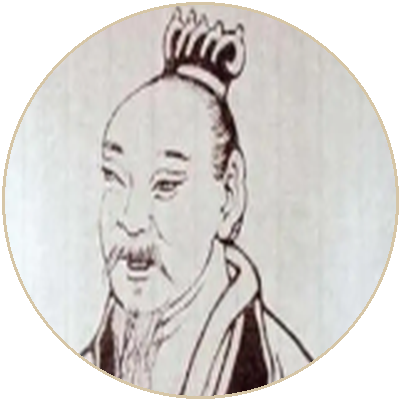
The Self-Preserver
杨朱
Though biographical records are scarce, scattered anecdotes vividly illustrate Yang Zhu's philosophical stance and character.
Weeping at the Crossroads: Yang Zhu wept at a fork in the road because each path led to further forks. This became the famous metaphor of 'losing the sheep at the crossroads' — not weakness, but a profound recognition of life's bewildering choices.
Debate with the Mohists: Yang Zhu and Mozi represented opposing ethical poles. Mozi championed universal love and self-sacrifice; Yang Zhu championed the self. Mencius placed them at opposite extremes: 'would not pluck a hair to benefit the world' vs. 'would grind away his whole body if it helped.'
Yang Zhu Meets the King of Liang: When the king challenged him — 'You can't manage your own household, yet you speak of governing the world?' — Yang Zhu replied with the parable of the shepherd: a boy with a staff can lead a hundred sheep, but even Yao and Shun could not move one. Governance lies in grasping the essential principle.
Would Not Trade a Hair for All Under Heaven: Yang Zhu's followers declared they would not pluck a hair even for the world's benefit. Not simple selfishness, but a philosophical declaration: individual life has absolute, irreplaceable value. The question remains vital today.
拔一毛而利天下,不为也。
"I would not pluck a single hair from my body to benefit the world." — The most famous summary of Yang Zhu's philosophy, attributed by Mencius. It asserts the absolute value of individual existence against all utilitarian claims.
人人不损一毫,人人不利天下,天下治矣。
"If no one sacrifices a single hair, and no one tries to benefit the world, the world will be well governed." — Yang Zhu's paradoxical political vision: universal respect for individual autonomy would create a naturally harmonious society.
全性保真,不以物累形。
"Preserve your nature and protect your authenticity; do not let external things burden your body." — The core ethical imperative of Yang Zhu's philosophy: live authentically, free from the distortion of external pressures.
百年,寿之大齐。得百年者千无一焉。
"A hundred years is the great limit of life. Among a thousand, not one reaches it." — Yang Zhu on the precious brevity of life, and the urgency of living fully rather than sacrificing oneself for abstract causes.
生民之不得休息,为四事故:一为寿,二为名,三为位,四为货。
"People cannot find rest because of four things: the pursuit of longevity, fame, status, and wealth." — Yang Zhu's diagnosis of human restlessness: the ceaseless chase for external goods destroys inner peace.
The core of Yang Zhu's philosophy: maintain your innate nature and live authentically. Don't let external fame and fortune distort your true self. Closely aligned with Daoist ideals of the 'authentic' and the 'uncarved block.'
The fundamental ethical principle: individual life and happiness deserve the highest value. Not selfish indulgence, but the idea that if everyone takes care of themselves without harming others, the world will naturally be at peace. A challenge to both Confucian collectivism and Mohist altruism.
Don't sacrifice your health and well-being chasing external things — wealth, fame, power, status. The truly wise person knows when to stop and refuses to be enslaved by externals. Strikingly similar to modern minimalism and mindfulness.
杨朱将生命本身视为最高价值。他认为人的一生短暂而珍贵——「百年,寿之大齐」——因此不应该把有限的生命浪费在追逐虚幻的目标上。他反对为了名声而牺牲生命(「殉名」),也反对为了财富而损害健康。他提倡一种回归自然、享受生命本真之乐的生活方式。在《列子·杨朱篇》中,杨朱描绘了一种既不放纵也不禁欲,而是顺其自然、享受生命之美的理想生活。" data-en="Yang Zhu regarded life itself as the supreme value. He observed that human life is brief and precious — 'A hundred years is the great limit of life' — and therefore should not be wasted chasing illusory goals. He opposed sacrificing one's life for fame (殉名) and damaging one's health for wealth. He advocated a lifestyle of returning to nature and enjoying the authentic pleasures of existence. In the 'Yang Zhu' chapter of the Liezi, he paints a vision of life that is neither indulgent nor ascetic, but naturally follows the beauty of living.">Life itself is the supreme value. Human life is brief — don't waste it chasing fame or wealth. Yang Zhu advocated a life that is neither indulgent nor ascetic, but naturally follows the beauty of living. A vision strikingly modern in its appeal.
The most important surviving text on Yang Zhu's thought, presenting his philosophy through dialogues on life's meaning, fame's illusoriness, and death's inevitability. Scholars note it was compiled relatively late and may contain later additions.
Yang Zhu's words appear across the Mencius, Zhuangzi, Han Feizi, Annals of Lü Buwei, and other texts. Though fragmentary, they reflect his thought's richness. Even Mencius's criticisms help illuminate Yang Zhu's core claims.
Long dismissed as extreme selfishness, Yang Zhu's philosophy contains profound modern wisdom. His assertion of individual life's supreme value anticipates individual rights consciousness. His opposition to self-alienation for external gain parallels Marxist and existentialist critiques. His emphasis on self-compassion aligns with contemporary mental health movements. His restraint of material desires carries ecological wisdom relevant to today's environmental crisis.