The Lakeside Master
张栻
Zhang Shi
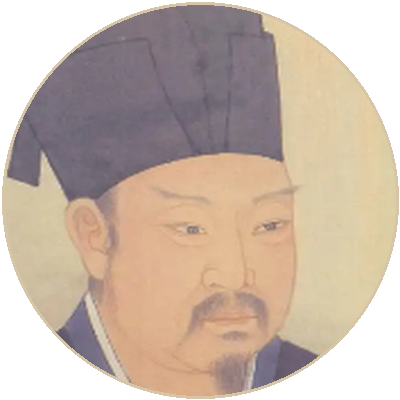
The Lakeside Master
张栻
Though Zhang Shi's life was brief, he left a deep mark on scholarship and education. Here are the most significant episodes.
Studying Under Hu Hong: In his youth, Zhang Shi became a disciple of Hu Hong, absorbing the Huxiang school's philosophy of mind and nature. Under his teacher's guidance, he formed his system centered on 'the heart-mind governs nature and emotions.'
The Zhu-Zhang Joint Lecture (1167): Zhu Xi traveled to Changsha and debated Zhang Shi at Yuelu Academy for over two months. They discussed equilibrium and harmony, mind-nature philosophy, and the Supreme Ultimate — a legendary event that advanced Song Neo-Confucianism.
Presiding over Yuelu Academy: He built Yuelu into a premier Southern Song intellectual center, reforming the curriculum to emphasize practical statecraft alongside moral philosophy. Under his leadership, the academy produced generations of capable scholars.
The Yi-Li Distinction: The core of Zhang Shi's program was distinguishing righteousness from profit. Even before the famous Goose Lake meeting, he had systematically argued that righteousness should lead and restrain profit, opposing the elevation of utility as the primary goal.
Untimely Death (1180): Zhang Shi died at forty-eight. Zhu Xi was deeply grieved and praised his profound learning and noble character. His premature death was a great loss, but his legacy lived on through his disciples.
学者潜心孔孟,必得其门而入。然以为必先明义利之辨,而后可以入道。
"Scholars who devote themselves to Confucius and Mencius must find the right door to enter. But first they must clarify the distinction between righteousness and profit — only then can they enter the Way."
心也者,贯万事统万理而为万物之主者也。
"The heart-mind is that which pervades all affairs, unifies all principles, and serves as the master of all things." — Zhang Shi's doctrine of the heart-mind as the governing center of human nature.
义利之辨,乃儒者第一义。
"The distinction between righteousness and profit is the foremost principle of the Confucian scholar." — The foundation of Zhang Shi's entire philosophical program.
学莫先于义利之辨。义者,本心之当为;利者,为人欲之私也。
"Nothing in learning precedes the distinction between righteousness and profit. Righteousness is what the original heart-mind ought to do; profit is the selfishness of human desire."
知行互发,知之明则行愈笃,行之力则知益精。
"Knowledge and action mutually advance — the clearer the knowledge, the more earnest the action; the stronger the action, the more refined the knowledge."
The core of Zhang Shi's thought. Righteousness embodies natural principle and the innate goodness of the heart-mind; profit represents selfish desire. In self-cultivation and governance, one must place righteousness foremost.
这是张栻心性论的核心命题。他认为心是统摄性和情的主宰——性是心之体(本质),情是心之用(表现)。心通过「主」(统摄、主宰)的功能,使性与情保持和谐统一。这一理论既不同于朱熹将心、性、情分为三个层次的观点,也不同于陆九渊将心与理直接等同的立场,而是提供了一种独特的中间路线。
The heart-mind is the master governing both nature and emotions — nature as substance, emotions as function. This offered a unique middle path between Zhu Xi's three-level distinction and Lu Jiuyuan's identification of heart-mind with principle.
张栻反对空谈义理而不务实际。他主张学问必须与经世实践相结合,学习的目的不仅是个人的心性修养,更是为了治国利民。他强调「知行互发」,认为知识和实践是相互促进的——认识越清楚,行动就越坚定;实践越有力,认识就越精深。这一思想深刻影响了湖湘地区重实践、尚实学的学风。
Zhang Shi opposed empty theorizing. Scholarship must serve governance and the people's benefit. 'Knowledge and action mutually advance' — this profoundly shaped the Huxiang tradition of practical learning.
张栻对「仁」的理解融合了湖湘学派的心性之学。他认为仁不仅是对外的爱人之心,更是心体本身的特质——心的本然状态就是仁。通过「识仁」和「体仁」的修养工夫,人可以恢复心的本然状态,达到与天地万物为一体的境界。这种将仁与心性本体相结合的思路,是张栻对儒学仁论的重要发展。
Ren is not merely love directed outward — it is the essential quality of the heart-mind itself. Through recognizing and embodying ren, one restores the heart-mind's original state and achieves unity with all things.
A systematic commentary reflecting his interpretive method centered on the yi-li distinction and mind-nature philosophy, emphasizing the inner connection between benevolence and righteousness.
《孟子解》是张栻对《孟子》的注解,充分发挥了孟子的性善论和仁政思想。张栻在注解中特别关注义利之辨、王霸之分等议题,将孟子的思想与湖湘学派的心性之学相融合。" data-en="This commentary on Mencius fully develops Mencius's theory of innate goodness and benevolent governance. Zhang Shi pays special attention to the yi-li distinction and the difference between kingly and hegemonic governance, integrating Mencius's thought with the Huxiang school's philosophy of mind and nature.">A commentary that develops Mencius's theory of innate goodness and benevolent governance, integrating it with the Huxiang school's mind-nature philosophy.
《南轩集》收录了张栻的书信、序跋、论说等各类文章,是研究其思想的重要文献。其中与朱熹等人的往来书信,记录了南宋理学家之间的学术交流和思想论辩,具有极高的学术价值。" data-en="This collection of Zhang Shi's letters, prefaces, essays, and other writings is an essential resource for studying his thought. The correspondence with Zhu Xi and others records the scholarly exchanges and intellectual debates among Southern Song Neo-Confucians, holding great academic value.">A collection of letters, prefaces, and essays. The correspondence with Zhu Xi records scholarly exchanges among Southern Song Neo-Confucians of great academic value.
Zhang Shi's thought remains relevant today. His yi-li distinction provides a philosophical foundation for business ethics and social responsibility. His emphasis on unity of knowledge and action aligns with modern education's focus on practical skills. His opposition to empty theorizing inspires scholars to address real social needs. His theory of the heart-mind governing nature and emotions offers parallels with modern psychology's approach to emotional well-being.