The East Zhe Master
吕祖谦
Lü Zuqian
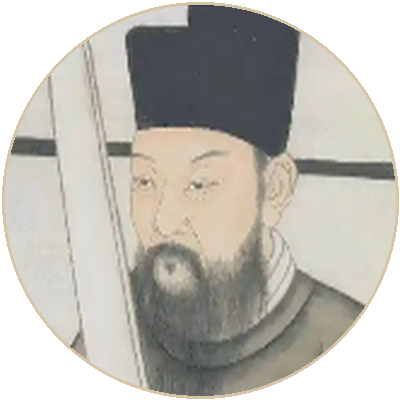
The East Zhe Master
吕祖谦
Though Lü Zuqian's life was brief, he made unique contributions to scholarly organization and intellectual mediation.
The Goose Lake Meeting (1175): Lü Zuqian organized the legendary debate between Zhu Xi and Lu Jiuyuan at Goose Lake Temple. As mediator between the 'inquiry and study' and 'moral nature' approaches, he deepened both schools' thinking.
Founding the Wu School: In Wuzhou, he established an eclectic school emphasizing classics and history equally, drawing governance wisdom from historical experience — profoundly influencing eastern Zhejiang's scholarly tradition.
Compiling the Imperial Literary Mirror: He was commissioned to compile a massive anthology of Song literature, preserving invaluable literary texts and demonstrating his deep literary and historical expertise.
Teaching at Lize Academy: He founded Lize Academy, encouraging wide reading and independent thinking. It became a major Southern Song intellectual center, producing many talented scholars for eastern Zhejiang.
Untimely Death (1181): He died at forty-five. Zhu Xi lost his most important interlocutor, and the scholarly world lost its most tolerant mediator between competing schools.
学问之道,贵在兼取其长,不可执一而废百。
"The way of learning values drawing from each school's strengths; one must not cling to one and abandon all others." — The essence of Lü Zuqian's eclectic method.
读史当观大伦理、大机会、大治乱得失。
"In reading history, one should observe the great moral principles, the great turning points, and the great lessons of governance and its failures." — Lü Zuqian's method for extracting practical wisdom from historical study.
学贵有用,不贵空言。
"Learning values practical application, not empty words." — A concise statement of the Wu school's emphasis on pragmatic scholarship.
天下之事,理胜则治,欲胜则乱。
"In the affairs of the world, when principle prevails there is order; when desire prevails there is chaos." — Lü Zuqian on the fundamental tension between principle and desire in governance.
Eclectic synthesis — broadly absorbing all schools' strengths — was Lü Zuqian's hallmark. In the Zhu-Lu debate, he sought to combine both approaches rather than side with either. This open attitude was unique in the Southern Song.
吕祖谦强调学问必须有实际的用途,反对脱离现实的空洞思辨。他特别重视从历史中汲取治国理政的经验教训,认为「读史当观大伦理、大机会、大治乱得失」。他的婺学将经学和史学紧密结合,以历史为镜鉴,服务于现实的政治实践。这一思想对后来浙东学派的实学传统产生了深远影响。
Learning must serve practical governance. He drew lessons from history for politics, integrating classical and historical studies. This shaped the eastern Zhejiang tradition of practical learning.
吕祖谦是中国史学史上的重要人物。他不仅精通经学,更深研史学,将历史研究视为经世致用的重要途径。他编纂的《皇朝文鉴》和《历代制度详说》等著作,体现了他「以史为鉴」的学术理念。他主张从历史的兴衰成败中总结规律,为当下的政治决策提供参考。这一「史学经世」的传统,对浙东学派产生了深远影响。
History was his path to practical governance. His works embodied 'using history as a mirror,' drawing lessons from the past for present political decisions — a tradition that shaped eastern Zhejiang scholarship.
吕祖谦在朱熹和陆九渊之间的学术争论中扮演了独特的调停者角色。他组织了鹅湖之会,试图让两位大儒面对面交流。虽然他未能完全消除两家的分歧,但他的努力促进了双方的深入思考,也为后来的思想家提供了融合朱陆的思路。明代王阳明的心学,在某种程度上就是对朱陆融合的一种尝试,而吕祖谦可以说是这一方向的先驱。
He mediated between Zhu Xi and Lu Jiuyuan, organizing the Goose Lake Meeting. Though differences remained, his efforts provided later thinkers a model for integration — making him a pioneer of the Zhu-Lu synthesis that Wang Yangming would later pursue.
A collection of 168 essays using Zuo Commentary events to expound moral principles and governance — the finest of Southern Song historical criticism.
《历代制度详说》系统梳理了从先秦到宋代的各项制度,包括官制、兵制、赋税、选举等,分析各朝制度的利弊得失。这部著作体现了吕祖谦「经世致用」的学术理念,为后世的制度改革提供了宝贵的历史参考。" data-en="This work systematically examines institutional systems from the pre-Qin period through the Song dynasty, covering official systems, military organization, taxation, and civil service selection. It analyzes the strengths and weaknesses of each dynasty's institutions, embodying Lü Zuqian's practical approach and providing valuable historical reference for later institutional reform.">A systematic examination of institutions from pre-Qin through Song — analyzing strengths and weaknesses of each dynasty's systems as a practical guide for reform.
《吕氏家塾读诗记》是吕祖谦对《诗经》的注解,体现了他注重考据和义理并重的解经方法。他既重视文字训诂,又关注诗歌的义理内涵,在宋代诗经学研究中占有重要地位。" data-en="This commentary on the Book of Songs reflects Lü Zuqian's interpretive method of balancing textual criticism with philosophical interpretation. He paid attention to both philological analysis and the deeper moral meaning of the poems, occupying an important position in Song dynasty Shijing studies.">A commentary on the Book of Songs balancing textual criticism with philosophical interpretation, holding an important place in Song dynasty Shijing studies.
Lü Zuqian's thought offers valuable lessons for today. His eclectic approach models interdisciplinary thinking. His method of 'using history as a mirror' guides better decision-making. His role as mediator between Zhu and Lu exemplifies academic dialogue and tolerance. His opposition to empty talk and emphasis on practical application resonates with modern demands for innovation and applied knowledge.