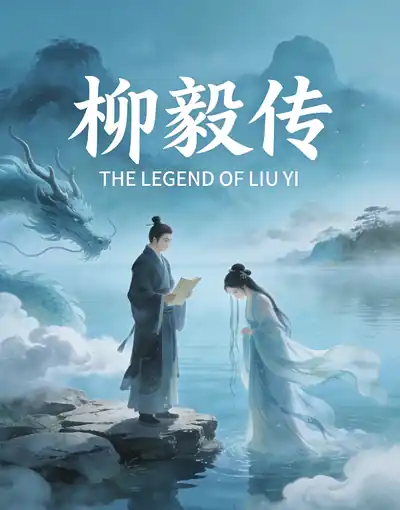
唐仪凤中,有儒生柳毅者,应举下第,将还湘滨湘滨湘江之滨,即今湖南一带。柳毅为湘人,故事以此为地理起点,后文龙宫亦在洞庭湖底,形成完整的湖南水系叙事空间。。念乡人有客于泾阳者,遂往告别。
至六七里,鸟起马惊,疾逸道左。又六七里,乃止。见有妇人,牧羊于道畔。毅怪视之,乃殊色也。然而蛾脸不舒,巾袖无光,凝听翔立,若有所伺。
毅诘之曰:「子何苦而自辱如是?」妇始楚而谢,终泣而对曰:「贱妾不幸,今日见辱问于长者。然而恨贯肌骨,亦何能愧避?幸一闻焉。妾,洞庭龙君小女也。」
During the Yifeng reign of the Tang dynasty, there was a Confucian scholar named Liu Yi. Having failed the imperial examination, he was about to return to the banks of the Xiang River. Learning that a fellow townsman was staying in Jingyang, he went to bid farewell.
After traveling six or seven li, birds startled and his horse bolted, galloping wildly off the road. Another six or seven li, it stopped. He saw a woman tending sheep by the roadside. Liu Yi looked at her curiously — she was of extraordinary beauty. Yet her brows were furrowed in sorrow, her sleeves and kerchief were faded, and she stood listening intently as though waiting for something.
Liu Yi asked her: "What misfortune brings you to such a state?" The woman at first only wept in gratitude, then through tears replied: "I have been unfortunate, and today I am shamed by your question. But my grief has pierced me to the bone — how could I hold back in shame? I beg you to hear my story. I am the youngest daughter of the Dragon King of Dongting."
The Dragon King of Dongting — the dragon deity governing Dongting Lake in Chinese folk belief. Tang dynasty tales feature rich dragon-palace narratives, shaping dragon kings as figures with both divine and human qualities, intertwined with Buddhist dragon-king traditions.
「父母配嫁泾川次子,而夫婿乐逸,为婢仆所惑,日以厌薄。既而将诉于舅姑,舅姑爱其子,不能御。迨诉频切,又得罪舅姑。舅姑毁黜以至此。」
言讫,歔欷流涕,悲不自胜。又曰:「洞庭于兹,相远不知其几多也。长天茫茫,信耗莫通。心目断尽,无所知哀。闻君将还吴,密迩洞庭。欲以尺书寄托侍者,未卜将以为可乎?」
毅曰:「吾义夫也。闻子之说,气血俱动,恨无毛羽,不能奋飞。是何可否之谓乎?然洞庭之深,水府水府水神的宫殿,即龙宫。中国神话中水府与天上宫殿、地下冥府构成三界空间体系。此处"水府"一词将龙宫纳入了道教的宇宙观框架。幽旷,人世隔绝。唯恐道途显晦,不相通达,致负所托。子有何术,可导我邪?」
"My parents married me to the second son of the Jing River Dragon. But my husband is dissolute and idle, seduced by his maids and servants, and grows colder toward me day by day. When I tried to complain to his parents, they loved their son too much to restrain him. As my complaints grew more frequent, I offended them as well. They cast me down to this wretched state."
Having spoken, she wept and sobbed, overcome with grief. She continued: "Dongting is impossibly far from here. The sky stretches endlessly; no message can reach them. My heart and eyes have exhausted themselves; there is no one to share my sorrow. I hear you are returning to Wu, which lies close to Dongting. Might I entrust a letter to your servant? I dare not presume — would you consider it?"
Liu Yi said: "I am a man of honor. Hearing your words, my blood stirs with indignation. I regret only that I have no wings to fly to your aid. What question of 'can or cannot' is there? Yet Dongting lies in the deep waters — the Aquatic Palace水府 shuǐ fǔThe underwater palace of a water deity, i.e., the Dragon Palace. In Chinese mythology, the aquatic palace, celestial palace, and underworld palace form a three-realm cosmological framework. The term "水府" places the Dragon Palace within a Daoist cosmological structure. is vast and remote, sealed off from the mortal world. I fear only that the path between light and darkness cannot be traversed, and I may fail in the trust you place in me. What method can guide me there?"
The Jing River Dragon Clan — The Jing River lies in modern Shaanxi, thousands of li from Dongting. The dragon daughter's distant marriage mirrors the Tang dynasty reality of women having no autonomy in marriage arrangements.
女曰:「洞庭之阴,有大橘树焉,乡人谓之社橘社橘社坛旁的橘树,古代祭祀土地神之处。此处橘树成为人间通往龙宫的入口,融合了民间信仰中"神树通灵"的母题。。君当解去兹带,束以他物,然后扣树三发,当有应者。因而随之,无有碍矣。」
毅曰:「敬闻命矣。」女遂于襦间解书,再拜以进。东望愁泣,若不自胜。毅深为之戚。
乃置书囊中,因复问曰:「吾不知子之牧羊,何所用哉?神祇岂宰杀乎?」女曰:「非羊也,雨工雨工行雨之神,即雷雨之神。龙女牧的不是真羊而是雨工,暗示她虽被贬但仍保有神族身份,也隐喻其处境:即使神族也无法免于人间苦难。也。」曰:「何为雨工?」曰:「雷霆之类也。」毅顾视之,则皆矫顾怒步,饮龁甚异。
The maiden said: "On the southern shore of Dongting, there grows a great orange tree. The locals call it the Sheju社橘 shè júAn orange tree beside an altar to the earth god. Here the tree becomes a portal between the mortal world and the Dragon Palace, blending the folk motif of "sacred trees as spirit passages.". Remove your belt, tie something else in its place, and knock upon the tree three times. Someone will answer. Follow them, and there will be no obstruction."
Liu Yi said: "I shall heed your instructions." The maiden drew a letter from within her garments and presented it with two bows. She gazed eastward, weeping with sorrow, as though she could not bear it. Liu Yi was deeply moved.
He placed the letter in his bag and asked: "I do not understand — what purpose do these sheep serve? Surely divine beings do not slaughter them?" She replied: "They are not sheep — they are Rain Workers雨工 yǔ gōngSpirits of rain and thunder. That the dragon maiden herds rain spirits rather than real sheep hints that she retains her divine lineage even in exile, and metaphorically suggests that even gods cannot escape mortal suffering.." He asked: "What are Rain Workers?" She said: "They are of the order of thunder and lightning." Liu Yi looked again — the creatures were all strutting with fierce intent, drinking and gnashing their teeth in most peculiar fashion.
文学价值
《柳毅传》是唐传奇中最为成熟的作品之一,与《霍小玉传》《莺莺传》并称唐代三大爱情传奇。李朝威以"传书"为核心事件,巧妙地将侠义精神与爱情叙事融为一体。柳毅最初传书是出于义愤而非爱慕,龙女的感恩最终升华为真挚的爱情,这一情感递进在同时代传奇中极为罕见。
龙宫场景的描写是全文最华彩的段落,以人间的贫寒与龙宫的富丽形成强烈对比,既满足了读者的想象,也暗示了龙女身份的尊贵——她不是普通的弃妇,而是被不公正对待的神族公主。
文化语境
唐代是中国龙文化的繁荣期。龙从上古的图腾崇拜演变为掌管水域的神灵体系,龙王信仰与佛教的龙王(Nāga)传统深度交融。《柳毅传》中的龙宫既有道教仙境的华美,也有佛教净土的庄严,反映了唐代三教合一的文化大背景。
Literary Merit
"The Story of Liu Yi" is among the most accomplished Tang dynasty tales, ranked alongside "The Story of Huo Xiaoyu" and "The Story of Yingying" as the three great love tales of the era. Li Chaowei uses the "letter delivery" as the core event, skillfully blending chivalric spirit with romantic narrative. Liu Yi's initial act is motivated by righteous indignation rather than love; the dragon maiden's gratitude gradually matures into genuine affection — an emotional progression rare among contemporary tales.
The dragon palace sequence is the story's most dazzling passage, creating stark contrast between mortal poverty and divine splendor. This both satisfies the reader's imagination and hints at the dragon maiden's true status — not an ordinary abandoned wife, but a divine princess unjustly cast down.
Cultural Context
The Tang dynasty marked a flourishing period for Chinese dragon culture. Dragons evolved from ancient totems into a full system of water-governing deities, with dragon-king worship deeply intertwined with Buddhist Nāga traditions. The dragon palace in this tale combines the splendor of Daoist paradises with the majesty of Buddhist pure lands, reflecting the broader cultural synthesis of the Three Teachings in Tang China.
社橘是古代"社树"传统的一种体现。"社"为祭祀土地神的场所,社旁植大树以为神灵凭依。柳毅以橘树为通往龙宫的入口,融合了民间信仰中"神树通灵"的母题。屈原《橘颂》以橘为高洁之树,此处李朝威可能有意呼应楚文化传统,因为故事主要发生在洞庭湖(楚地)。
The altar orange tree reflects the ancient tradition of "she trees" — sacred trees planted beside earth-god altars as spirit anchors. Liu Yi's use of the orange tree as a portal blends the folk motif of "sacred trees as spirit passages." Qu Yuan's "Ode to the Orange" praised the tree as noble; Li Chaowei likely echoes this Chu cultural tradition, as the story is set around Dongting Lake in the Chu region.
龙宫是中国神话中水下神灵的居所,最早见于佛经中龙王(Nāga)的宫殿描写,后与道教的"水府"概念融合。唐代龙宫叙事达到高峰,从《柳毅传》到《西游记》中的东海龙宫,龙宫不仅是水域权力的象征,更是人间欲望的投射——金碧辉煌的宫殿、取之不尽的珍宝、绝色的龙女,都是底层文人对美好生活的想象。
The Dragon Palace is the underwater abode of divine beings in Chinese mythology. It first appeared in Buddhist sutras describing Nāga kings' palaces, later merging with Daoist "aquatic palace" concepts. Dragon palace narratives peaked in the Tang dynasty — from this tale to the East Sea Dragon Palace in Journey to the West — symbolizing not just aquatic power but projecting mortal desires: golden halls, inexhaustible treasures, and beautiful dragon maidens embodying the fantasies of impoverished scholars.
"柳毅传书"后来成为汉语中的经典典故,喻指替人传递重要信息、成人之美。这个典故的核心精神是"义"——不计回报地帮助弱者。与"红线盗盒"并称为古代侠义精神的两大文学典范,在戏曲、绘画、诗词中反复出现。
"Liu Yi delivers the letter" became a classical allusion in Chinese, meaning to deliver crucial messages on behalf of others and help bring about happy outcomes. Its core spirit is "righteousness" — helping the weak without expectation of reward. Paired with "Red Thread Steals the Casket," it forms one of the two great literary exemplars of ancient chivalric spirit, recurring in drama, painting, and poetry.
Yuan Dynasty — Shang Zhongxian adapted the tale into a zaju play, one of the Yuan drama classics, strengthening the romantic thread between Liu Yi and the dragon maiden.
1962 — Yue opera film "Liu Yi Delivers the Letter," starring Zhu Shuizhao and Xiao Shuizhao. The dragon palace was realized through stage design, becoming a classic repertoire piece.
Contemporary — "Liu Yi Delivers the Letter" was featured on a 2004 Chinese postage stamp set (four stamps depicting letter delivery, dragon palace, reunion, and dragon transformation), demonstrating its enduring cultural significance.