The Metaphysical Prodigy
王弼
Wang Bi
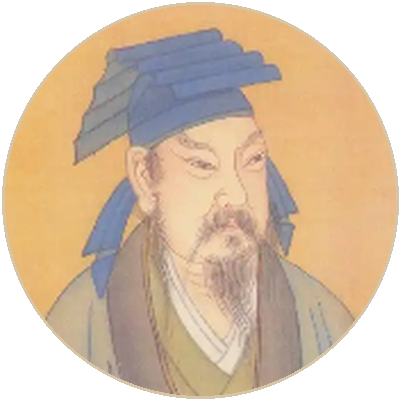
The Metaphysical Prodigy
王弼
正始年间(240—249年),王弼与何晏、夏侯玄等名士交游,成为当时清谈的核心人物之一。何晏对王弼极为赏识,曾感叹说:「仲尼称后生可畏,若斯人者,可与言天人之际矣。」将王弼比作可以与之讨论天道与人事关系的知己。
王弼不仅精通老庄,对《周易》也有极深的研究。他一改汉代象数易学的传统,以义理解《易》,开创了义理易学的新方向。他的《周易注》和《老子注》成为后世研究这两部经典的标准文本,影响深远。
然而天妒英才。公元249年,司马懿发动高平陵之变,诛杀曹爽集团,何晏被杀。王弼虽未直接卷入政治斗争,但因与何晏的交情而受到牵连,同年秋天便因病去世,年仅二十三岁。一代天才就此陨落,令人扼腕叹息。
" data-en="Wang Bi (226–249), courtesy name Fusi, was born in Gaoping, Shanyang (present-day Jinxiang, Shandong Province). A renowned philosopher and metaphysician of the Wei dynasty during the Three Kingdoms period, he was one of the most dazzling geniuses in Chinese intellectual history — dying at just twenty-three, yet leaving a philosophical legacy that shaped a millennium of thought.
Wang Bi came from a distinguished family; his great-grandfather-in-law was Liu Biao, the great Confucian scholar and warlord of the late Eastern Han. From childhood he was extraordinarily intelligent, drawn to the writings of Laozi and Zhuangzi with an innate sensitivity to metaphysical inquiry. According to Pei Songzhi's commentary on the Records of the Three Kingdoms, Wang Bi had developed original insights into Laozi's philosophy by his early teens, and his debating skills astonished all the leading scholars of his day.
Wang Bi lived during the turbulent transition from Wei to Jin, when political dangers made intellectual life perilous. Many scholars retreated from the tedious textual scholarship of the Han dynasty into the abstract discussions of Xuanxue (玄学, 'Dark Learning' or 'Metaphysics') — exploring questions of being and non-being, root and branch, language and meaning. Wang Bi became the supreme figure of this intellectual movement.
During the Zhengshi era (240–249), Wang Bi mingled with leading intellectuals such as He Yan and Xiahou Xuan, becoming a central figure in the philosophical salons. He Yan greatly admired him, exclaiming: 'Confucius said the young are to be respected. This is someone with whom one can discuss the relationship between Heaven and humanity!' He saw in Wang Bi a true intellectual companion.
Wang Bi was not only a master of Laozi and Zhuangzi but also deeply versed in the Book of Changes (Yijing). He broke decisively with the Han dynasty tradition of image-number (xiangshu) interpretation, instead reading the Changes through the lens of meaning and principle (yili). His Commentary on the Book of Changes and Commentary on Laozi became the standard texts for studying these classics for centuries to come.
But Heaven envies genius. In 249, Sima Yi launched the Gaopinglin coup, executing Cao Shuang's faction. He Yan was killed. Though Wang Bi was not directly involved in political struggles, his association with He Yan made him vulnerable. That autumn, he died of illness at the age of twenty-three. A prodigy was lost, and the world mourned.
">Wang Bi (226–249), courtesy name Fusi, was a philosopher of the Wei dynasty and the supreme figure of Xuanxue (Dark Learning). Born into a distinguished family, he showed extraordinary brilliance from childhood. By his teens he had original insights into Laozi's philosophy. During the Zhengshi era, he became a central figure in philosophical salons alongside He Yan. His commentaries on Laozi and the Book of Changes revolutionized Chinese philosophy by replacing Han dynasty textualism with meaning-based interpretation. He died of illness at twenty-three during the political upheaval of the Gaopinglin coup.Though Wang Bi died young, his brief life left several memorable stories.
Boy Wonder: The teenage Wang Bi visited the scholar Pei Hui, who asked why Confucius never spoke of non-being while Laozi endlessly expounded on it. Wang Bi replied: 'The sage embodies non-being, but non-being cannot be taught through words. Laozi still has being, which is why he constantly speaks of non-being.' This brilliant answer stunned the scholarly world.
Surpassing He Yan: He Yan, the leading Xuanxue scholar much older than Wang Bi, had completed his own Laozi commentary — until he met Wang Bi and discovered the young man's understanding far surpassed his own. He set aside his work and championed Wang Bi's instead.
Debating Xun Rong: Wang Bi debated the Book of Changes with Xun Rong and others, championing meaning-and-principle interpretation over the traditional image-number approach — a pivotal shift in Yijing studies.
Untimely Death: In 249, Sima Yi's Gaopinglin coup killed He Yan and his faction. Though not directly involved, Wang Bi was implicated through association. He died of illness that autumn at twenty-three — a prodigy swept away in a political storm.
圣人体无,无又不可以训,故不说也。
"The sage embodies non-being, but non-being cannot be taught through words, so he did not speak of it." — Wang Bi's explanation for why Confucius never discussed the concept of 'non-being': it transcends language.
凡有皆始于无。
"All being originates from non-being." — The fundamental proposition of Wang Bi's metaphysics, stating that non-being (wu) is the ultimate origin of everything that exists.
得意在忘象,得象在忘言。
"To grasp the meaning, forget the image; to grasp the image, forget the words." — Wang Bi's theory of language: words point to images, images point to meaning, but meaning transcends both.
道者,无之称也。无不通也,无不由也,况之曰道。
"The Way is the name for non-being. There is nothing it does not pervade, nothing that does not come from it — hence we call it the Way." — Wang Bi's definition of the Dao as the ultimate ground of all existence.
言者所以明象,得象而忘言;象者所以存意,得意而忘象。
"Words exist to illuminate images; once you grasp the image, forget the words. Images exist to preserve meaning; once you grasp the meaning, forget the images." — The core of Wang Bi's hermeneutical method for reading the Book of Changes.
Non-being as the root is Wang Bi's central proposition. The ultimate origin is not a particular being but 'non-being' — a pure ground transcending all determinations. Like silence underlying all sound, non-being is the root of all being.
王弼提出了本末体用的哲学框架。「本」是根本、本质,「末」是枝节、表象。他主张崇本息末——抓住根本,才能把握枝节。在政治上,这意味着君主应当以无为之道治理天下,而不是沉迷于繁琐的法令和制度。在认识论上,这意味着要透过现象看本质,不被表面的纷繁所迷惑。
言意之辨是王弼哲学中最具创造性的部分。他认为,语言(言)是表达工具,意象(象)是中间环节,而真正的意义(意)超越于语言和意象之上。他用《周易》的例子来说明:卦爻辞(言)指向卦象(象),卦象指向背后的义理(意)。一旦把握了义理,就可以超越卦象和卦爻辞。这一理论不仅革新了易学研究,也深刻影响了中国的文学理论和美学思想。
The debate over language and meaning (yan-yi zhi bian) is the most creative part of Wang Bi's philosophy. He held that words (yan) are tools of expression, images (xiang) are intermediaries, and true meaning (yi) transcends both. Using the Book of Changes as illustration: hexagram texts (words) point to hexagram figures (images), which point to the underlying principles (meaning). Once you grasp the meaning, you can transcend the images and texts. This theory revolutionized Yijing studies and profoundly influenced Chinese literary theory and aesthetics.
王弼是中国哲学史上最早系统阐述体用关系的思想家之一。「体」是本体、本质,「用」是功能、表现。他认为体用不二——本体与功能不是两个分离的东西,而是同一实在的两个方面。「无」作为本体,通过万物的生成变化来展现其功能。这一思想后来被宋明理学家继承和发展,成为中国哲学的核心范畴之一。
Wang Bi was among the first Chinese philosophers to systematically articulate the relationship between substance (ti) and function (yong). Substance is the underlying reality; function is its expression. He held that substance and function are not two separate things but two aspects of the same reality. Non-being, as the substance, manifests its function through the generation and transformation of all things. This idea was later inherited and developed by Song-Ming Neo-Confucianism, becoming a core category of Chinese philosophy.
王弼在易学史上的最大贡献是以义理解《易》,取代了汉代以来繁琐的象数之学。他认为《周易》的精髓不在于卦象和数字的机械推演,而在于其中蕴含的哲学义理。他的《周易注》以简洁明快的笔法,揭示了每一卦的核心思想,使《周易》从一部占卜之书转变为一部哲学经典。此后,义理易学成为易学研究的主流。
Wang Bi's greatest contribution to Yijing studies was his meaning-and-principle (yili) interpretation, replacing the tedious image-number scholarship of the Han dynasty. He argued that the essence of the Book of Changes lies not in mechanical manipulation of hexagrams and numbers but in the philosophical principles they contain. His Commentary on the Book of Changes, written in clear and elegant prose, revealed the core meaning of each hexagram, transforming the Yijing from a divination manual into a philosophical classic. Meaning-and-principle interpretation became the mainstream approach thereafter.
The most influential commentary on the Dao De Jing ever written. Wang Bi interpreted Laozi through 'non-being as the root,' reading the Dao as the ultimate ground of existence. Later scholars said 'none who comment on Laozi surpass Wang Bi.'
Wang Bi's other epoch-making work. Breaking with Han dynasty image-number tradition, he read the Changes through meaning and principle, influencing Yijing studies for over a thousand years and elevating it from divination to philosophy.
Wang Bi's attempt to reconcile Confucianism and Daoism through the Analects. He argued Confucius and Laozi were fundamentally in agreement — both pointing to the same transcendent Way. This paved the way for later Confucian-Daoist synthesis.
Wang Bi's philosophy resonates with modern concerns: his theory of language and meaning anticipates Wittgenstein; his interpretive method pioneered hermeneutics; his pursuit of simplicity speaks to information-age overload; and his bridging of Confucianism and Daoism models cross-cultural dialogue. His insight that 'all being originates from non-being' remains one of the most profound propositions in Chinese philosophy.