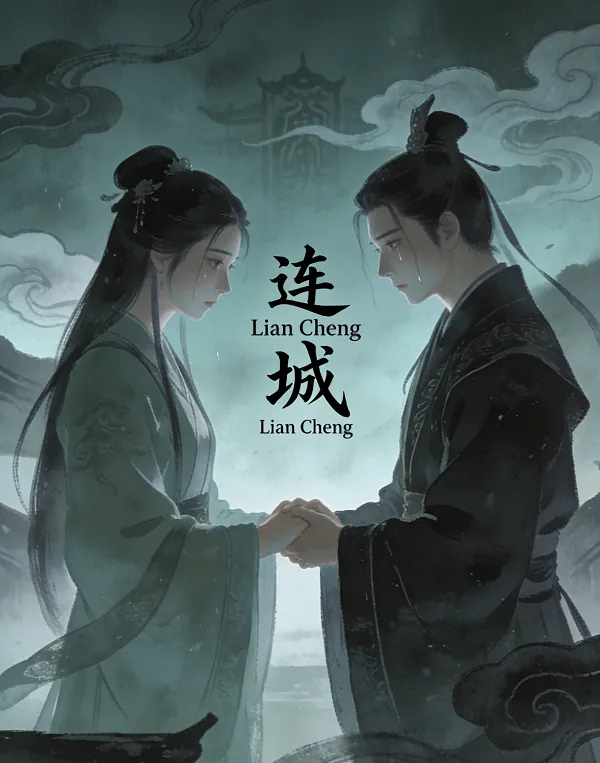
乔生乔生故事男主人公,晋宁人,少负才名,为人忠厚。因一诗而得连城倾心,后为知己殉情,成为"士为知己者死"的典范。,晋宁人,少负才名。为人有肝胆,与顾生善。顾卒,时恤其妻子。
邑宰以文相契重,宰终于任,家口淹滞不能归,生破产扶柩,往返二千余里。由是士林重之,而家益落。
史孝廉有女字连城连城史孝廉之女,工刺绣,知书达礼。以诗择婿,与乔生心意相通,后因父命另许他人,忧愤而死。,工刺绣,知书。史爱之,出所刺倦绣图倦绣图连城亲手刺绣的图卷,史孝廉以此征诗择婿。图中绣一仕女倦怠于绣架前,含蓄表达待嫁闺中的幽思。,征少年题咏,意在择婿。
Qiao Sheng乔生 Qiao ShengThe protagonist, a scholar from Jinning renowned for his talent and loyal character. His devotion to a single poem makes Liancheng fall in love with him; later he dies for his soulmate, embodying "a scholar dies for one who understands him.", a native of Jinning, was known from youth for his literary talent. A man of deep loyalty, he befriended Scholar Gu. When Gu died, Qiao regularly provided for Gu's widow and children.
The county magistrate valued him for his writing. When the magistrate died in office, his family was stranded and could not return home. Qiao spent his entire fortune to escort the coffin back, a round trip of over two thousand li. For this the scholarly world honored him, though his family grew ever poorer.
Subprefect Shi had a daughter named Liancheng连城 LianchengDaughter of Subprefect Shi, skilled in embroidery and well-read. She chose her husband through poetry and fell in love with Qiao Sheng, but when her father betrothed her to another, she sickened and died of grief., who excelled at embroidery and was well-read. Her father cherished her and displayed her Embroidery of Weary Repose倦绣图 Juàn Xiù TúAn embroidered scroll by Liancheng depicting a lady languishing at her embroidery frame — a veiled expression of longing in the boudoir. Her father used it to solicit poems from young scholars, intending to choose a son-in-law., soliciting poems from young scholars with the intention of choosing a son-in-law.
生献诗云:「慵鬟高髻绿婆娑,早向兰窗绣碧荷。刺到鸳鸯魂欲断,暗停针线蹙双蛾。」又赞其挑绣之工云:「绣线挑来似写生,幅中花鸟自天成。当年织锦新花样,只有秦川一女能。」
连城见诗,大加称赏。对父夸之。父贫之。女逢人辄称道;又遣媪矫父命,赠金以助灯火。生叹曰:「连城,我知己也!」倾怀倾怀倾吐胸怀,即将全部心意和盘托出。此处指乔生因连城的赏识而深深感动,将全部真情倾注于她。结想,如饥思啖。
无何,女许字于鹾贾鹾贾盐商。"鹾"为盐的古称,"贾"指商人。在古代社会,盐商往往富甲一方,但在士人眼中,以财势论婚是可鄙之事。之子王化成。生始绝望,然梦魂中犹佩戴之。
Qiao Sheng presented a poem: "Her loosened tresses coil in verdant waves / At orchid-window's light she stitches lotus green. / When needlework reaches the mandarin ducks, her soul well-nigh breaks— / Secretly she halts the thread, twin brows drawn in a frown." He praised her embroidery skill: "Each stitch like living brushwork drawn, / Within the frame, birds and blooms seem heaven-sent. / Of all who wove brocade in ancient days, / Only one maiden in Qin's land matched this art."
Liancheng read the poems and was greatly impressed. She praised them to her father, but he dismissed the poet as poor. She spoke of Qiao wherever she went and even sent an old servant, pretending her father's command, to give him silver for lamp-oil and books. Qiao sighed: "Liancheng—she is the one who truly knows me!" He poured out his heart倾怀 qīng huáiTo bare one's heart completely. Here it means Qiao, moved by Liancheng's recognition, devoted all his true feelings to her. in longing, as a starving man craves food.
Before long, however, Liancheng was betrothed to the son of a salt merchant鹾贾 cuó gǔA salt merchant. "Cuó" is an archaic word for salt; "gu" means merchant. Salt merchants were often fabulously wealthy, but in the eyes of scholars, marrying for money was contemptible. named Wang Huacheng. Qiao fell into despair, yet even in his dreams he still cherished her.
未几,女病沉痼沉痼久治不愈的重病。"沉"指病势深重,"痼"指顽固难医。此处连城之病既是身体的,更是心病——因婚事不如意而忧愤成疾。,西域头陀头陀苦行僧,行脚僧人。佛教中修"头陀行"者以简朴苦修为本,常云游四方。此处头陀开出的药方暗含深意。诊之,曰须男子膺肉一钱,合药屑服之。史遣人诣大第门,使媼以意告之。
生自诣史。史大喜,以意告之。生亦喜,即自割肉付之。女服之,果愈。
史设筵款之,以千金置案上,曰:「以此报大德。」生怫然怫然愤怒的样子。"怫"本意为愤怒、不悦。乔生割肉并非为了钱财,史孝廉以金相报,等于侮辱了他的真心。曰:「仆所以不爱肌肤者,聊以报知己耳,岂货肉哉!」拂袖而去。
女闻之,意良不忍。托媪慰谕之,且云:「以彼才华,当不久落寞。天下何患无佳人?我梦不祥,三年必死,何必与死人争?」生告媪曰:「『士为知己者死士为知己者死出自《战国策》:"士为知己者死,女为悦己者容。"意为有志之士愿为赏识自己的人献出生命。这是中国士人精神的核心信条之一。』,不以色也。如不见信,请以死明志!」
Before long, Liancheng fell gravely ill沉痼 chén gùA deep-seated, incurable illness. "Chén" means severe; "gù" means stubborn. Here her sickness is both physical and emotional — grief over her arranged marriage has consumed her.. A wandering monk头陀 tóu tuóAn ascetic Buddhist monk who practices austere discipline and wanders from place to place. The prescription he gives carries a deeper meaning. from the Western Regions diagnosed her, saying she needed one qian of flesh from a man's chest, mixed into medicine, to be consumed. Shi sent a servant to the gate of a great house, having an old woman convey the request.
Qiao went to the Shi residence himself. Shi was overjoyed and told him the request. Qiao was equally glad and immediately cut flesh from his own chest to give them. Liancheng took the medicine and truly recovered.
Shi prepared a banquet to thank him and placed a thousand taels of silver on the table, saying: "Let this repay your great kindness." Qiao bristled with anger怫然 fú ránAn expression of indignation. "Fú" means angered or displeased. Qiao cut his flesh not for money; to repay him with silver was to insult his sincerity.: "The reason I spared no thought for my flesh was simply to repay one who understands me — not to sell meat at market!" He swept out of the room.
Liancheng heard of this and felt deeply uneasy. She sent the old woman to comfort him, adding: "With his talent, he will not long remain poor. The world is full of fine women. My dreams have been ill-omened — I shall surely die within three years. Why struggle over a dead woman?" Qiao told the old woman: "'A scholar dies for one who understands him'士为知己者死From Strategies of the Warring States: "A scholar dies for one who understands him; a woman adorns herself for one who delights in her." This is one of the core tenets of the Chinese literati spirit — that recognition and understanding merit the highest sacrifice. — it is not about beauty. If she does not believe me, let me prove it with death!"
无何,连城死。生往临吊临吊亲临丧事致哀。"临"意为亲到现场,"吊"为吊唁。乔生在连城灵前痛哭,情深至极。,痛哭而绝。史舁以归之。
生自知己死,冥然无所苦。但觉飘然出门,行至冥司冥司阴间的官府,即冥界法庭。中国民间信仰中,人死后灵魂会到冥司接受审判,根据生前善恶决定来世去向。。遇一女郎,视之,连城也。相见悲喜,各诉衷情。
连城曰:「君何以至此?」生曰:「卿死,吾何生为!」连城泫然泫然泪流满面的样子。"泫"本指水珠下滴,"泫然"形容泪水盈眶欲滴。此处连城被乔生的真情深深打动。曰:「如此痴情,我何以为报!」遂相携至一处,有老僧坐焉。
僧曰:「尔两人皆善人,当再生。」合掌诵咒,以手摩其顶,两人皆活。
Before long, Liancheng died. Qiao went to pay his last respects临吊 lín diàoTo personally attend a funeral and mourn. "Lín" means to attend in person; "diào" means to condole. Qiao weeps at Liancheng's bier with the deepest grief., wept bitterly, and collapsed lifeless. The Shi family carried his body home.
Qiao knew himself to be dead, yet felt no suffering. He seemed to drift out of doors and walked until he reached the courts of the dead冥司 míng sīThe underworld tribunal. In Chinese folk belief, after death the soul is judged in the courts of the dead, where one's fate in the afterlife is determined by virtue and vice in life.. There he encountered a young woman — and saw that it was Liancheng. They met with both grief and joy, each pouring out their hearts.
Liancheng asked: "How have you come here?" Qiao replied: "You are dead — why should I live?" Liancheng shed tears泫然 xuàn ránWith tears flowing freely. "Xuàn" originally means drops of water falling; "xuàn rán" describes eyes brimming with tears. Here Liancheng is deeply moved by Qiao's devotion.: "Such devotion — how can I ever repay it!" Together they came to a place where an old monk sat in meditation.
The monk said: "You are both good people. You shall live again." He pressed his palms together in prayer, chanted an incantation, and laid his hands upon their heads. Both returned to life.
"知己"的至高意义
《连城》的核心不是"爱情",而是"知己"。蒲松龄有意将一个才子佳人的故事升华为士人精神的寓言。乔生对连城的感情不是普通的男女之爱,而是"知己"之爱——连城以诗识人,以金助人,她看到了乔生的才华与品格,而非门第与财富。这正是中国文人最渴望的:被真正理解。
"士为知己者死"出自《战国策》,是先秦士人精神的核心信条。蒲松龄在《连城》中将这一信条从政治语境移植到爱情语境,使之具有了更加普遍的人性光辉。乔生割肉不求回报、殉情不计后果,他所践行的不是浪漫主义的爱情观,而是知遇之恩的报答。
生死的转化
蒲松龄在故事中安排了两次死亡:连城忧愤而死,乔生悲痛而死。然而死亡并未终结这段感情,反而使他们在冥界重逢,成为真正的伴侣。这种"以死为生"的叙事策略,既是对现实婚姻制度的控诉——活人世界中,门第和金钱阻隔了有情人——也是对真情永恒性的信念表达。
The Supreme Meaning of "Zhījǐ"
The heart of "Liancheng" is not romance but zhījǐ — true understanding. Pu Songling deliberately elevates a talent-and-beauty story into an allegory of the scholar's spirit. Qiao's feeling for Liancheng transcends ordinary love: she recognized him through his poetry, aided him with silver, and saw his talent and character rather than his social standing or wealth. This is what Chinese literati most longed for: to be truly understood.
"A scholar dies for one who understands him" originates from Strategies of the Warring States and is a core tenet of pre-Qin scholarly ideals. Pu Songling transplants this creed from the political to the romantic context, giving it a more universal human radiance. Qiao cuts his flesh expecting nothing in return; he dies without calculating consequences. What he enacts is not a romantic ideal of love, but the repayment of a debt of recognition.
The Transformation of Life and Death
Pu Songling stages two deaths: Liancheng dies of grief; Qiao dies of heartbreak. Yet death does not end their love — it reunites them in the underworld as true companions. This narrative strategy of "life through death" is both an indictment of the real-world marriage system — where class and money separate true lovers — and an expression of faith in the eternity of genuine feeling.
"连城"之名,本义为连绵之城,引申为价值连城之意。《史记》载蔺相如奉和氏璧,秦王许以十五城易之,故有"价值连城"之典。蒲松龄以此为女主人公命名,暗示她的才情与品格是无价之宝,非金银所能衡量。这也是对鹾贾之子以财势论婚的讽刺——真正"连城"的价值,不在聘礼之中。
The name "Liancheng" literally means "linked cities" and by extension signifies "priceless" — as in the story of Lin Xiangru's jade, valued at fifteen cities. Pu Songling names his heroine thus to suggest her talent and character are beyond price, unmeasurable by gold or silver. It is also an ironic rebuke to the salt merchant's son who judges worth by wealth — the true "price" of Liancheng cannot be found in a bride-price.
"生"是古代对读书人的通称。乔生为人有肝胆,重义轻财。他为顾生遗孀散尽家财,为知己割肉殉情,体现了中国士人"义"的最高准则。蒲松龄笔下的"生"多为落魄才子,寄托了作者本人屡试不第的愤懑与对理想人格的寄托。
"Shēng" is a general term for a scholar in classical Chinese. Qiao Sheng is characterized by loyalty and disregard for wealth — he exhausts his fortune for a dead friend's family, and cuts his own flesh for the one who understands him. Pu Songling's "shēng" characters are often impoverished scholars, reflecting the author's own frustration after repeated failures in the imperial examinations, and his yearning for an ideal character.
语出《战国策·赵策一》:"士为知己者死,女为悦己者容。"这是先秦士人精神的经典表述。"知己"不仅指理解自己的人,更指赏识自己才华与品格的伯乐。在中国文化中,"知己"关系高于君臣关系,因为它建立在真诚的心灵契合之上,而非权力和利益的交换。蒲松龄在《连城》中将这一信条从政治领域扩展到爱情领域,赋予了它更广泛的人性意义。
From Strategies of the Warring States: "A scholar dies for one who understands him; a woman adorns herself for one who delights in her." This is the classic expression of the pre-Qin scholarly spirit. "Zhījǐ" (one who knows me) means not merely someone who understands, but a patron who recognizes talent and character. In Chinese culture, the zhījǐ bond transcends the ruler-minister relationship, for it rests on genuine spiritual harmony rather than power and profit. Pu Songling extends this creed from politics to love, giving it broader human significance.
清代蒲松龄所著短篇小说集,凡四百九十一篇。"聊斋"是蒲松龄的书斋名,"志异"意为记录奇异之事。全书以文言写成,借鬼狐仙怪的故事反映社会现实,寄托作者的孤愤与理想。《连城》为其中名篇,与《阿宝》《婴宁》等同为聊斋中至情故事的代表作。
A collection of 491 short stories by Qing-dynasty author Pu Songling. "Liaozhai" (Leisure Studio) was Pu Songling's study; "zhiyi" means "records of the strange." Written entirely in classical Chinese, the tales use ghosts, foxes, and immortals to mirror social reality and channel the author's solitary indignation and ideals. "Liancheng" is among its most celebrated stories, alongside "Ah Bao" and "Yingning" as representative tales of transcendent love.