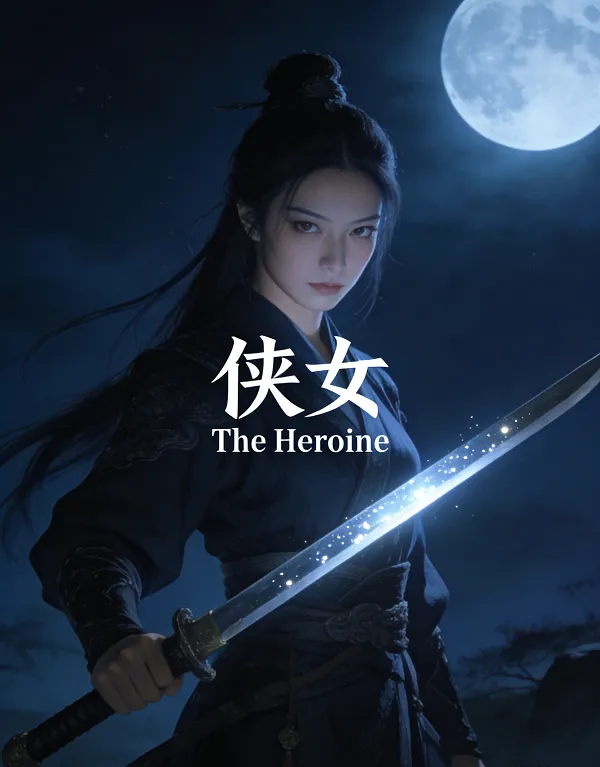
顾生顾生故事中的书生,家贫,与盲母相依为命。为人忠厚善良,对邻家女子始终以诚相待。他在不知侠女身世的情况下爱上了她。,金陵人,博于才艺,而家酷贫。又以母老,不忍离膝下。惟日为人书画,受贽以自给。
行年二十有五,伉俪犹虚。对户旧有空第空第空置的宅院。此处空宅中搬入的母女来历不明,为故事增添了悬疑色彩。,一老妪及少女来居其中。女年约十八九,秀曼都雅,世罕其匹。见生亦不甚避,然凛然凛然严肃庄重、令人敬畏的样子。侠女虽美,却自带一股不可侵犯的冷峻气质,与寻常闺秀截然不同。不可犯。
生归告母。母亦疑为亡人之女,然贫不能问。邻妇告生曰:「此女孝,日夜纺织以养母。然性冷,邻里少有见其笑容。」
Gu Sheng顾生 Gu ShengThe scholar of the story. Impoverished, he lives with his blind mother, supporting them both by painting and calligraphy. Kind and sincere by nature, he falls in love with the neighbor without knowing her true identity., a native of Jinling, was rich in talent but desperately poor. Because his mother was old and blind, he could not bear to leave her side. Each day he painted and wrote for others, accepting fees to support them both.
At twenty-five, he was still unmarried. Across the way stood an empty house空第 kōng dìA vacant residence. An old woman and a young girl moved in, their origins unknown — adding an element of mystery to the tale., into which an old woman and a young girl moved. The girl was about eighteen or nineteen, slender and graceful beyond compare. She did not avoid Gu when she saw him, yet she remained cold and forbidding凛然 lǐn ránStern, awe-inspiring, inviolable. Though beautiful, the swordswoman carries an air of cold dignity that sets her apart from ordinary young women..
Gu told his mother. She suspected the girl might be the daughter of the deceased, but poverty prevented inquiry. A neighbor told Gu: "This girl is filial — she spins day and night to support her mother. But she is cold by nature; neighbors seldom see her smile."
一日,生自外归。见女自母房出,邃邃深远、幽深,此处形容侠女目光深邃含情。虽然她表面上冷若冰霜,但偶尔流露出的目光中暗含深情。目流睇,若将有情。生喜,望之。女径去不顾。
生归,思之不置。又见女来馈其母。母问之,女曰:「感婆子苦,聊为馈馈赠送食物。古文中"馈"常指送饭、送食物给他人。侠女以关心顾生母亲为名,实则开始了与这个家庭的往来。耳。」母受之。生出谢,女不顾而去。
一日,生坐斋头,有少年来求画。少年姿容甚美,意颇儇薄儇薄轻佻浮薄。"儇"意为轻浮、狡黠,"薄"意为浅薄。此少年容貌虽美,举止却轻浮不端,暗示他并非善类。。生拒之。少年出,遇女于门外。女颜色忽变。生怪之。
少年去远,女入告生曰:「此非人也,乃妖狐妖狐狐妖,修炼成精的狐狸。在中国志怪传统中,狐妖常化为美貌男女迷惑世人。侠女一眼识破狐妖真身,显示了她超凡的本领。。君几不免!」遂不见。
One day, Gu returned from outside. He saw the girl emerging from his mother's room, her deep eyes邃 suìProfound, far-reaching. Here it describes the swordswoman's deep, lingering gaze. Though outwardly cold as frost, she occasionally reveals a glimmer of deeper feeling. lingering on him as if she cared. Delighted, Gu gazed at her. She walked away without looking back.
Gu went home and could not stop thinking of her. He saw her come again to bring food馈 kuìTo gift food. In classical Chinese, "kuì" often means delivering meals to others. The swordswoman uses concern for Gu's mother as a pretext, beginning her connection with the household. to his mother. His mother asked why; the girl said: "I feel for your hardship, old mother — I bring a little something." His mother accepted. Gu came out to thank her, but the girl turned and left.
One day, as Gu sat in his study, a young man came requesting a painting. He was strikingly handsome but frivolous儇薄 xuān bóGlib and shallow. "Xuān" means flighty and cunning; "bó" means superficial. The youth's fine looks mask a dissolute nature, hinting he is not what he seems.. Gu refused him. The young man left and encountered the girl outside the door. Her expression changed instantly. Gu was puzzled.
After the youth had gone far, the girl entered and told Gu: "That was no man — he was a fox demon妖狐 yāo húA fox spirit that has cultivated supernatural power. In the Chinese supernatural tradition, fox demons often take the form of beautiful men or women to seduce mortals. The swordswoman sees through the disguise instantly, revealing her extraordinary abilities.. You narrowly escaped!" Then she vanished.
无何,母病笃笃病重。"笃"意为深厚、沉重,"病笃"指病情危重。此处顾生母亲病重,侠女的照料显示了她内心的善良。,生侍奉汤药,昼夜不解带。女来视母,为之浣衣涤器。生益感之。
生私谓女曰:「娘子待我母子恩重如山。倘能执箕帚执箕帚持簸箕和扫帚,是古代男子向女子求婚的委婉说法。意为"愿意做我的妻子吗",暗含愿为对方操持家务之意。,虽死无恨。」女正色曰:「君之孝,我所知也。然事有未了,不可言此。」生问何事。女默然不答。
一夕,女忽至生室。生惊喜,女曰:「吾为君留嗣续嗣续后代、子嗣。在古代宗法社会中,"不孝有三,无后为大",延续香火是重大责任。侠女为顾生留下后代,既是报恩,也是对这段感情的回应。,非有他也。」遂与生合。天未明而去。
后果生一男。女自乳之。一日,谓生曰:「此儿相貌不凡,君善视之。」言讫,目光凄然。
Before long, Gu's mother fell gravely ill笃 dǔSevere, critical. "Dǔ" means deep or heavy; "bìng dǔ" means critically ill. Here Gu's mother's illness brings out the swordswoman's hidden kindness.. Gu attended to her medicine day and night without rest. The girl came to visit his mother, washed their clothes, and cleaned their dishes. Gu was ever more grateful.
Gu privately said to the girl: "Your kindness to my mother and me is weighty as a mountain. If you would take up broom and dustpan执箕帚 zhí jī zhǒuTo hold the dustpan and broom — a euphemistic marriage proposal in classical Chinese. It means "would you be my wife," implying a willingness to share domestic life. — I would die without regret." The girl replied gravely: "Your filial devotion is known to me. But there is unfinished business; we cannot speak of this." Gu asked what business. She fell silent.
One night, the girl suddenly appeared in Gu's room. Overjoyed, he listened as she said: "I have come to give you an heir嗣续 sì xùDescendants, offspring. In the ancient patriarchal system, "of the three unfilial acts, having no heir is the greatest." The swordswoman gives Gu a child — both repaying his kindness and answering her own heart. — nothing more." They lay together. Before dawn, she was gone.
In time she bore a son. She nursed him herself. One day she told Gu: "This child's features are uncommon — raise him well." As she spoke, her eyes were filled with sorrow.
又数日,女谓生曰:「吾今夜当去。」生惊曰:「何往?」女曰:「有夙仇夙仇旧日的仇怨,积年的仇恨。"夙"意为旧有的、素来的。侠女隐忍多年,为的就是这一刻的清算。,今当报之。」生曰:「我能为力否?」女曰:「此非君所能预也。」
遂取匣中短剑短剑匕首或短刃,侠女随身携带的武器。在武侠传统中,短剑适合近身搏杀,暗示侠女的复仇方式是直接而致命的。,光芒射室。嘱生曰:「善抚吾儿。后会无期。」
生泣送之。女飘然而去,如惊鸿惊鸿受惊飞起的鸿雁,形容体态轻盈飘逸。典出曹植《洛神赋》:"翩若惊鸿,婉若游龙。"此处侠女离去的姿态宛如仙人,既美又决绝。。是夜,忽闻巷中有击杀声。天明视之,有大吏死于路,身首异处。
生大惧。俄而女至,更衣毕,取儿付生曰:「此君骨血,善视之。君福泽绵长,勿以我为念。」言讫,出门如飞,瞬息瞬息一眨眼一呼吸之间,极言时间短暂。侠女来去如风,完成使命后瞬间消失在茫茫人海中。已杳。生追之不及,望空洒泪。
Several days later, the girl said to Gu: "I must leave tonight." Alarmed, he asked: "Where are you going?" She said: "There is an old enmity夙仇 sù chóuA long-standing vendetta. "Sù" means old, long-held. The swordswoman has endured for years, all for this moment of reckoning. that I must settle." Gu asked: "Can I help?" She replied: "This is not for you to meddle in."
She took from a case a short sword短剑 duǎn jiànA dagger or short blade — the swordswoman's weapon of choice. In the martial tradition, a short blade suits close combat, implying her revenge will be swift and lethal. that filled the room with light. She told Gu: "Raise our son well. We shall not meet again."
Gu wept as he saw her off. She departed like a startled swan惊鸿 jīng hóngA startled goose in flight — describing effortless, ethereal grace. From Cao Zhi's Rhapsody on the Goddess of the Luo: "Floating like a startled swan, sinuous as a dragon." Her departure is both beautiful and absolute.. That night, sounds of combat echoed through the alley. At dawn, a high official was found dead on the road, head severed from body.
Gu was terrified. Soon the girl appeared, changed her clothes, and handed the child to Gu: "This is your own blood and bone. Raise him well. Your fortune stretches far — do not think of me." With that she flew out the door and in an instant瞬息 shùn xīIn the blink of an eye — a breath's time. The swordswoman comes and goes like wind, vanishing into the world the moment her mission is complete. was gone. Gu ran after her but could not catch her; he wept toward the empty sky.
女性主体性的书写
《侠女》在聊斋中是一个异类。蒲松龄笔下的女性多为狐鬼花妖,美丽而依附于男性。但侠女完全不同——她独立、冷静、强大,有自己的使命和判断。她对顾生的感情是真实的,但这份感情从未凌驾于她的复仇使命之上。她选择与顾生生子,不是出于爱情的冲动,而是经过深思熟虑的决定:既报答了顾生的孝心,也为顾家延续了血脉。
这种女性形象在中国古典文学中极为罕见。侠女不是等待被拯救的公主,也不是为情所困的痴女,她是一个有自己行动逻辑的完整的人。蒲松龄在这里超越了他所处时代的性别观念,创造了一个真正具有主体性的女性角色。
侠女作为反类型
在中国文学传统中,"侠女"是一个特殊的类型。从唐传奇中的红线、聂隐娘到清代的十三妹,女侠往往被塑造成武艺高强但最终回归家庭的形象。蒲松龄的侠女打破了这个模式:她没有"从此过上幸福生活",而是带着使命消失在江湖。她的离去不是悲剧,而是一种选择——选择了自由和使命,而非安稳和依附。
The Writing of Female Agency
"The Swordswoman" is an anomaly in Liaozhai. Pu Songling's women are typically fox spirits, ghosts, or flower spirits — beautiful and dependent on men. The swordswoman is entirely different: independent, composed, powerful, with her own mission and judgment. Her affection for Gu Sheng is genuine, yet it never overrides her quest for vengeance. Her decision to bear his child is not an impulsive act of love but a calculated choice — repaying Gu's filial devotion while continuing his family line.
Such a female figure is exceedingly rare in classical Chinese literature. The swordswoman is no princess waiting to be rescued, nor a lovelorn maiden consumed by passion. She is a complete person with her own logic of action. Pu Songling transcends the gender conventions of his era, creating a female character with genuine subjectivity.
The Swordswoman as Anti-Type
In the Chinese literary tradition, "the swordswoman" is a distinct type — from Hongxian and Nie Yinniang in Tang tales to Thirteenth Sister in Qing fiction, the female knight-errant is typically portrayed as martially gifted but ultimately returning to domestic life. Pu Songling's swordswoman breaks this mold: she does not "live happily ever after" but disappears into the jianghu with her mission. Her departure is not tragedy but choice — choosing freedom and purpose over comfort and dependence.
"侠"是中国文化中极具分量的概念。《史记·游侠列传》定义侠者为"言必信,行必果,已诺必诚,不爱其躯"。侠女继承了这个传统,但她又有所超越:传统侠客的义是对外的(打抱不平),而侠女的义是对内的(为父报仇)。她将"侠"的精神与女性的隐忍和坚韧结合,创造了一个独特的形象。
"Xiá" is a weighty concept in Chinese culture. Records of the Grand Historian defines the knight-errant as one "whose word is trusted, whose actions are resolute, whose promises are sincere, who spares not their own body." The swordswoman inherits this tradition but transcends it: the traditional knight-errant's righteousness is outward-facing (righting wrongs), while hers is inward-facing (avenging her father). She combines the chivalric spirit with female endurance and resilience, creating a unique figure.
顾生是聊斋中典型的"好人"书生——孝顺、善良、有才华但贫穷。他与侠女的关系颇为特殊:他爱她,但始终尊重她的独立和神秘。他不追问她的来历,不强求她的陪伴,只是默默地等待和关心。这种态度在传统中国社会中是少见的——通常男子对心仪女子的追求是直接的、占有式的。顾生的克制反而赢得了侠女的信任和一段短暂的缘分。
Gu Sheng is the archetypal "good scholar" of Liaozhai — filial, kind, talented, but poor. His relationship with the swordswoman is unusual: he loves her but always respects her independence and mystery. He never presses for her origins, never demands her company — he simply waits and cares in silence. This restraint was rare in traditional Chinese society, where male pursuit of women was typically direct and possessive. Gu's forbearance earns the swordswoman's trust and a brief bond.
中国传统文学中的"女侠"形象源远流长。从唐传奇中的红线(《红线传》)、聂隐娘(《聂隐娘》),到清代小说中的十三妹(《儿女英雄传》),女侠被赋予了武艺高强、行侠仗义的特质。蒲松龄的侠女延续了这一传统,但加入了一个独特元素——生育。她既完成了侠客的使命(复仇),又完成了女性的传统角色(生育),然后选择了自己的道路(离去)。这种处理使她既不是纯粹的侠客,也不是纯粹的母亲,而是一个超越了性别二元对立的人物。
The figure of the "female knight-errant" has deep roots in Chinese literature. From Hongxian (in "The Story of Hongxian") and Nie Yinniang in Tang tales, to Thirteenth Sister in Qing fiction, the swordswoman is defined by martial skill and righteous action. Pu Songling's heroine continues this tradition but adds a unique element: childbirth. She fulfills the knight-errant's mission (vengeance) and the woman's traditional role (bearing a child), then chooses her own path (departure). This makes her neither pure warrior nor pure mother, but a figure who transcends the gender binary.
清代蒲松龄所著文言短篇小说集,凡四百九十一篇。"聊斋"是蒲松龄的书斋名,"志异"意为记录奇异之事。全书借狐鬼仙怪的故事反映社会现实。《侠女》是其中罕见的以女性为主体的作品,展现了蒲松龄对性别和权力关系的深刻思考。
A collection of 491 classical Chinese short stories by Qing-dynasty author Pu Songling. "Liaozhai" (Leisure Studio) was Pu's study; "zhiyi" means "records of the strange." The tales use fox spirits, ghosts, and immortals to reflect social reality. "The Swordswoman" is a rare female-centered work, revealing Pu Songling's deep reflection on gender and power.