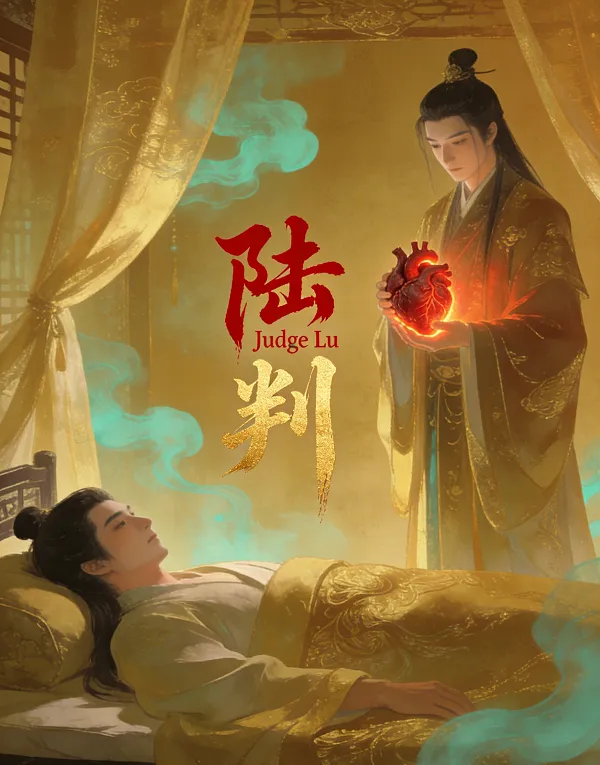
朱尔旦,字小明,性豪放。然素钝钝迟钝、愚笨。此处指朱尔旦虽然为人豪爽,但天资愚钝,读书不通,才学有限。,虽读书,知名而不工。然为人豪迈,不拘小节。
一日,文社聚饮。或戏之曰:「君有豪名,能深夜入十王殿,取左廊判官来,众当醵作筵作筵设宴请客。"醵"是凑钱请客的意思,众人合出酒席钱。此处暗示众人以设宴为赌注,激朱尔旦去做冒险之事。。」朱即起,径去。
无何,门外呼曰:「我请判官至矣!」众起,见朱负一判官判官冥界负责审判亡魂的官员,相当于人间的法官。十王殿中的判官是泥塑神像,朱尔旦将其背来,众人惊惧不已。像至。置之座上,举爵酹之三。众惧,劝其仍负之去。
Zhu Erdan, courtesy name Xiaoming, was a man of bold and generous spirit豪放 háo fàngOpen-hearted, magnanimous, unconstrained by convention. A prized quality in classical Chinese culture, associated with heroes and wine-drinkers.. Yet he was naturally dull钝 dùnSlow-witted, obtuse. Despite his reading, Zhu could never master the literary arts — a common theme in Pu Songling, contrasting inner virtue with intellectual limitation. — though he studied, his reputation was for mediocrity rather than mastery. Still, his open-hearted nature and disregard for trifles made him beloved.
One day, his literary society gathered for drinks. Someone teased him: "You're known for your boldness — could you go at midnight to the Hall of Ten Kings and fetch the Judge from the left corridor? We'd pool our money for a feast作筵 zuò yánTo host a banquet. "醵" means pooling money for a treat — the group dares Zhu with a feast as the prize, testing his legendary boldness.." Zhu rose at once and walked out without a word.
Before long, a voice called from outside the door: "I've brought the Judge!" The men rose and saw Zhu carrying a Judge's statue判官 pàn guānAn underworld magistrate responsible for judging the dead — the netherworld equivalent of a court judge. The statues in the Hall of Ten Kings were clay effigies; Zhu had actually carried one back, terrifying his friends. on his back. He set it in a seat of honor, raised his cup, and poured three libations. The others, frightened, urged him to carry it back.
次日,朱独饮。忽有人掀帘掀帘撩起门帘。古时房屋以竹帘或布帘分隔内外,"掀帘而入"表示来者毫不客气、径直而入,暗示判官与朱尔旦已非外人。入,则判官也。朱喜曰:「判官来,快甚!」即斟酒奉之。判官亦不辞,连举数觥。
朱问:「姓字?」判官曰:「我姓陆,无名。」朱曰:「人皆有名,何言无?」判官曰:「阴曹阴曹阴间的官府。"曹"是古代官署的通称,"阴曹"即阴间的行政机构,与"阳间"相对。不以名行也。」朱遂呼之陆判。自是每饮必来。
一夜,朱醉,先卧。陆判就灯自饮。忽见朱肠胃肠胃肠和胃,泛指内脏。此处判官所见朱尔旦的肠胃,实指其才智——古人认为心主思,肠胃通则思维敏捷,此处暗喻朱尔旦天资愚钝的根源。皆露,陆以手探之,复纳之。朱醒觉腹微痛。自是觉文思大进。
The next evening, Zhu was drinking alone when someone parted the curtain掀帘 xiān liánLifting aside the door curtain. In traditional houses, bamboo or cloth curtains divided inner from outer rooms. "Parting the curtain and entering" suggests familiarity — the Judge treats Zhu's home as his own. and walked in — it was the Judge. Zhu cried with delight: "The Judge has come — splendid!" He poured wine and offered it. The Judge did not refuse; they drank cup after cup.
Zhu asked: "What is your name?" The Judge said: "My surname is Lu. I have no given name." Zhu said: "Every man has a name — how can you have none?" The Judge replied: "In the courts of the dead阴曹 yīn cáoThe underworld administration. "曹" is a general term for government offices; "阴曹" refers to the bureaucratic apparatus of the netherworld., we do not go by personal names." Zhu then called him Lu Pan. From that night on, the Judge came whenever Zhu drank.
One night, Zhu fell asleep drunk while the Judge sat drinking alone by lamplight. Suddenly he saw Zhu's entrails肠胃 cháng wèiThe intestines and stomach — here symbolizing Zhu's innate talent. In Chinese thought, the organs govern mental acuity; exposed entrails suggest the raw material of intelligence, waiting to be rearranged. exposed. The Judge reached in with his hand, rearranged them, and tucked them back. Zhu woke with a faint pain in his belly. From that day on, his literary thoughts flowed far more freely.
一日,朱谓陆曰:「吾文思虽进,然面颜不扬。君能为我易之否?」陆笑曰:「诺。当为君换心。」朱曰:「换心?」陆曰:「心者,智府智府智慧的府库。古人认为"心之官则思"(《孟子》),心是思维和智慧的器官,故称"智府"。此处判官所言之"心"不仅是心脏,更是才智之源。也。君之心不开,故文思不进。吾将为君易慧心。」
是夜,朱觉有人以手探胸,取心出,复以一心置之。微微觉痛,俄而愈。视案上,则己心在焉,血殷血殷血迹暗红发黑。"殷"读yān时指深红色、暗红色,形容血已凝固变色的样子。。乃知陆判果以慧心换己钝心也。
自是文思大进,过目成诵。岁试遂冠诸生诸生秀才们的统称。明清时期,通过院试的读书人称"生员",俗称"秀才","诸生"即所有生员。朱尔旦换心后文章大进,在秀才考试中名列前茅。。人皆异之。朱心知陆判之力,然不敢告人。
One day, Zhu said to the Judge: "My literary mind has improved, but my face remains undistinguished. Could you change it for me?" The Judge laughed and said: "Certainly. I shall give you a new heart." Zhu said: "A new heart?" The Judge said: "The heart is the seat of wisdom智府 zhì fǔThe mansion of intelligence. In Chinese thought (cf. Mencius: "The office of the heart is to think"), the heart is the organ of thought, not the brain. The Judge's "heart" encompasses both the physical organ and the source of talent.. Your heart is closed, so your thoughts cannot flow. I shall replace it with a keen one."
That night, Zhu felt someone reach into his chest, draw out his heart, and place another in its stead. A faint pain, then it passed. Looking at the table, he saw his own heart lying there, dark with dried blood血殷 xuè yānBlood turned dark crimson, nearly black. "殷" (yān) denotes the deep red of congealed blood — a visceral image of what has been taken away.. He knew then that the Judge had truly exchanged his dull heart for a clever one.
From that day, his literary powers surged — he could memorize a text at a single reading. In the annual examination, he topped all the scholars诸生 zhū shēngThe collective term for licensed scholars (shengyuan). In Ming-Qing times, those who passed the qualifying exam were called "scholars" — Zhu's sudden genius baffled them all.. Everyone marveled. Zhu knew it was the Judge's doing, but dared not tell a soul.
朱妻貌寝寝丑陋、容貌不佳。古文中"寝"通"寝",形容面貌不端正。朱尔旦虽然换了聪明的心,但妻子的相貌问题仍然困扰着他。,朱常以为恨。一夕,陆判来,朱以情告。陆曰:「易耳。适有美人首,可为君换之。」
夜半,陆以帛裹首来。令朱取刀,自领际割之割之割下头颅。此处"割之"指沿着脖子切下妻子的头。蒲松龄以极其冷静的笔调描写这一骇人听闻的手术,增加了故事的荒诞感和恐怖感。,即以美人首合之。细细按捺,以帛缠之。天明,朱妻醒,觉颈间微痛。取镜照之,大骇。视其身,则己身也;视其首,则非己首也。
朱入,妻哭告之。朱曰:「此陆判为汝换首,勿惧。」妻审视之,首端好端好端正美好、容貌秀丽。形容新换上的头非常美丽,与妻子原来"寝"的面容形成强烈对比。,较旧容美甚。乃喜。自此,合邑传为异事。
Zhu's wife was plain of face寝 qǐnUgly, ill-favored. In classical Chinese, "寝" is a euphemism for unattractiveness. Despite his new brilliance, Zhu's wife's appearance continued to vex him., and this was a constant source of regret. One evening the Judge came, and Zhu confessed his feelings. The Judge said: "Easily done. I happen to have a beautiful woman's head — I can make the exchange for you."
At midnight, the Judge arrived with a head wrapped in silk. He told Zhu to take a knife and sever the head割之 gē zhīTo cut off the head — along the line of the neck. Pu Songling narrates this horrifying procedure with chilling detachment, heightening the tale's absurdity and horror. at the neckline, then fitted the beautiful head in its place. He pressed and adjusted it carefully, binding it with cloth. At dawn, Zhu's wife woke with a faint pain in her neck. She reached for a mirror and shrieked in terror. The body was hers; the face was not.
Zhu entered, and his wife wept and told him everything. Zhu said: "Lu Pan exchanged your head for you — do not be afraid." She examined herself: the new face was exquisitely beautiful端好 duān hǎoGraceful and lovely, finely formed. The new head's beauty stands in stark contrast to her former plainness., far surpassing her old appearance. She was delighted. From then on, the tale was told as a wonder throughout the county.
文学价值
《陆判》是蒲松龄最大胆的奇幻作品之一。换心、换头——这些在现代医学中才勉强实现的手术,在蒲松龄笔下不过是一个鬼朋友的举手之劳。故事的荒诞感恰恰来自这种"日常化"的处理方式:判官像一个普通的酒友一样来访,换头像换一件衣服一样轻松。
但故事的深层寓意远不止猎奇。换心是对"天资"的重新分配——蒲松龄一生科举失意,他或许在幻想:如果有人能为自己换一颗聪慧之心?换头则触及了身份认同的核心问题:换了头的妻子,还是原来那个人吗?蒲松龄没有给出答案,而是让读者自己去思考。
比较研究
与玛丽·雪莱的《弗兰肯斯坦》相似,《陆判》也探讨了身体改造与身份的关系。但两者的取向截然不同:弗兰肯斯坦的怪物是失控的创造,充满了恐惧与悲剧;而陆判的手术是成功的馈赠,充满了善意与奇迹。这种差异反映了中西文化对"超自然力量"的不同态度——西方恐惧于失控的科技,东方则敬畏于超凡的友情。
Literary Merit
"Lu Pan" is one of Pu Songling's most audacious works of fantasy. Heart transplant, head swap — procedures that modern medicine can barely achieve — are here treated as trivial favors from a ghostly friend. The tale's absurdity derives precisely from this casual treatment: the Judge visits like an ordinary drinking companion; the head swap is as easy as changing clothes.
Yet the deeper significance goes far beyond shock value. The heart exchange redistributes innate talent — Pu Songling, who failed the examinations his entire life, may have fantasized: what if someone could replace my dull heart with a brilliant one? The head swap raises the core question of identity: is the wife with a new head still the same person? Pu offers no answer, leaving the reader to ponder.
Comparative Study
Like Mary Shelley's Frankenstein, "Lu Pan" explores the relationship between body modification and identity. But the orientations are diametrically opposed: Frankenstein's creature is an act of creation gone wrong, filled with horror and tragedy; Lu Pan's surgery is a successful gift, filled with kindness and wonder. This difference reflects contrasting cultural attitudes toward the supernatural — the West fears uncontrolled technology, while the East venerates extraordinary friendship.
十王殿是中国佛教地狱观念的产物,供奉十殿阎王(秦广王、初江王、宋帝王、五官王、阎罗王、变成王、泰山王、平等王、都市王、五道转轮王)。每殿阎王各司其职,分别审判亡魂在人间的各种罪行。十王殿中的判官即辅佐阎王审判的冥界官员,陆判即此类神祇。蒲松龄将其塑造为豪饮善友的形象,颠覆了传统冥界叙事中的恐怖基调。
The Hall of Ten Kings derives from Buddhist conceptions of hell, housing the ten Yama kings who each preside over different categories of sin. The Judges in these halls assist Yama in adjudicating the dead. Pu Songling reshapes Lu Pan into a wine-drinking boon companion, subverting the horror conventions of traditional underworld narratives.
出自《孟子·告子上》:"心之官则思,思则得之,不思则不得也。"这是中国哲学中关于心脑关系的经典表述——古人认为心是思维的器官,而非大脑。这一观念直接影响了"换心"故事的合理性:在蒲松龄的文化语境中,换一颗心就等于换一种思维方式。故事中的"慧心"不仅是解剖学意义上的心脏,更是才智、悟性和创造力的象征。
From Mencius (Gaozi I): "The office of the heart is to think. By thinking one attains; without thinking one does not." This is the classic Chinese philosophical statement on the heart-mind — the ancients believed the heart, not the brain, was the organ of thought. This directly legitimizes the heart-swap story: in Pu Songling's cultural context, replacing a heart replaces a way of thinking. The "clever heart" is not merely an anatomical organ but a symbol of talent, insight, and creative power.